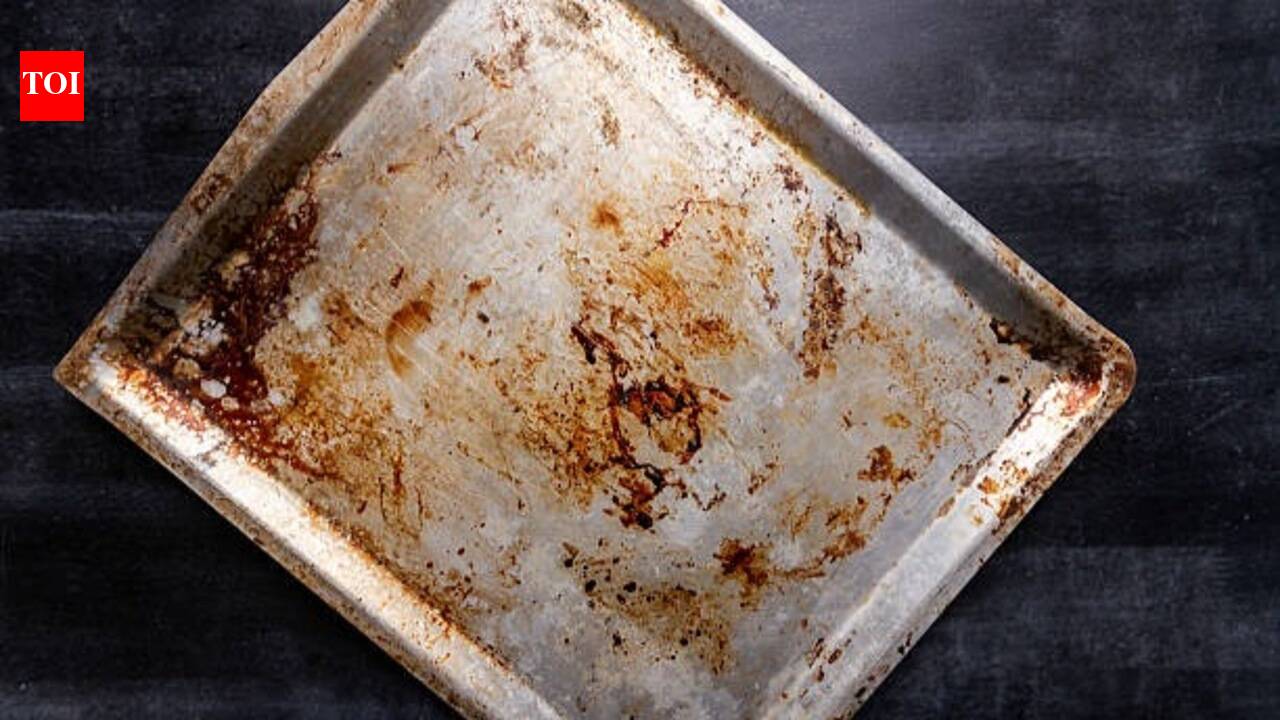
There’s a particular kind of kitchen mystery that plays out in almost every home eventually: a baking sheet that started out gleaming and silver slowly turns into something dark, blotchy, and faintly sticky, no matter how carefully you wash it after every use. It’s tempting to assume something’s gone wrong, or that the pan’s simply worn out, but the actual explanation is a lot more interesting than that, and it doesn’t mean your pan is ruined or unsafe to keep using. Here’s what’s genuinely happening to your baking sheet, and how to clean it back to something closer to its original shine using nothing but natural, kitchen-cupboard ingredients.
What’s actually causing the brown, sticky layer
The scientific term for it is polymerization, and it’s essentially the same process that creates the seasoning on a well-loved cast-iron pan. Every time oil on a baking sheet gets heated past its smoke point, its molecules start bonding together into larger, more stable structures, forming a thin, dark film that layers up a little more with every bake. It’s not dirt sitting on top of the pan so much as it is the oil itself chemically transforming under repeated heat, which is exactly why regular washing alone often barely makes a dent in it.
Is a darkened pan actually a problem?
Here’s the reassuring part: that dark buildup is generally harmless and doesn’t mean your pan is unsafe to cook on. In fact, kitchen researchers who’ve specifically tested this found that older, darker sheet pans actually browned food faster and more evenly than shiny new ones, since darker surfaces absorb and hold heat more efficiently. So while a heavily blackened, tacky pan is worth cleaning for hygiene and performance reasons, a bit of natural darkening over time isn’t a sign anything’s actually wrong with your bakeware.
Baking soda and vinegar soak
For everyday grease and moderate staining, this combination remains the most reliable natural fix. Sprinkle a generous layer of baking soda across the pan, then pour white vinegar over it and let the fizzing reaction get to work for several minutes. Give the pan a light scrub with a non-abrasive sponge once the fizzing settles, or let it sit and soak for closer to an hour if the buildup feels stubborn. Rinse thoroughly afterward, since leftover vinegar can leave a faint smell behind if it isn’t washed off properly.
Overnight baking soda paste for heavy buildup
For a baking sheet that’s gone well past light staining into genuinely thick, blackened gunk, patience matters more than elbow grease. Mix baking soda with just enough hot water to form a thick paste, spread it generously across the affected areas, and let the pan sit overnight rather than trying to scrub it clean in one go. The extended soak gives the baking soda far more time to break down the polymerized layer, and most of what’s left the next morning wipes away with noticeably less effort than it would otherwise take.
Lemon and salt scrub
For pans with more localised staining rather than an all-over dark layer, lemon and salt make a genuinely effective natural scrub. Cut a lemon in half, sprinkle salt directly onto the cut surface, and use it to scrub the stained areas directly, letting the citric acid work alongside the salt’s mild abrasiveness. It’s particularly satisfying on aluminium pans, where it tends to lift discolouration without needing anything harsher, and it leaves a noticeably fresher smell behind than a plain baking soda soak on its own.
Preventing the buildup in the first place
The easiest long-term fix isn’t really about cleaning at all, it’s about stopping the buildup before it starts. Lining your baking sheet with parchment paper, aluminium foil, or a reusable silicone baking mat creates a barrier between the pan’s surface and the oil that causes polymerization in the first place, meaning far less scrubbing is needed over the pan’s lifetime. It won’t eliminate the need to clean your baking sheet entirely, but it does mean the deep, overnight-soak level of cleaning becomes the exception rather than a regular chore.
Disclaimer:
This article is intended for general informational purposes only. Always check whether your baking sheet is aluminium, stainless steel, or non-stick coated before cleaning, as abrasive scrubbing or certain natural acids can affect some finishes over repeated use. Wear gloves when handling vinegar or baking soda for extended periods, and ensure pans are rinsed thoroughly and dried completely before their next use.