
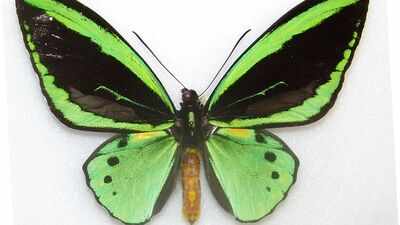
Butterfly wings could offer a unique solution to one of the biggest problems faced by solar panels, which is ‘sunlight that bounces away before it can be used.’ A study published in ‘Solar Energy’ explored how the tiny structures found on the black scales of butterfly wings could be copied to create more effective anti-reflective surfaces for silicon-based solar cells. The researchers found that one particular butterfly structure, inspired by ‘Ornithoptera priamus,’ could reduce light reflection from more than 35% on bare silicon to less than 5%. Computer simulations also showed that this design could increase the short-circuit current of a solar cell by as much as 66%. The finding demonstrates how a structure evolved in nature to capture sunlight could potentially be adapted to improve the way human technology collects solar energy.
Why are black-butterfly wings so good at trapping light
The study examined the tiny structures present on the scales of several butterfly species. The research was carried out by Zhongjia Huang, Xinying Shi, Gang Wang, Petri Leukkunen, Marko Huttula and Wei Cao. As described in the study, black colour in butterfly scales is different from the structural colours responsible for many of the bright shades seen across butterfly wings. Instead, the black scales can trap sunlight within their structures, allowing very little of that light to escape.This ability is particularly interesting because solar panels face the opposite problem. When sunlight hits a silicon surface, some of it is reflected rather than absorbed. That reflected light represents energy that the solar cell cannot use. The researchers therefore looked at whether the structures responsible for trapping light in butterfly scales could be copied and applied to silicon solar cells.
What did the researchers find inside the butterfly scales
The study examined black scales from 4 butterfly species and found that they did not all use exactly the same structure. The scales of Ornithoptera priamus, for example, contain parallel V-shaped grooves formed between ridges and connected by thin layers. The other species examined such as ‘Tirumala limniace,’ ‘Graphium doson’ and ‘Papilio protenor cramer,’ had different arrangements involving rounded ridges and varying numbers of holes.Although all of these scales appeared black, their microscopic structures affected the way they interacted with light. The ‘Ornithoptera priamus’ structure was particularly effective at reducing reflection. According to the study, its black scales showed very low reflection in the visible-light range, with values between about 1% and 5%. That made the structure an especially promising model for solar technology.
How could a butterfly-inspired surface improve solar panels
The researchers proposed using the butterfly-inspired structures as anti-reflective patterns on silicon-based photovoltaic cells. The basic idea is straightforward. Instead of allowing sunlight to hit a relatively flat silicon surface and bounce away, a carefully designed microscopic surface could help direct more of that light into the material. The researchers tested this concept through computer simulations. When the butterfly-inspired structures were applied to silicon solar panels, the amount of light scattered back from the surface fell substantially. The study found that light reflection could fall to less than 5% when the biomimicked structure was used. This means that considerably more of the incoming light could remain available to the solar cell.
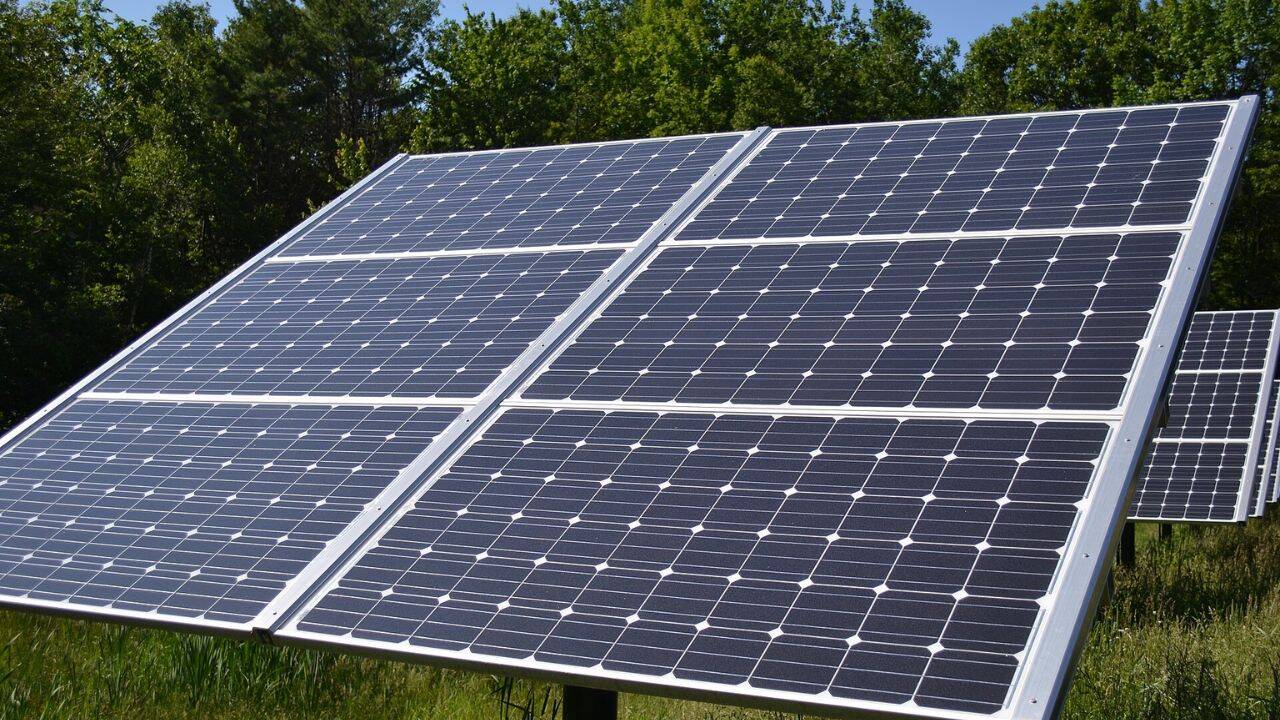
Fixed tilt solar array in of crystalline silicon panels. Image Credit: Wikipedia
Could the technology really increase solar power by 66%
The study reported a striking result from its simulations. The Ornithoptera-inspired structure increased the short-circuit current by 66%. Short-circuit current refers to the maximum current that can be obtained from a photovoltaic cell under the conditions being tested. In simple terms, the increase indicates that the solar cell could make better use of the available incoming light. However, the 66% figure should not be interpreted as meaning that an ordinary commercial solar panel would automatically produce 66% more electricity simply by receiving a butterfly-inspired coating.The result came from the researchers’ modelling of the proposed structure and its effect on a silicon photovoltaic system. The work was aimed at demonstrating the potential of the design, while experimental implementation was proposed as a next step. That distinction is important because a promising microscopic structure still needs to be manufactured, tested and integrated into practical solar panels before its real-world performance can be established.
Why could butterfly wings be useful for future solar technology
The research highlights an approach known as biomimicry, in which engineers and scientists study solutions that have developed naturally and adapt their principles for human technology. In this case, the butterfly does not need to produce electricity from sunlight. Its scales have simply evolved structures that are remarkably effective at controlling and trapping light. Researchers saw an opportunity to borrow that principle for solar energy.The potential advantage is particularly significant because silicon-based solar panels are already widely used. If similarly effective anti-reflective structures could eventually be produced on a practical scale, they could help solar cells capture more of the sunlight that reaches them. The study therefore presents butterfly scales not merely as an interesting natural feature, but as a possible blueprint for improving solar technology.The study shows how even the smallest details of nature can inspire new ways of tackling major technological challenges. In this case, the black scales of a butterfly could provide a surprisingly useful lesson in how to keep sunlight from bouncing away, and help solar panels make better use of the light they receive.