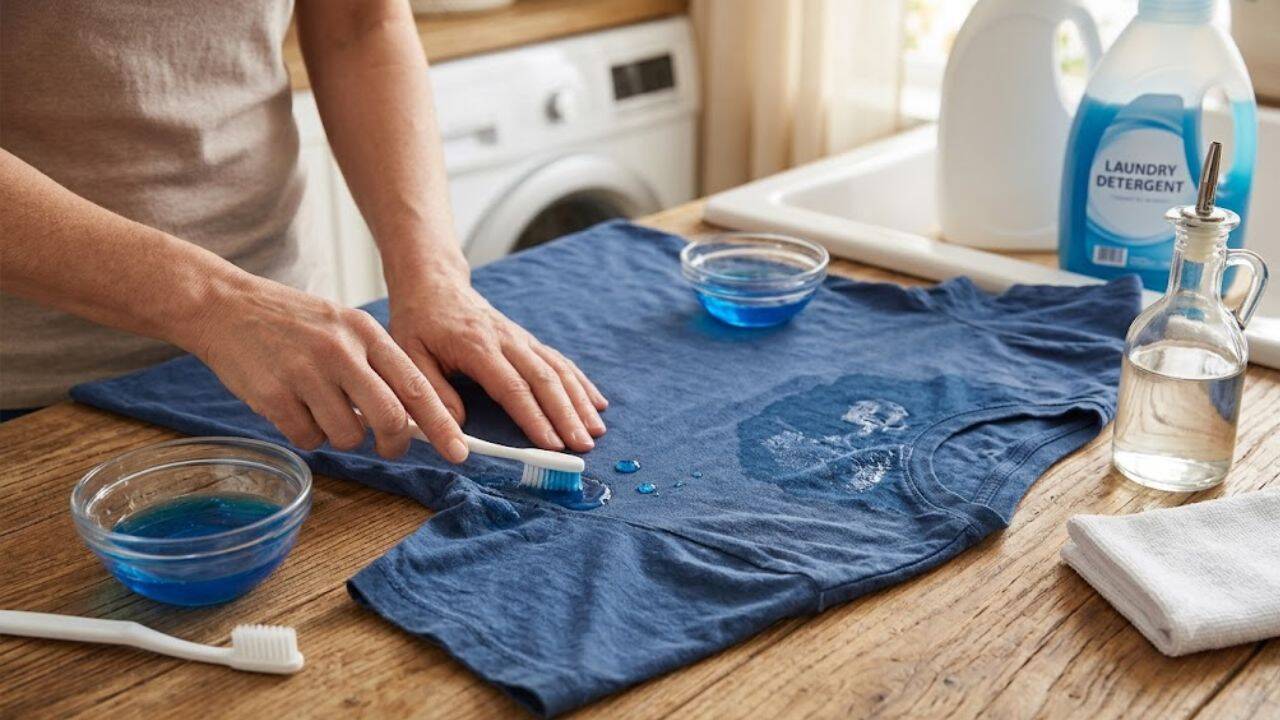
Deodorant helps control sweat and body odour, but it can also leave stubborn marks on clothes. White streaks are especially common on dark T-shirts, while yellow patches often develop around the underarms of lighter garments. Over time, the residue can settle deeper into the fabric and become harder to remove.But that does not mean the garment is ruined. Many deodorant stains can be treated at home with simple cleaning methods. The key is to choose a treatment that suits both the stain and the fabric. Fresh marks are often easier to remove, while older stains may need a little more care.Before you start, check the care label to see how the garment should be washed and whether it needs any special care. It is also advisable to test any cleaning solution on a small hidden area first, especially when dealing with coloured or delicate fabrics.
5 easy ways to remove deodorant stains from clothes
1. Use liquid laundry detergent
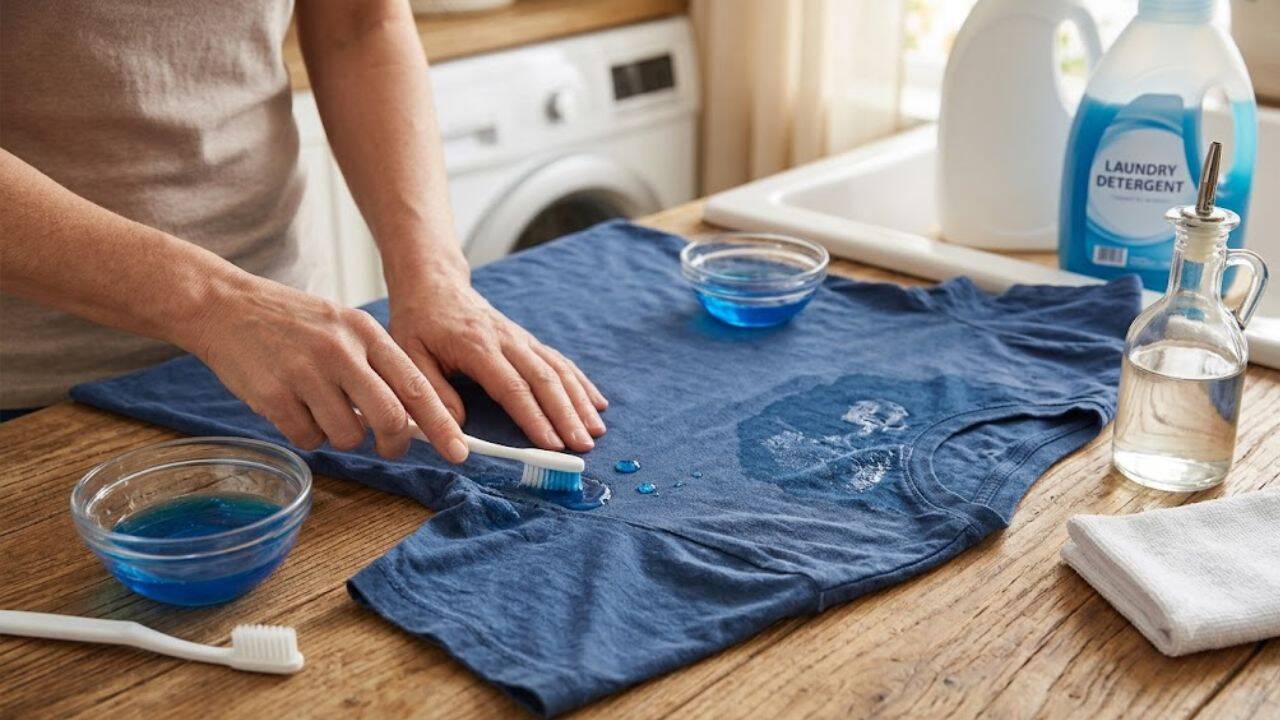
Liquid laundry detergent can help break down deodorant residue that has settled into the fabric. It is a first step when brushing alone does not remove the mark.Apply a small amount of liquid detergent directly to the affected area. Gently rub the fabric with your fingers or a soft cloth. Leave it on the stain for the amount of time recommended on the product label.
PC: AI Generated
2. Use white vinegar
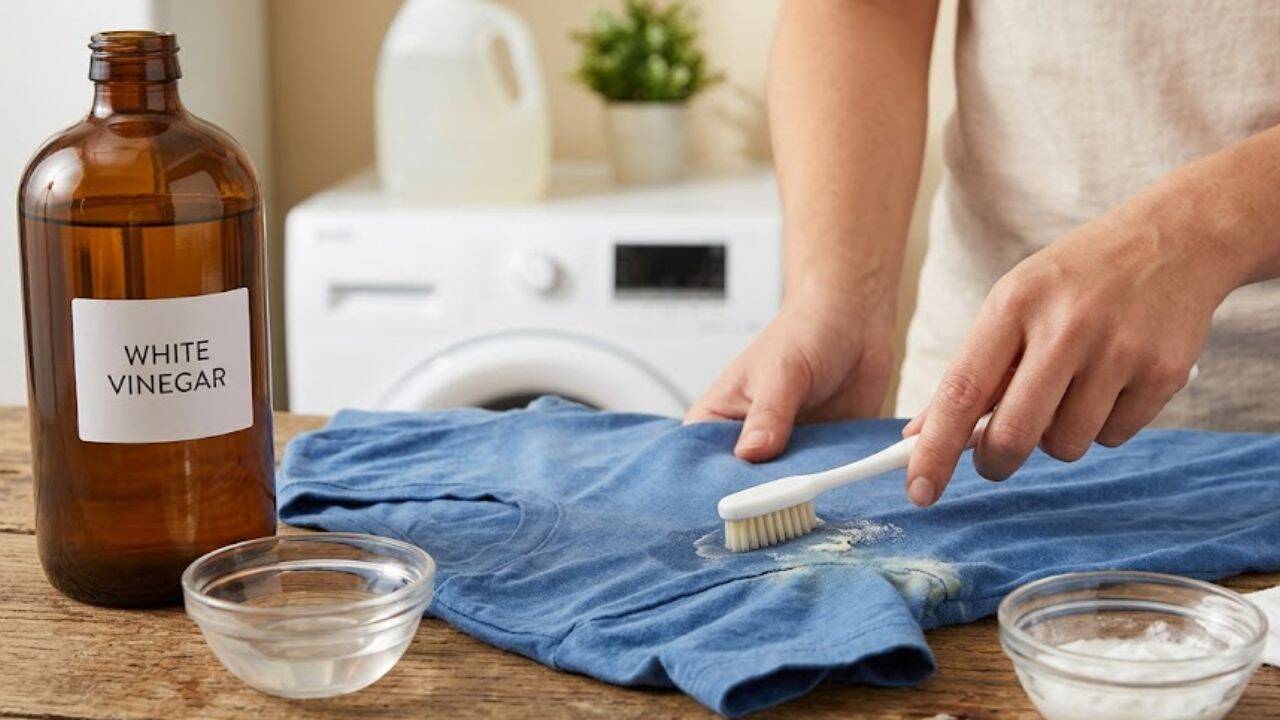
White vinegar can be useful when deodorant residue has left behind an unpleasant smell as well as a mark. It may also help loosen some residue on fabrics.Dilute a small amount of white vinegar with water. Apply the mixture carefully to the affected area and leave it for a while. Wash the garment afterwards as directed on its care label. Do not use this method on every fabric.
3. Use baking soda paste
Baking soda can offer another option for stubborn deodorant marks on suitable washable fabrics. Mix it with water; it forms a simple paste that can be applied directly to the affected area.Spread the paste over the stain and gently apply it to the fabric. Leave it for some time before washing the garment. There is no need for hard scrubbing as baking soda can be mildly abrasive, so excessive rubbing may damage delicate fibres or change the appearance of the fabric.
4. Soak the garment before washing
Some deodorant stains need more time to loosen. Soaking can help when residue has built up around the underarms and a normal wash has not been enough.Fill a suitable container with water and add an appropriate amount of laundry detergent. Place the garment in the solution and leave it to soak. Wash it afterwards and avoid leaving delicate fabrics submerged for longer than advised.
5. Use a soft toothbrush
A soft, clean toothbrush can help lift deodorant residue from the fibres without requiring hard scrubbing. This method is particularly useful for fresh white marks on cotton T-shirts and other washable, sturdy fabrics.Apply a small amount of liquid laundry detergent to the affected area. Gently brush the stain with a soft toothbrush using short, light strokes. Avoid this method on delicate fabrics, where brushing may cause damage.
PC: AI Generated
Mistakes you should avoid when removing deodorant stains from clothes
1. Do not scrub the stain aggressively
Hard scrubbing may weaken the fibres and leave the affected area looking different from the rest of the garment. Work gently instead. Apply the cleaning solution and give it time to loosen the residue. A soft cloth or brush is usually enough for fresh marks. Delicate fabrics need even more care because excessive friction can cause visible damage.
2. Do not use bleach without checking the fabric
It can damage some fabrics and may cause unwanted colour changes. Using more bleach will not necessarily produce a cleaner garment. Check the garment’s care label before considering bleach. Instructions on the bleach product should also be checked. If the fabric is delicate or the label warns against bleach, choose a gentler method instead.
3. Do not mix cleaning products
Mixing household cleaning products can cause chemical reactions that are harmful to health. A stronger-looking combination is not necessarily a more effective stain remover. Use one treatment at a time. If you decide to try another method, rinse the garment properly first. Never mix products unless their labels specifically state that they are safe to combine. This is particularly important when using products that contain bleach or other strong cleaning agents.
4. Do not use excessive heat on an untreated stain
Heat can make some stains harder to remove. Putting a stained garment straight into a hot dryer may leave a mark that is more difficult to treat later. Check the garment after washing. If the deodorant stain is still visible, treat it again before drying it with high heat. The same caution applies to ironing. Avoid pressing directly over an area that still shows visible staining.
5. Do not ignore the care label
A cleaning method that works well on a cotton T-shirt may not be safe for wool, silk, or another delicate fabric. Follow the recommended washing temperature and cycle. Pay attention to warnings about bleach, drying, and ironing. Use the gentlest suitable method rather than risking permanent damage to the fabric.