Those who’ve observed Manu Rishi Chadha’s onscreen journey for the past 24 years would be pleasantly surprised to see him play Pervez Musharraf, former Pakistan president and the mastermind behind the 1999 Kargil War against India, in Netflix India’s period war drama Operation Safed Sagar. But those who’ve traced his onscreen arc too closely wouldn’t be shocked to see how he portrays the antagonistic character with consummate ease. In an exclusive interview with SCREEN, the actor talks about how he got into Musharraf’s skin, doing the confrontational scenes with Vinay Pathak’s Nawaz Sharif, and finally breaking his age-old stereotype.
Do you think playing Musharraf would help you break the stereotype of a comic actor that you’ve been boxed into all these years?
Yes, of course. That’s very beautiful and soothing to hear. In the industry, it’s a crime if you do a good role. That fetches you an award, and then everybody starts calling you. My savings dried up before doing Oye Lucky! Lucky Oye! (2008), and I didn’t get any money for that film. So, whoever approached me after that, I kept saying yes. Han bolte bolte laga ki acting se zyada boring koi cheez hi nahi hai. Everybody’s giving me Manu Rishi to play. Manu Rishi is very good at improvisation. I haven’t even done a proper comedy yet, if you leave out Subhash Kapoor’s film Phas Gaye Re Obama (2010).
You don’t consider Oye Lucky! Lucky Oye! a comedy?
For me, Oye Lucky! Lucky Oye! isn’t a comedy. It was a very serious role. That also wasn’t that great, but every producer, director, and screenwriter began calling me to improvise. Everyone had tasted blood. So, I kept working for money without enjoying. I developed the habit of making good of weirdly written lines. So, I’d be doing two jobs within one — of a writer and an actor, but got paid only for one craft. When I was asked at an event whether I enjoy writing or acting, I said I don’t enjoy acting anymore.
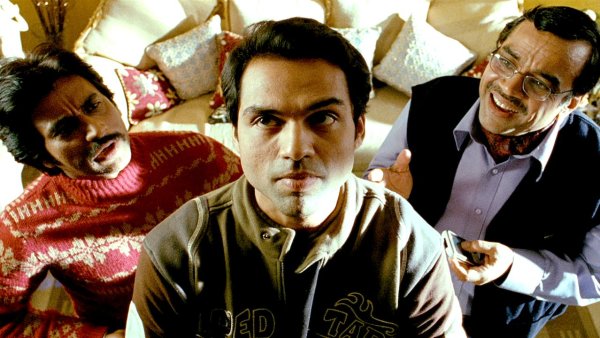
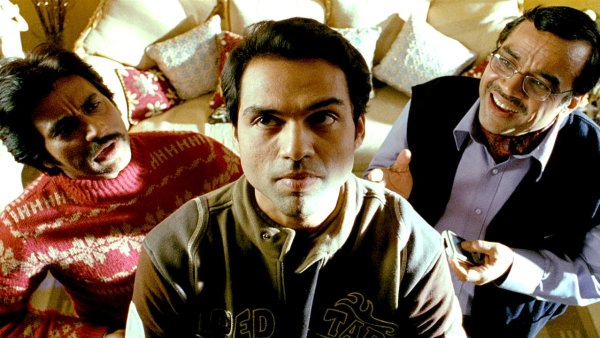 Manu Rishi Chadha, Abhay Deol, and Paresh Rawal in Oye Lucky! Lucky Oye!.
How did you land the role of Pervez Musharraf then?
Even in those odd jobs, maybe my honesty would shine through. Which is probably why everyone’s receiving my performance of Musharraf well. So, even if you want me to play Manu Rishi, let me tap into another side of Manu Rishi. I want to cry, make people laugh, get scared, and scare someone too. There are so many faces in abhinay. Just yesterday, someone told me, “We were going to approach you for a role, but we saw you as Musharraf. Now, we won’t be able to offer you the role. It was a great role, but we got scared.” I said, “Good that you got scared” (laughs).
Story continues below this ad
You co-wrote another Indo-Pak war drama, Vijay Raaz’s Kya Dilli Kya Lahore (2014), where you also played a soldier, but an Indian one originally from Lahore. Given that the film didn’t find many takers, does it feel validating to now play the 180-degree opposite of that character?
That’s a bitter truth which we should face and accept. Do you know how much I charged for that film? It’s been a few years, so let me disclose it now — only Rs 1100! I was so emotionally convinced. The producer (Karan Arora) and director were new. The director couldn’t do the film, so Vijay Raaz had to step up. Gulzar sahab also gave four of his songs to the film for only Rs 1100. So, I thought if he’s done that, I should do that too. Everything was done so well in that film, but the producer thought who’d come and watch Vijay Raaz and Manu Rishi Chadha? So, the producer didn’t market it well. He lost interest only because he was hopeful Vinay Pathak and Ranvir Shorey would agree to do the film. Because I’d co-written the film, and they were my friends. But they didn’t find the producer right. They’re much more experienced. So, the producer tried for Amitabh Bachchan and Mithun Chakraborty. He came from an equity firm, so he had the small-town dream of making it big in Mumbai one day. So, the film fell prey to that. It’s sad.
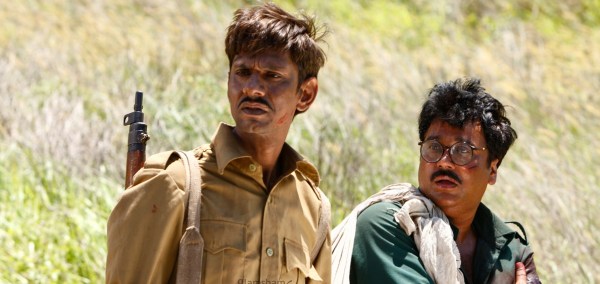 Vijay Raaz and Manu Rishi Chadha in Kya Dilli Kya Lahore.
How did you get into the skin of Pervez Musharraf?
My first instinct as an actor was to open YouTube and watch his videos. But I’d gone to Nawazuddin Siddiqui to narrate something, so I just asked him casually how he did Manto (2018). He said he didn’t have any visual reference of Manto. He just had a photo and text for reference. He also said he wanted to place his faith on Nandita (Sen, director). So, I also began discussing it with Abhijeet Parmar (co-creator) and Oni (Sen, director) sir, and I realised they know more about Musharraf than me. A long time ago, I’d watched a conclave of Musharraf in India. I observed that he always thought he’s saying the truth. We know that he’s lying. It was very important to locate that human in him. All humans have the ability to carry lies for over 20-25 years.
Story continues below this ad
But for such an animated actor like you, was it difficult to play Musharraf without overdoing it?
I think it was very important to play him with stillness. I should always keep my volume correct. I’m not like that. I’m a Chadha from Delhi, boss! Punjab’s Punjabis are still subtle. Punjabis from Delhi are a bit overboard. I also realised while reading the script that I need to take a little pause before each dialogue. I’ve used all my pauses as weapons, actually. I didn’t watch the monitor during the scenes. When I thought I’d made a mistake, I’d say sorry, but the director would reassure me that I was doing it very well. So, I was nervous, and had doubts about my performance. But the day I’m not nervous, I make big f*ck-ups.
Since you mentioned Vinay Pathak is a friend, and he’s also great at improvisation, how was it doing those scenes of friction between Musharraf and then-Pakistan Prime Minister Nawaz Sharif?
Vinay is also from the same school because we’ve all grown with Rajat Kapoor. But we were not allowed to improvise at all. We were yearning for it a lot, but we were at the mercy of our director. We weren’t even allowed to joke on set. I have this habit of storytelling and drifting, but Abhijeet would bring me back (laughs). We had the permission of adding a few changes, but before the shoot, not while performing.
Story continues below this ad
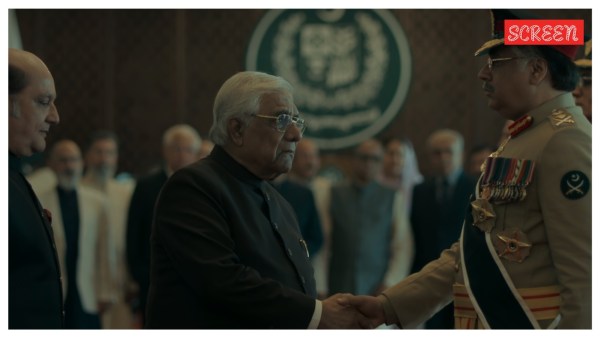
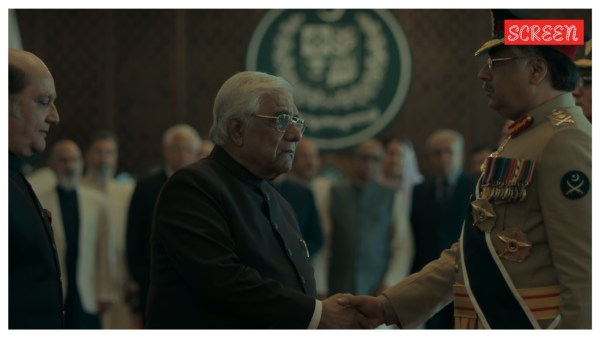 Vinay Pathak as Nawaz Sharif, Aanjjan Srivastav as Atal Bihari Vajpayee, and Manu Rishi Chadha as Pervez Musharraf in Operation Safed Sagar.
Also Read — ‘With Awarapan 2, I wanted to reclaim the box office failure of the first film’: Vishesh Bhatt
Musharraf had such a long and eventful life, marked by his military coup that ousted Sharif and his subsequent rise to the presidency of Pakistan. If you get a chance to tap into another aspect of his life, what would that be?
I’d take it in an entirely different direction. I feel Musharraf should be alive and realising his mistakes. As per our Hindu beliefs, Musharraf’s restless soul keeps wandering till he gets Dawood Ibrahim back to India. And then Dawood tells him, “Thank you for bringing me back to India. Now, I can at least be laid to rest in Azamgarh.” And then the film ends (laughs). I don’t believe in picking historical chapters, but in using fiction to show realism. Isn’t it a good idea? We should borrow the intellects and sensibilities of all the great directors I’ve worked with to write this one — Oni sir, Rajat Kapoor, Sudhir Mishra, and Dibakar Banerjee. When we do theatre, we do bring Shakespeare to the contemporary world. So, we can bring Musharraf back too.