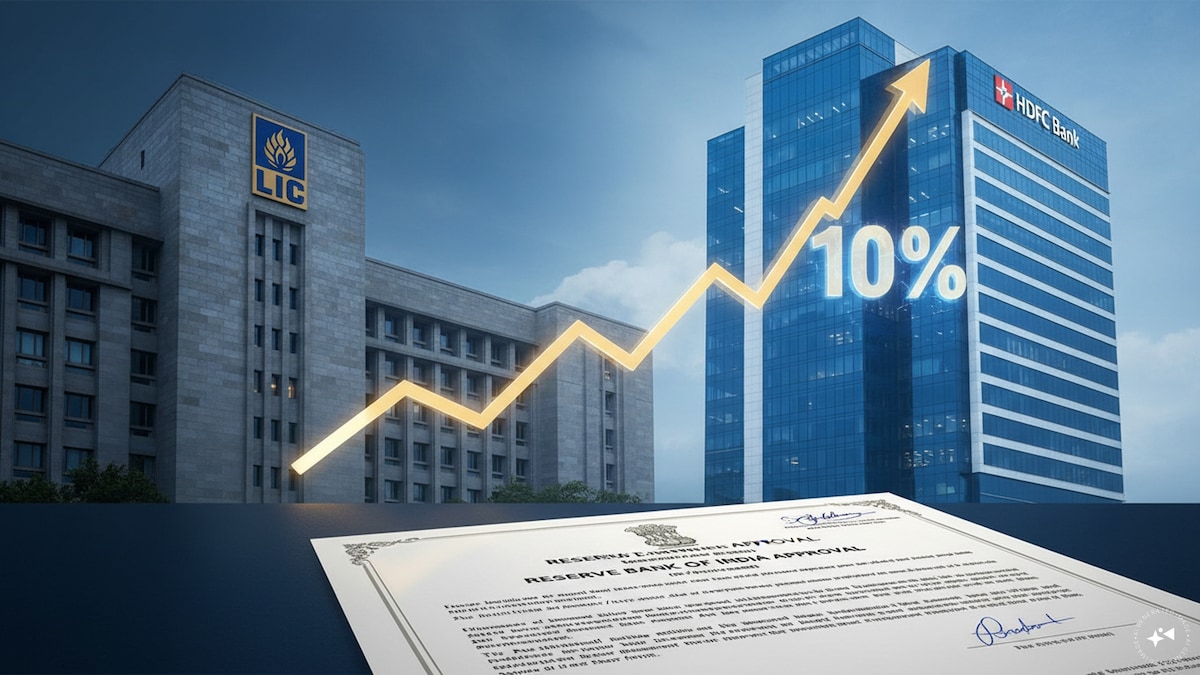
HDFC Bank informed the exchanges that the RBI has approved LIC’s proposal to acquire an aggregate holding of up to 9.99% of the bank’s paid-up share capital or voting rights.
As of the latest available beneficial ownership data on August 14, LIC held 4.11% of HDFC Bank’s total share capital, leaving significant headroom under the newly approved limit.
Meanwhile, domestic investors have been increasing their exposure to HDFC Bank. Mutual funds raised their stake to 30.62% in the June quarter from 29.54% in March, according to shareholding data.
Retail participation has also remained significant, with around 44 lakh small retail shareholders – those with authorised share capital of up to ₹2 lakh – collectively holding a 10.32% stake in HDFC Bank as of the June quarter.
In contrast, foreign portfolio investors (FPIs) have continued to pare their holdings in the lender, with FPI ownership declining for at least five consecutive quarters.
Leveraged positions surge
Another notable development has been the sharp increase in leveraged positions in HDFC Bank through the Margin Trading Facility (MTF).
According to MTF disclosures on the National Stock Exchange (NSE), the leveraged positions in HDFC Bank stood at ₹3,212 crore as of the close on August 13, making it the only stock on the MTF book with exposure above ₹3,000 crore.
The figure has risen 36% from ₹2,360 crore as of July 31 and is up nearly 80% from ₹1,790 crore at the end of June.
The sharp increase indicates that leveraged exposure to HDFC Bank has risen significantly in recent weeks.
What is Margin Trading Facility?
The Margin Trading Facility (MTF) allows investors to buy shares by paying only a portion of the total transaction value, with the broker funding the remaining amount. The investor pays interest on the funded amount, while the shares are held as collateral.
While leverage can amplify returns when a stock rises, it can also magnify losses when prices fall. If the stock declines sharply and the investor fails to provide additional funds to meet the margin requirement, the broker may liquidate the position.
The developments come as HDFC Bank is heading for one of its weakest calendar-year performances in recent history, with the stock down around 25% so far in 2026. This comes after the lender delivered positive annual returns in each of the previous 10 calendar years.
HDFC Bank’s net interest margin (NIM) fell to a record low in the June quarter, offsetting otherwise strong loan growth for the fifth consecutive quarter and healthy deposit growth. Asset quality, however, remained among the best in the industry.
Shares of HDFC Bank ended 0.33% lower at ₹720.65 on Wednesday. The stock has declined more than 7% over the past month.