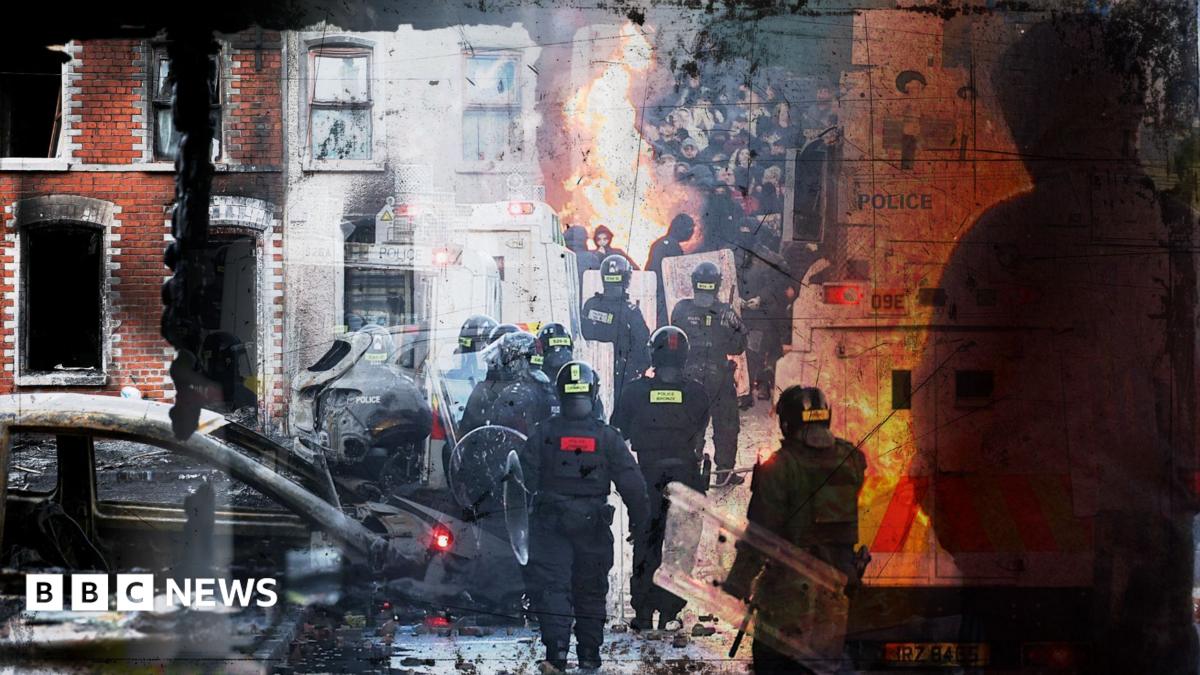
But, at the same time as social media posts were circulating organising the riots, something else was happening online.
A network of groups normally helping migrant communities with things like food banks and interpreter support got together on WhatsApp.
They helped more than 200 people, often rushing into areas of violence to take those targeted to safety.
Anne works for one of the groups and described messages as “coming in as fast as people could pick them up”.
“And even then, when we were down town collecting people, we were then also being asked to go somewhere else, you know, to pick somebody else up.
“There’s a lift needed to take somebody to work, lift needed to take somebody into the hospital for a shift. There’s somebody coeliac, no food in the house, pick up such and such at an address.”
Ciara, another community worker, responded to a call from four Sudanese women fearing that their home would be targeted.
“I was trying to reassure them. I don’t speak Arabic and they were just coming along. It was blind trust. But then I was on adrenaline thinking: ‘I have to keep these people safe’.
“Imagine you were being brought somewhere and you didn’t know where you were going. I just thought: ‘God, these poor people might not even understand what I’m saying’.”
Then there was Carolyn, a community worker of 35 years experience. Her effort was gargantuan.
She has a large home 60 miles away from Belfast and, with the help of a coach driver and his vehicle, managed to take 22 people out of the city to her house in County Antrim, where they stayed for a week.
“It was dark, nearly midnight, when they got here, and there was a lot of crying and hysteria from the kids and the families, just not knowing where they were and stuff like that. They were traumatised.”
Some of them, she recalled, didn’t have a change of clothes. A mum with a baby didn’t have nappies or formula.
“It was crazy. To think of how you would just flee your home, not able to take anything with you and try and protect you and your kids.”