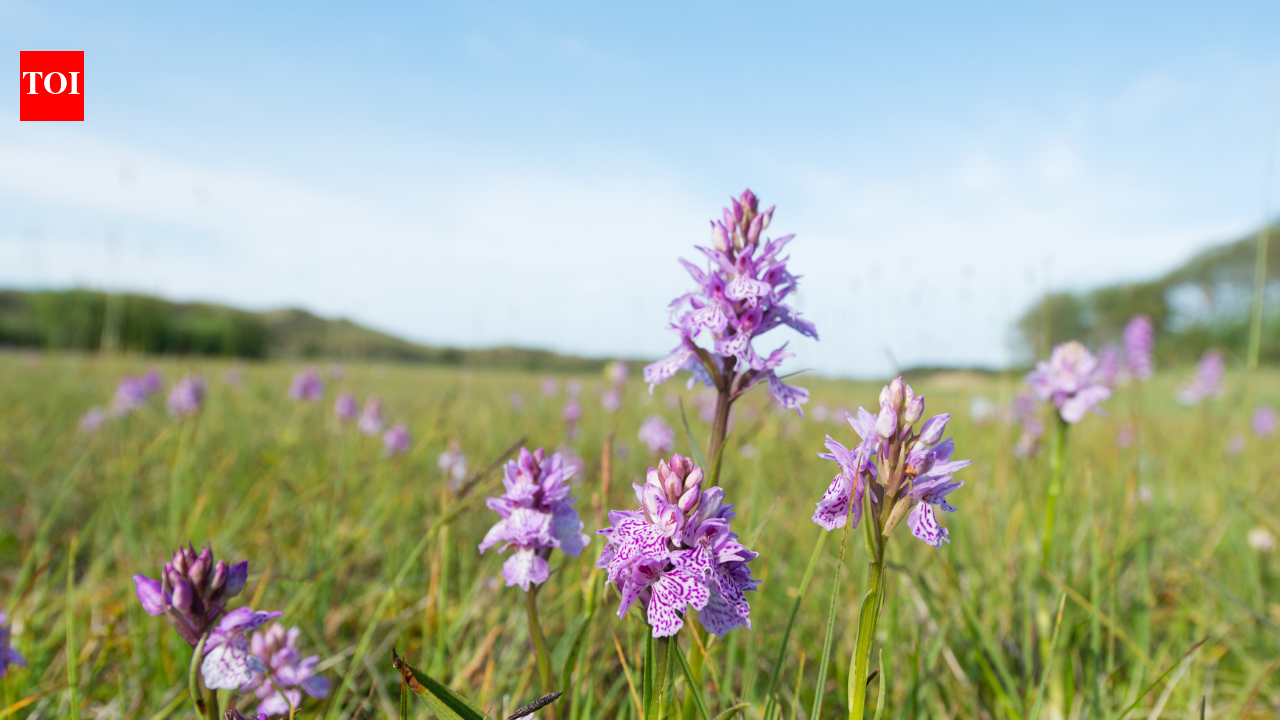
A Norfolk field was left untouched for over a decade in the early 2000s after farming there stopped. Nobody sowed a single seed. Nobody planted a single wildflower. The only human intervention was a traditional annual hay cut, which was followed by farmers for centuries.What happened next was no less than magical. Within ten to fifteen years, the field had silently become a species-rich wildflower meadow, dotted with locally rare plants and, most interestingly, thousands of wild orchids that nobody had introduced.While farmers put their heart and soul into rearing and nurturing produce, sometimes the most powerful thing you can do for nature is simply step back, and that is what happened here.The findings was this surprising growth was published in the journal Restoration Ecology.
In 2005, a Norfolk field was left untouched for over a decade, and it grew into a magical field of rare flowers
The story begins in 2005, when a two-hectare field in Bodham, North Norfolk, grew its last crop of oilseed rape before farming stopped there. The land, owned by Professor Carl Sayer’s father, Derek Sayer, researchers of the study, was hard to drain and no longer practical to farm. Rather than sow it with a wildflower seed mix, as most conservation advice recommends, the family chose to simply let it be, cutting hay annually and otherwise leaving it to nature.
Eleven years of careful watching
From 2011 to 2022, Professor Sayer and collaborator Pete Robinson returned to the field every two to three years, walking it systematically and logging every plant species they found, along with the detailed surveys of permanent plots.
The abandoned farm got filled with rare beautiful flowers over the years
The results were interesting as the average plant species per survey plot nearly doubled, climbing from around 10 in 2011 to close to 20 by 2022.Locally rare species began appearing, including southern marsh orchid, greater tussock-sedge, yellow rattle, and common centaury. Yellow rattle and orchids are widely considered reliable markers of a healthy, maturing meadow, and their steady spread over the study period meant that the field was recovering.This kind of long-term monitoring is hard to come across; keeping it up for over a decade takes real dedication, which is exactly why this dataset means so much to researchers trying to understand how land heals itself over time.
But how did the plants get there?
Several of the rarer species had no known nearby source population, so how did they grow there?The team’s leading theory points to deer, which may have carried seeds into the field on their fur or hooves as they moved through the Norfolk countryside.Carl Sayer, Professor of Limnology and Freshwater Ecology, said, “Our study shows that resisting seeding and allowing nature to lead may be worth trying a lot more in wildflower meadow restoration. Natural plant recovery better safeguards genetic diversity than seeding and ensures that local species thrive, making meadows less generic.”