Old steel utensils can lose their shine over time. Regular use can leave behind cooking oil, food residue, and water marks. These build up gradually and can make the surface look dull and stained. Even utensils that once looked bright and polished can lose their original appearance with repeated use. That does not mean it needs replacing. In many cases, the problem is simply a layer of dirt left on the surface. The right cleaning method can loosen it without damaging the steel underneath. Some kitchen materials, such as baking soda, can help with stubborn residue. Vinegar is useful for water marks. Lemon can freshen the surface while dishwashing liquid deals with everyday grease. Stainless steel can scratch when treated too roughly. A soft sponge and a little patience often work better than force. Start with the mildest method and increase the effort only when necessary.
5 easy cleaning hacks to bring shine back to dull steel utensils
1. Use baking soda for dull and greasy surfaces
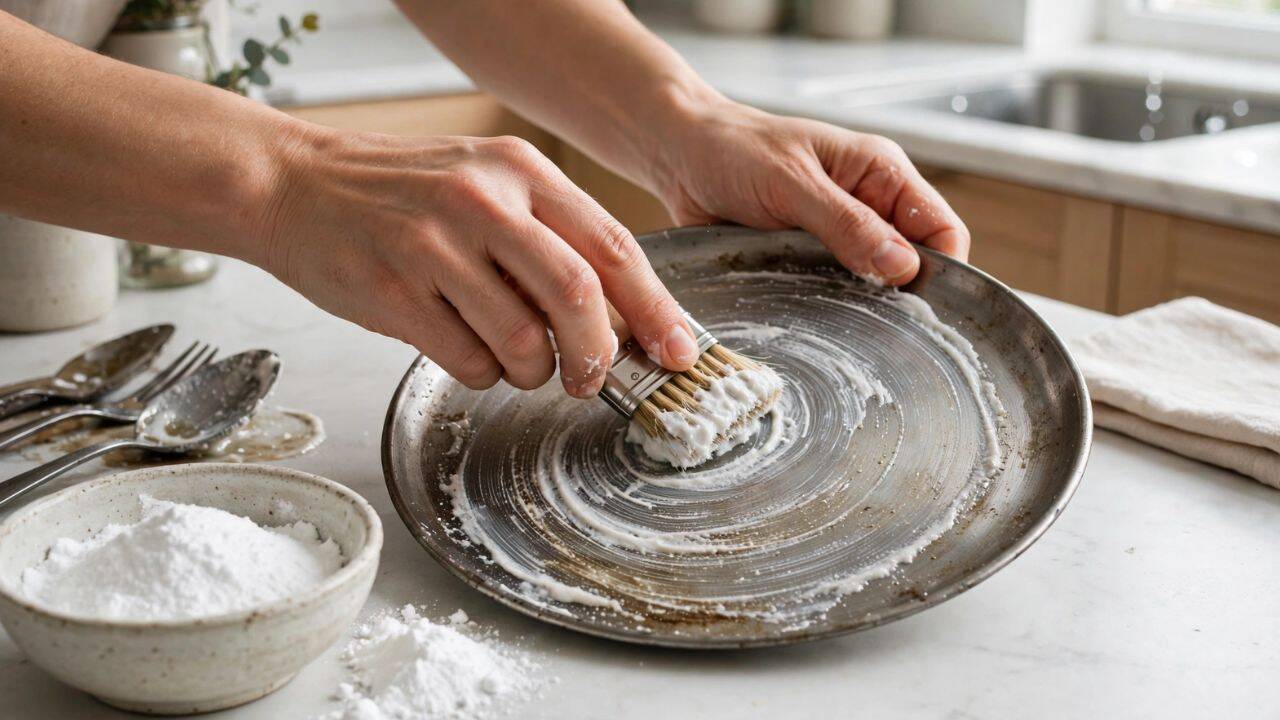
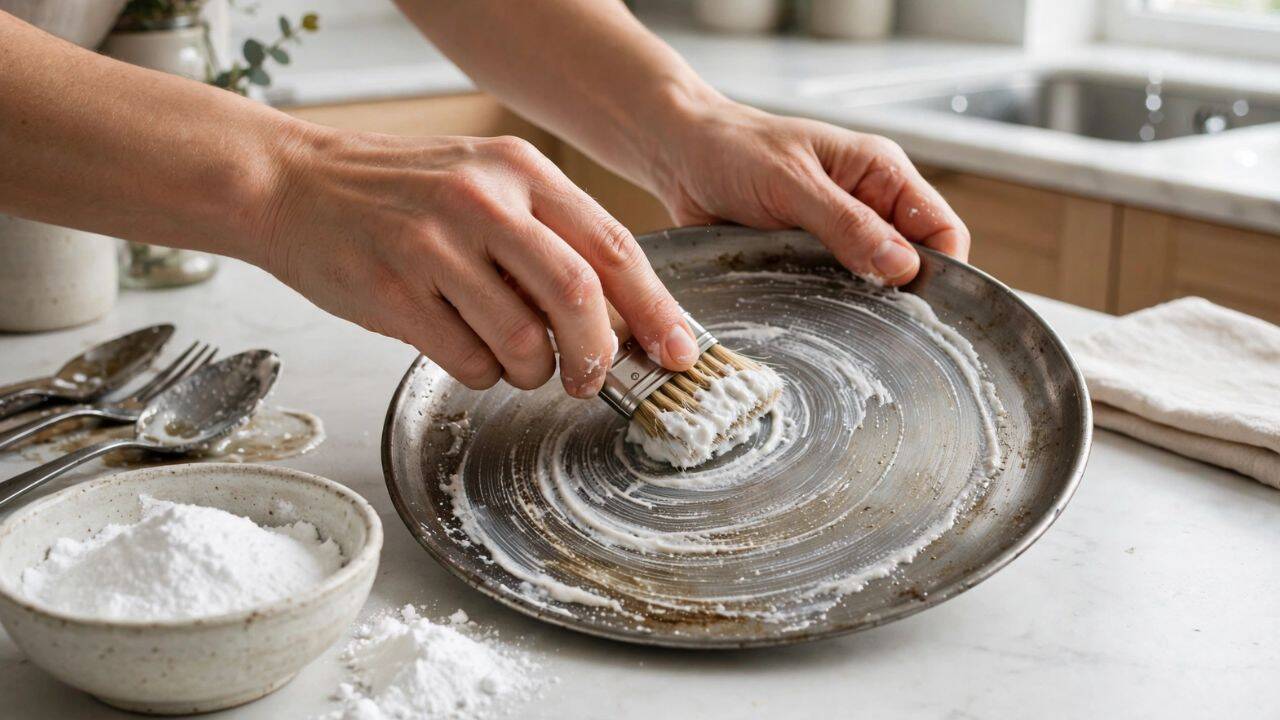
Baking soda is useful when steel utensils have lost their shine because of grease and everyday grime. Make a thin paste with baking soda and a little water. Spread it over the dull areas and leave it for a few minutes. Then wipe the surface with a soft sponge. Do not scrub aggressively. Rinse the utensil well and dry it with a clean cloth.
PC: AI Generated
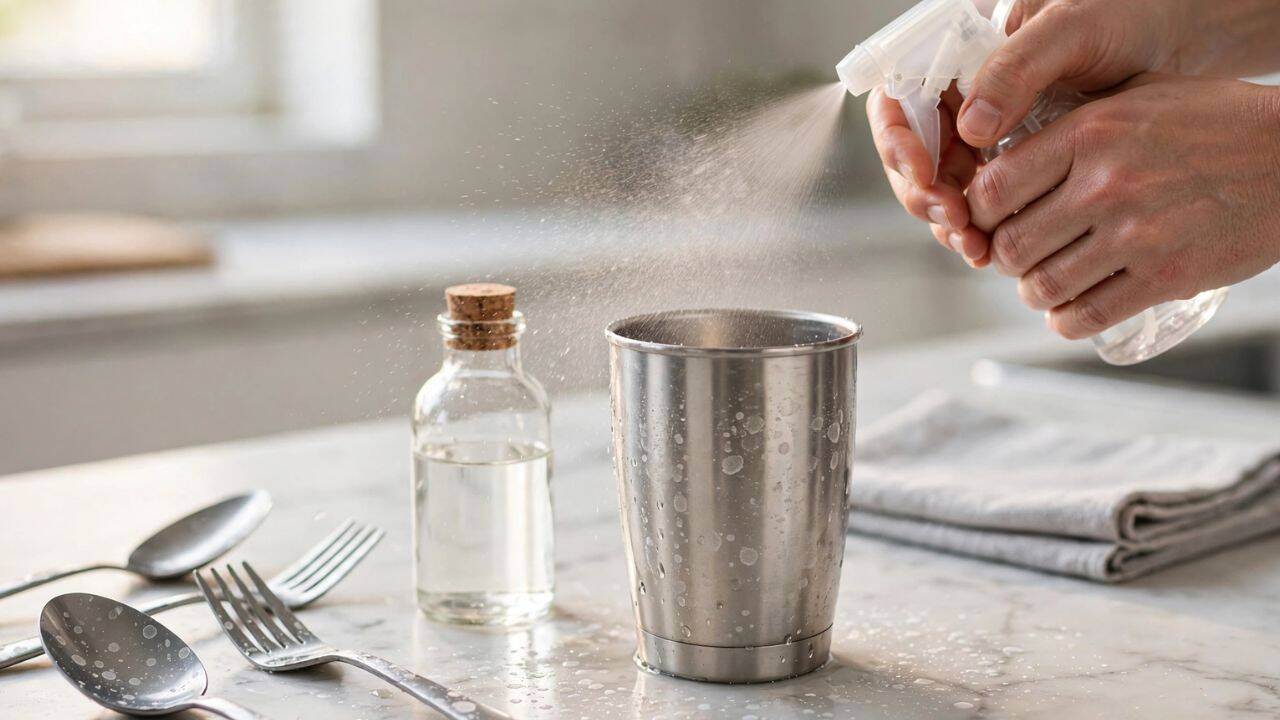
2. Use diluted vinegar for water marks
Water marks can make steel look cloudy even after it has been washed. Diluted white vinegar can help with this type of residue. Mix equal parts vinegar and water. Dip a soft cloth into the solution and wipe the affected areas. Leave it for a while before rinsing the utensil thoroughly. Dry it straight away with a clean cloth. Leaving water on the surface can create fresh marks.
PC: AI Generated
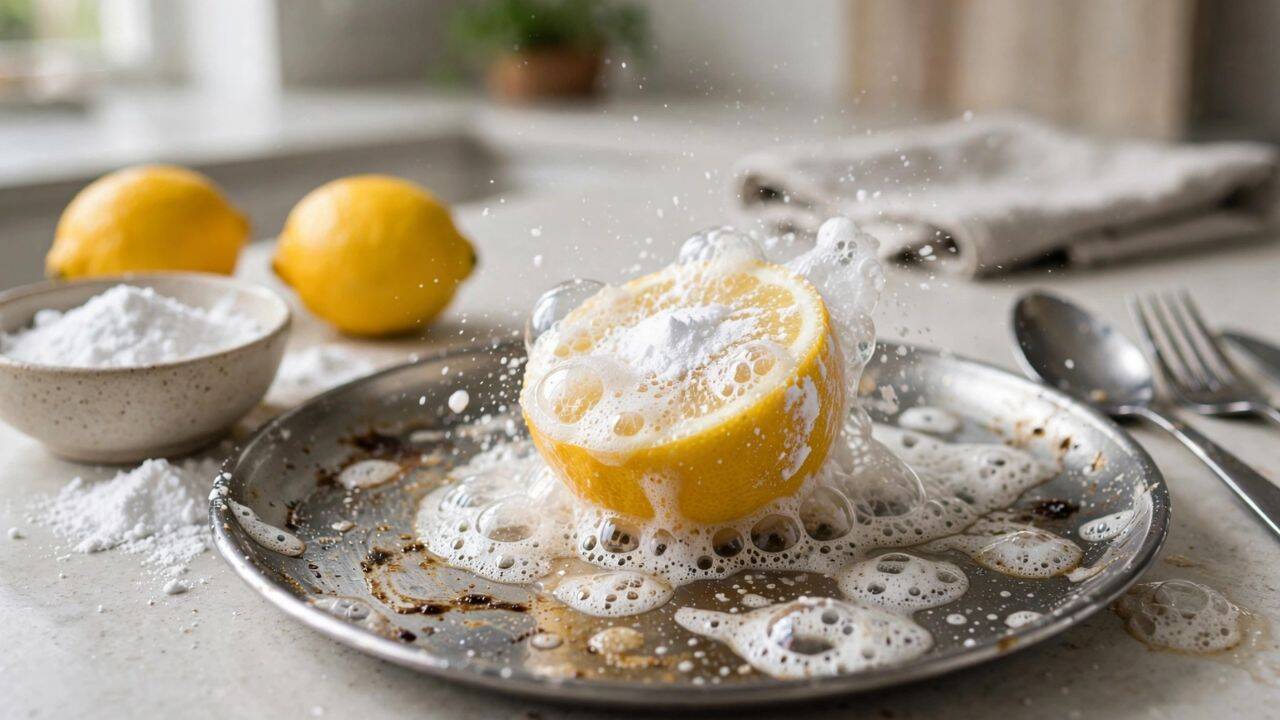
3. Combine lemon and baking soda for stubborn stains
Lemon and baking soda can be useful for stubborn surface residue. Sprinkle a small amount of baking soda over the stain. Rub the area gently with half a lemon. The lemon provides mild acidity while the baking soda helps loosen the residue. Do not press hard. Once the mark is removed, rinse the utensil thoroughly. Wipe it dry and check the surface before repeating the process.
PC: AI Generated
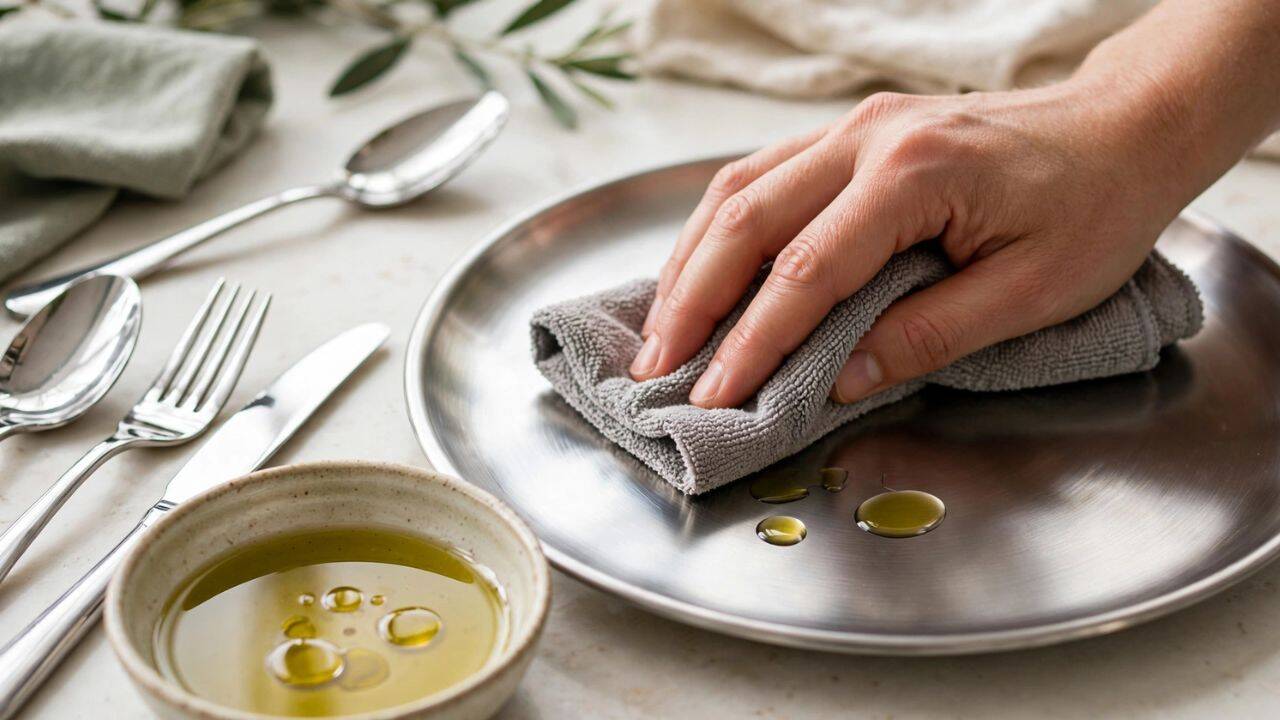
4. Use olive oil
Once the utensil has been cleaned and dried, a small amount of olive oil can help give the steel a smoother, brighter finish. Put a few drops on a soft microfibre cloth rather than pouring the oil directly onto the utensil. Wipe the surface in a thin, even layer.Leave it for a minute and then buff it with the dry side of the cloth. The aim is to use only a tiny amount. Too much oil can leave the utensil greasy and attract dust. This method works particularly well for the outer surfaces of serving bowls, plates, and other steel utensils.
PC: AI Generated
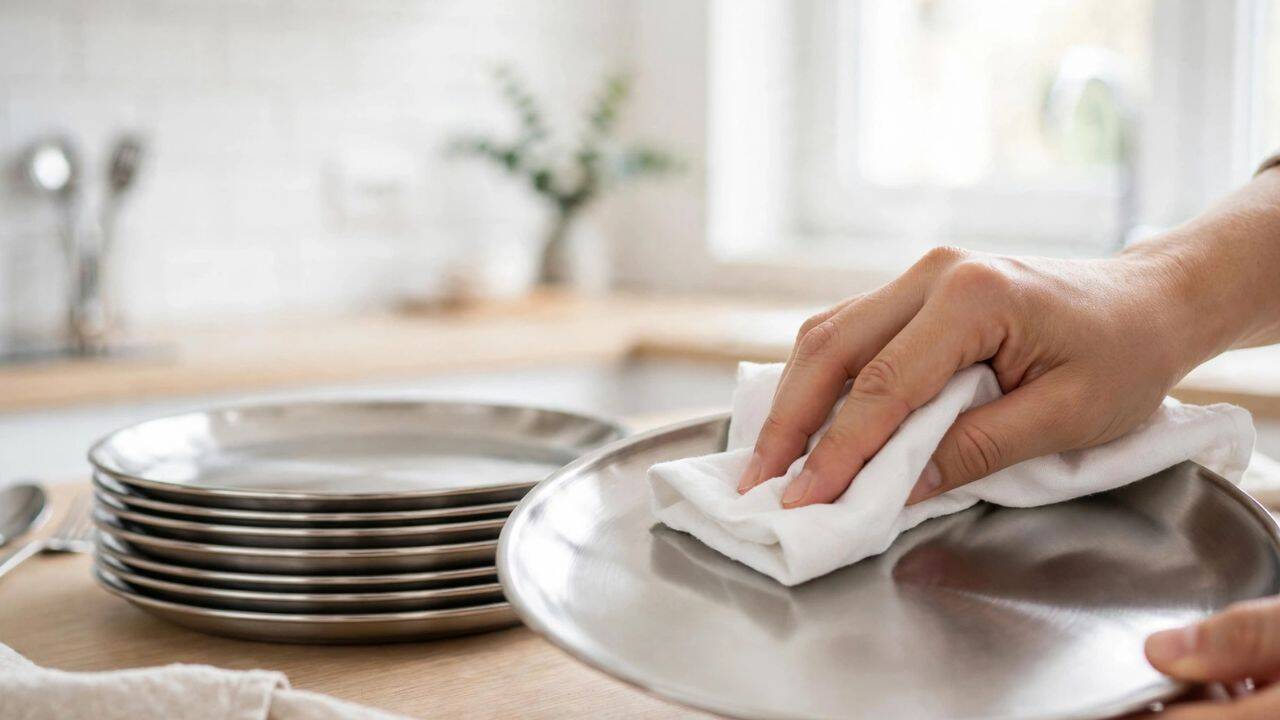
5. Final wipe with a clean, dry cloth to prevent water spots
The final wipe can make a bigger difference than it seems. Once the utensil is clean, rinse away every trace of the cleaning mixture. Use a soft microfibre cloth to remove the remaining moisture. Gently rub the surface as you dry it. This helps prevent water spots and leaves the steel looking cleaner. For serving bowls and cutlery, this small extra step can give the surface a noticeably brighter finish.
PC: AI Generated
What to avoid when cleaning old steel utensils
Avoid rough steel wool
Steel wool may seem like the quickest way to tackle a stubborn stain. It can also leave scratches behind. Those fine scratches can make a polished surface look dull. Use a soft sponge or non-abrasive cloth instead.
Do not scrub harder than necessary
A harder scrub is not always a better scrub. Excessive pressure can damage the finish without removing the stain. Apply the cleaning mixture and leave it for a few minutes, then wipe gently.
Do not leave vinegar or lemon for too long
Acidic ingredients can be useful for certain marks. But use them for a short period. Rinse the utensil well afterwards and dry it completely. This keeps the cleaning process gentle and controlled.
Avoid chlorine bleach
Chlorine bleach should not be used to clean stainless steel because it can damage the protective layer that helps the metal resist corrosion. It can be harsh on the surface and may damage the finish.Use mild cleaning methods instead. The goal is to restore the appearance of the utensil without creating another problem.