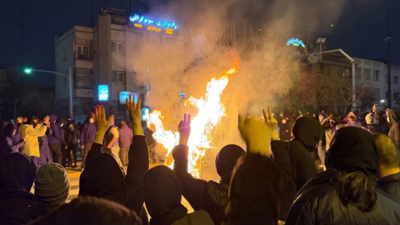
Iranian security forces used mosques across Tehran as bases to deploy personnel, monitor protesters and confront demonstrators during a deadly crackdown in January, according to evidence obtained by Iran International.Intercepted radio communications, video footage and eyewitness accounts reviewed by Iran International point to security operations being conducted from several mosques in and around the Iranian capital on January 8 and 9, when large crowds took to the streets.The report said security personnel discussed deploying forces and equipment inside Imam Hossein Mosque, which Iran International geolocated to the intersection of Sattari Highway and Mokhbari Street in western Tehran. Witnesses described security activity around the mosque after electricity was cut in the area, while surveillance drones flew overhead.According to Iran International, witnesses said security personnel positioned outside some mosques engaged protesters before forces inside emerged to beat and arrest demonstrators. The evidence, the report said, suggests that some mosques functioned not merely as places of worship or gathering, but as operational bases from which security forces monitored and confronted protesters.One witness told Iran International that several people were positioned on the roof of a mosque near Kashani Boulevard in western Tehran on January 8.The reported crackdown came amid widespread protests in Iran, as authorities faced growing public anger and unrest. The unrest has since been overshadowed by the broader conflict involving Iran, Israel and the United States, with the country now facing intense military and economic pressure.Nearly six months into the war, Washington has shifted towards economic pressure, with US Treasury Secretary Scott Bessent announcing new sanctions against nearly 60 Iran-linked entities and warning countries doing business with Tehran to cut financial ties or face retaliation.“We are level-setting with every country to tell them our expectations. We know who they are. They know who they are,” Bessent said.Iran’s rial has also fallen to a record low, while rising prices have added to pressure on ordinary people. Yet the economic strain has not so far translated into significant political pressure on Tehran.At the same time, Pakistan has sent a high-level delegation to Iran to encourage Washington and Tehran to return to negotiations, underscoring the continuing uncertainty surrounding the conflict.