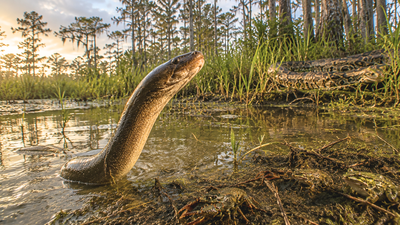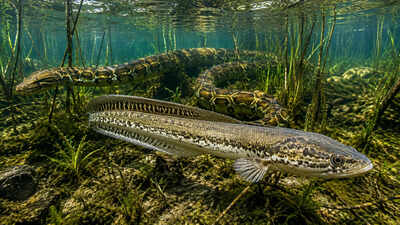
In Florida’s canals and wetlands, some of the most consequential changes are difficult to see. An Asian swamp eel can spend much of its time buried in mud or hidden beneath vegetation, emerging to feed when water returns. That makes it very different from the Burmese pythons that have become a familiar symbol of the state’s invasive-species problem. Yet biologists are increasingly concerned about what the eel is doing to the smaller animals that support much of the Everglades food web.Crayfish, tadpoles and small fish are among its prey. When those animals become scarce, the effects can reach species that never encounter an eel themselves. The concern is not simply that a new predator has arrived, but that it may be altering the way parts of the wetland function.
How Asian swamp eels quietly spread across Florida’s waterways
Asian swamp eels were first recorded in Florida in the late 1990s, with populations identified around Tampa and the Miami area. Their exact routes into the state are not always clear, although researchers have pointed to possible releases associated with the aquarium and food trades.At first, there was little indication that they would become a major ecological problem. The fish were able to survive in Florida waterways, but early assessments did not suggest that they would have a large effect on native wildlife. That judgement has changed with time.A 2024 research paper published ResearchGate, titled ‘Asian swamp eels (Synbranchidae, Monopterus) in Florida: distribution, spread, and range of hydrologic tolerance over twenty-seven years (1997–2023)’ in Aquatic Invasions described the species as a potentially serious aquatic invader in the United States after examining its distribution and spread in Florida over 27 years. The fish had moved well beyond the places where it was first noticed, turning up in canals, rivers, wetlands and other connected waterways.
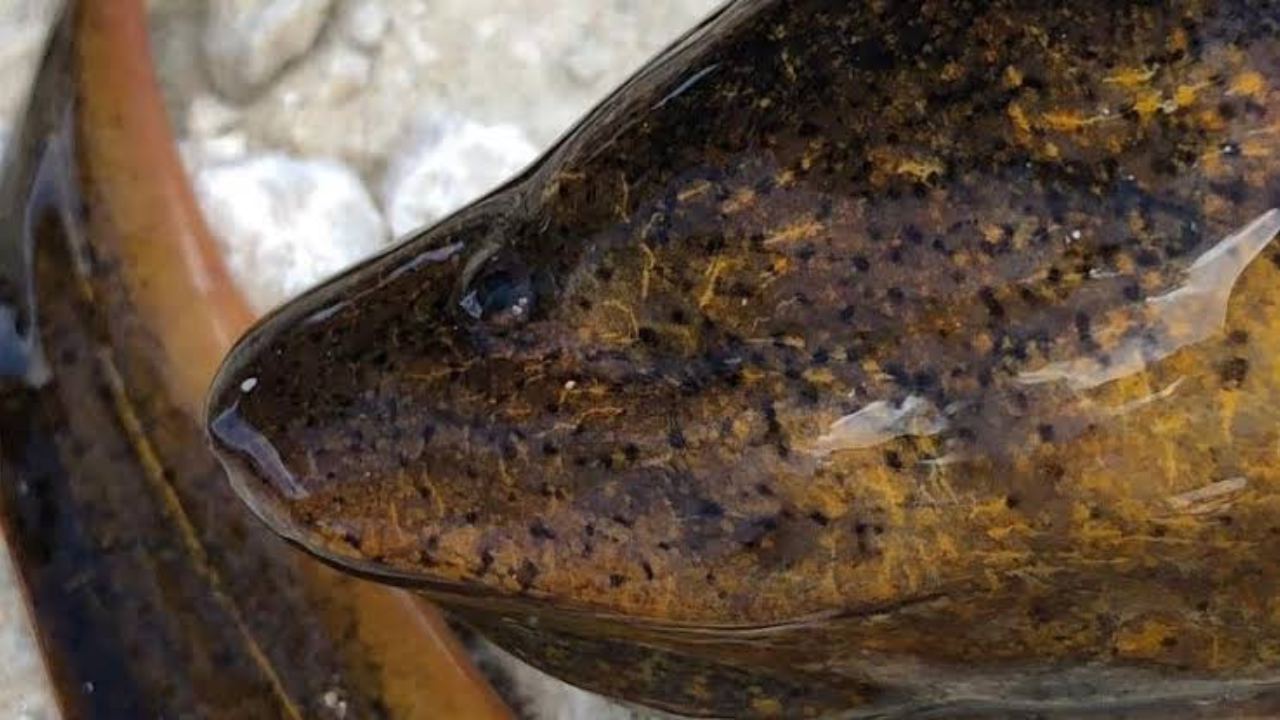
PC: USA Today
The growing concern over what swamp eels are taking from the Everglades
The Everglades depend on an enormous network of small aquatic animals. Crayfish and tiny fish feed larger fish, wading birds, reptiles and other predators. Amphibians occupy another part of that network, both as predators and prey. That makes changes at the bottom of the food chain important.As reported by the National Parks Conservation Association, in parts of Everglades National Park, crayfish numbers have fallen by about 99%. Those figures do not mean that every decline can be attributed to swamp eels alone. South Florida has experienced decades of habitat alteration, changing water patterns, drought and other pressures. But the eel has emerged as a particularly troubling factor because of what it consumes and the conditions in which it can continue feeding.
How swamp eels stay hidden while the Everglades dries out
The Everglades has always been shaped by cycles of wet and dry conditions. For many aquatic animals, those cycles create periods when predation pressure changes.During dry spells, larger fish tend to retreat into deeper pools. Smaller animals can make use of the temporary breathing space, reproducing and growing before the wet season reconnects the landscape.Swamp eels complicate that rhythm. They breathe air and can survive periods when water becomes extremely scarce. Instead of disappearing with the rest of the aquatic community, they can retreat into damp mud and remain there until conditions improve.When water spreads across the marsh again, the eels are already present. That gives young crayfish, frogs and fish less opportunity to take advantage of the seasonal gap that would once have reduced the risk of being eaten. In ecological terms, the difference is subtle but important. A predator does not necessarily need to kill everything to change an ecosystem. It can be enough to remove the refuge that prey species once relied upon.
The frog declines have added another warning sign
Amphibians were already under pressure in the Everglades long before the swamp eel appeared. Habitat loss, altered water conditions and historic harvesting all played a part in their decline.The study published in Scientific Reports, titled ‘Invasive swamp eels reduce aquatic animal diversity and disproportionately reduce prey for nesting wading birds’ reveals frogs and other amphibians across the Everglades provided a troubling picture as between 1996 and 2019, amphibian populations declined by about 80%.When researchers looked at where the remaining animals were found, the distribution of swamp eels became difficult to ignore.Areas where the eels had been established for longer periods contained very few aquatic amphibians.Florida’s wetlands are complicated systems, and several pressures operate at the same time. But the association has strengthened concern that predation from the invasive fish may be contributing to the disappearance of species that were once common.Tree frogs appear to have fared somewhat better in places where they can use vegetation and small islands that are harder for the eels to reach.
Why new swamp eel sightings are appearing across Florida
As reported by Palm Beach Post, an American daily newspaper, a significant expansion began around 2015. Swamp eels were detected near Palm Beach International Airport and soon afterwards in a constructed wetland connected to the Arthur R. Marshall Loxahatchee National Wildlife Refuge. Other populations have been recorded around Sarasota, Fort Myers and Tampa, as well as in the greater Everglades region.The Tampa population has continued moving through connected waterways. Eels were recorded at Myakka River State Park in 2021 and in the Hillsborough River the following year. In 2022, they were also detected at Mead Botanical Garden in Winter Park.A more recent sighting at Manatee Park in Fort Myers has added to the list. The pattern matters because Florida’s water network is heavily modified. Canals, drainage systems and other manmade connections can give aquatic species routes between places that would once have been separated.Some populations may therefore represent new introductions, while others could have spread from established groups.
How Florida’s swamp eel invasion could become a wider problem
Florida’s warm climate has helped many invasive species establish themselves, but swamp eels have raised a wider concern.Populations have been reported as far north as the Atlanta area, suggesting that the fish can tolerate conditions outside the subtropical environments where they first became established in Florida.That raises questions about what could happen if they continue moving north through suitable waterways. The concern is particularly relevant in parts of the Florida Panhandle, where native crayfish species occupy wetlands and seepage habitats.The eventual limits of the invasion are still uncertain. Temperature, habitat, water chemistry and the availability of connected waterways will all influence where the fish can survive. A species does not have to occupy every part of a state to cause serious ecological damage, though. Concentrated populations in vulnerable wetlands may be enough.
Why swamp eels can hide from conventional wildlife surveys
Swamp eels are not easy animals to monitor. Their habit of hiding in mud and vegetation means conventional surveys can miss them. That makes it difficult to know precisely where populations begin and end, and whether an apparently isolated sighting represents a small number of fish or an established breeding population.Scientists at the University of Florida have been working with environmental DNA as one way of detecting the species. The approach looks for traces of genetic material left behind in water, offering a means of identifying an eel population without having to catch the animal itself.Public reports are useful too. Sightings from anglers, park visitors and people living near waterways can help researchers identify places that deserve closer examination.Early detection matters because removing a few fish from a newly established site is very different from trying to reduce a large population spread through an interconnected wetland.