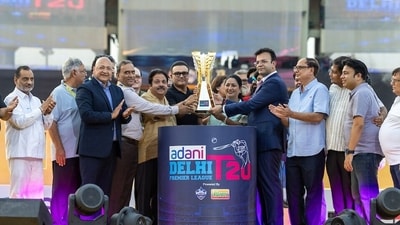
As the Delhi Premier League (DPL) enters its third season, the competition is evolving beyond its core role as a platform for emerging cricketers. In this conversation with Hindustan Times, Rohan Jaitley, President of the Delhi & District Cricket Association (DDCA) discusses DPL’s evolving identity, its connection with Delhi’s neighbourhoods and fans, the rise of women’s cricket, and his vision of building a league that becomes a sporting festival for the city.
Excerpts from the interview,
1. DPL began as a platform for Delhi’s cricketing talent. As the league has evolved, do you think it is now becoming something bigger than just a cricket tournament?
Yes, definitely. DPL began with a clear purpose – to give Delhi’s young cricketers a competitive platform and an opportunity to showcase their talent. But as the league has grown, its role has also expanded.
Today, DPL is bringing together players, fans, families and different parts of Delhi through cricket. We want it to become an important part of the city’s sporting culture – a league that people look forward to, identify with and feel proud to be associated with. The cricket will always be at its core, but the experience around it is becoming equally important.
2. The word festival is often associated with Delhi because of the city’s ability to turn sport, food, music and culture into a shared public experience. Is that the direction you see DPL moving towards? What does it take to transform a cricket league into an experience that people want to be part of, even beyond the result of a match?
Yes, that is exactly the direction we want to take DPL. Cricket will always be at the heart of the league, but we want the match day to feel like a complete experience.
Entertainment, music, fan activities and the atmosphere inside the stadium all have an important role to play. We want families, young fans and cricket lovers to come to the stadium not just for the result, but to enjoy the entire day.
That is what makes a sporting competition feel like a festival – when the experience becomes bigger than what happens on the field.
3. One of DPL’s most interesting elements is its connection with different parts of Delhi. Teams carry the identities of neighbourhoods and regions, giving fans something more personal to rally behind. How important is this local connect in building a genuine fan culture around the league?
It is extremely important. Delhi is made up of so many different communities and neighbourhoods, each with its own identity and character. When a team represents a particular part of the city, that connection becomes very personal.
People are not simply supporting a team; they are supporting their area, their players and their community. That sense of belonging is what creates genuine rivalries and passionate supporters. Over time, those local identities can become an important part of DPL’s culture.
4. The atmosphere around cricket has changed significantly over the years. Today’s fans are not simply coming to watch 40 overs — they are looking for an experience. How is DPL responding to this shift? What role do entertainment, fan engagement and the overall match-day atmosphere play in the league’s growth?
Fans today want to feel involved. They don’t just want to watch the game; they want to be part of the occasion.
We understand that, which is why we are working to make the match-day experience more engaging through entertainment, fan activities and the overall stadium atmosphere. At the same time, the cricket will always remain the most important part of DPL.
Our aim is simple – from the moment a fan enters the stadium until the time they leave, they should feel that they have been part of something special.
5. At the heart of DPL remains its role in discovering and developing young cricketing talent. How is the league helping bridge the gap between grassroots cricket and opportunities at the domestic and national level?
This is one of the most important responsibilities of DPL.
A lot of young players come through local and grassroots cricket, but making the transition to the professional level requires the right opportunities and exposure. DPL gives these players the chance to compete at a higher level, perform in front of coaches and selectors, and experience the demands of professional cricket.
It creates an important bridge between where a player starts and where they aspire to go – towards domestic cricket and, eventually, the national level.
6. What has the response from young cricketers told you about the importance of a platform like DPL? Do you see the league as a significant bridge between local cricket, professional opportunities and the larger domestic and national ecosystem?
The response has been extremely encouraging. Young cricketers are hungry for opportunities, and more importantly, they want a stage where they can prove themselves.
DPL can play an important role in connecting local cricket with the larger professional ecosystem. When a young player gets an opportunity, performs and starts attracting attention, it can change the trajectory of their career.
That is ultimately what we want DPL to achieve – not just to provide matches, but to create possibilities.
7. DPL has also brought established names and emerging players onto the same platform. How valuable is that ecosystem for a young cricketer who is trying to make the transition from being a promising local player to competing at a higher level?
It is invaluable. For a young cricketer, sharing a dressing room with experienced players can be as important as the match itself.
They get to learn about preparation, fitness, discipline, handling pressure and the mindset required to compete at a higher level. At the same time, playing alongside established cricketers gives young players confidence and helps them understand what it takes to succeed professionally.
That exchange between experience and youth is one of DPL’s biggest strengths.
8. Women’s cricket has also been an important part of the DPL ecosystem. How do you see the women’s league contributing to the larger ambition of making cricket more accessible and aspirational for young girls across Delhi?
The women’s league is a very important part of DPL’s vision.
We want more girls across Delhi to see cricket not just as a sport, but as a genuine career opportunity. When young girls see players from their own city competing on a major platform, it gives them confidence that they too can aspire to reach that level.
The women’s DPL can help create those opportunities, provide role models and inspire the next generation of women cricketers from Delhi.
9. Every successful sporting league eventually develops its own rituals, rivalries and memories — moments that fans associate with the competition long after a season is over. What are some of the moments or fan responses from the previous seasons that made you feel DPL was beginning to build that emotional connection with Delhi?
For us, one of the biggest signs has been the energy inside the stadium – seeing fans come out, support their teams and develop an emotional connection with the players.
The local rivalries, close matches and performances by young cricketers have all contributed to that. But perhaps the most satisfying moments are when a player who was relatively unknown gets an opportunity, performs well and suddenly starts getting recognition.
Those are the stories that give a league its identity. They are the moments that fans remember and that ultimately make a competition special.
10. Looking ahead, what is the ambition for DPL? If you look five years ahead, what would the ideal DPL look and feel like — for the players, the fans and the city of Delhi?
Five years from now, we want DPL to be recognised as one of India’s leading domestic cricket leagues – known for producing talented players, building strong teams and creating an exceptional experience for fans.
Ideally, we want packed stadiums, passionate supporters, strong local rivalries and players getting the opportunities they deserve. We want Delhi to feel proud of its league and for DPL to become a major sporting event on the city’s calendar.
But even as the league grows, its core purpose should remain the same: to provide a pathway for young cricketers while creating a sporting experience that brings the city together.
That, for us, is what will make DPL more than a cricket league — a cricket festival that belongs to Delhi.
Note to Readers: Hindustan Times is a media partner for Delhi Premier League 2026.