On a humid summer morning in Virginia’s Shenandoah Valley, the work of protecting nature looks surprisingly ordinary. There are fields to tend, invasive plants to control and young trees to check. But across these farms, two longtime neighbors are quietly working toward something much bigger: keeping wildlife habitats connected in a landscape increasingly divided by development. According to a report by the Smithsonian Magazine, farmers John Rice and John Sessler have spent decades managing their properties not only for agriculture, but also for biodiversity. Their efforts, supported by science and conservation programs, have helped transform privately owned farmland into an important link between larger protected landscapes. The report clearly states that Rice’s conservation journey began about 25 years ago when he recognized the importance of his property’s location. His land sits along a potential connection between Massanutten Mountain and other protected areas, offering wildlife a route through an otherwise fragmented landscape. After purchasing the property, Rice placed it under a conservation easement, an agreement designed to limit future development. It became the first such easement in Page County. He then began approaching neighboring landowners and encouraging them to consider similar protections. Building trust took years, but the effort gradually expanded beyond a single property. Today, nearly 2,500 acres of privately owned land are protected in the area, creating a larger corridor where wildlife can move between habitats. Scroll down to read the details about it.
Two approaches, one conservation goal
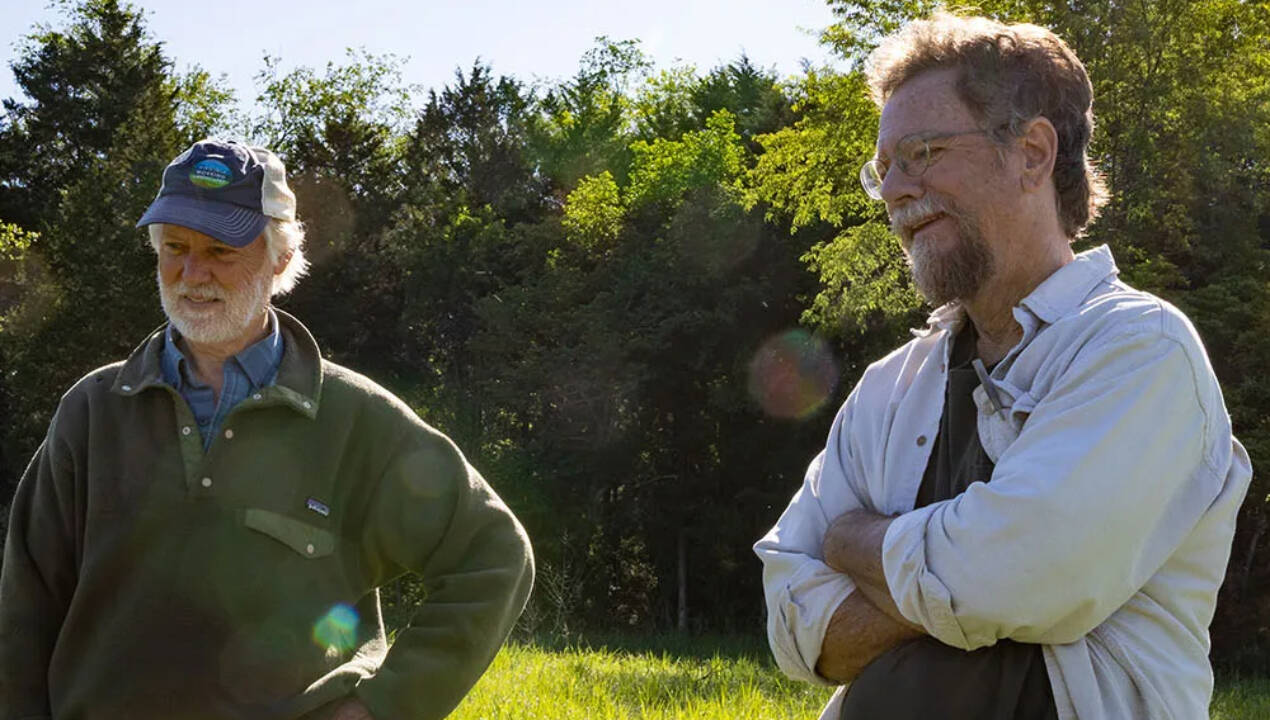
Farmers John Rice and John Sessler have spent decades managing their properties not only for agriculture, but also for biodiversity.
Rice and the Sesslers manage their farms differently, but their objectives are similar. Rice spends considerable time controlling invasive plants such as wavyleaf basketgrass and Japanese stiltgrass. These aggressive species can form dense ground cover, pushing out native plants and reducing habitat diversity. He also takes advantage of native seeds already present in his soil. By carefully managing the land, he has encouraged dormant native plant communities to return naturally.The Sesslers took a different route. When they began managing their property, they planted native seed mixes that produced fields filled with wildflowers and plants capable of supporting birds, butterflies and other pollinators. Their contrasting approaches demonstrate that there is no single formula for restoring biodiversity. Existing native vegetation can be encouraged, or new habitat can be established through intentional planting.
Fighting habitat fragmentation
The need for such work is growing as development, roads, invasive species, pollution and climate change alter Virginia’s landscapes. Habitat fragmentation breaks continuous natural areas into smaller, isolated patches. For wildlife, these separated areas can function like islands, making it harder for animals to find food, reproduce and move between populations. Connected corridors can help address the problem by allowing species to travel between larger protected areas. For farms located between forests, mountains and other natural habitats, conservation agreements can therefore have an impact far beyond individual property boundaries.
Using fire to restore native habitat
According to the report, conservation work on the farms also includes prescribed burning, and controlled burns can help remove accumulated vegetation, stimulate native plant growth and maintain habitats that depend on periodic fire. Rice helped establish the Shenandoah Valley Prescribed Burn Association, giving landowners another tool for managing their properties. Used under carefully controlled conditions, prescribed fire can benefit both naturally occurring seed banks and fields planted with native species.
Science helps measure the difference
The Smithsonian’s Virginia Working Landscapes program provides another important piece of the effort, states the report. Scientists, volunteers and interns conduct biodiversity surveys on participating farms, documenting plants, birds and other species. Their findings help researchers understand how different land-management practices influence biodiversity. For landowners, the surveys also provide tangible evidence of how their work is changing the landscape. Discovering native plants and wildlife species can indicate that conservation practices are creating healthier ecosystems. The program collects information across multiple properties, allowing scientists to examine broader patterns and identify management approaches that could benefit farms throughout Virginia.
A model built across property lines
Virginia’s Wildlife Corridor Action Plan, introduced in 2023, recognizes the importance of reconnecting fragmented habitats and reducing threats such as wildlife-vehicle collisions. But with roughly 90% of Virginia’s land privately owned, conservation cannot depend entirely on public parks and protected areas. That makes efforts by private landowners especially significant. In the Shenandoah Valley, Rice and Sessler show how conservation can begin with individual decisions and grow through neighbors working together. Their farms remain productive, but they also provide space for native plants, pollinators, birds and other wildlife.After 25 years, what began with one farmer protecting his property has developed into a nearly 2,500-acre network of privately conserved land. It is a reminder that wildlife corridors are not always created by governments or large conservation organizations. Sometimes, they begin with a farmer looking at a map, recognizing an opportunity and convincing the people next door to join him.Images Courtesy: Smithsonian Magazine