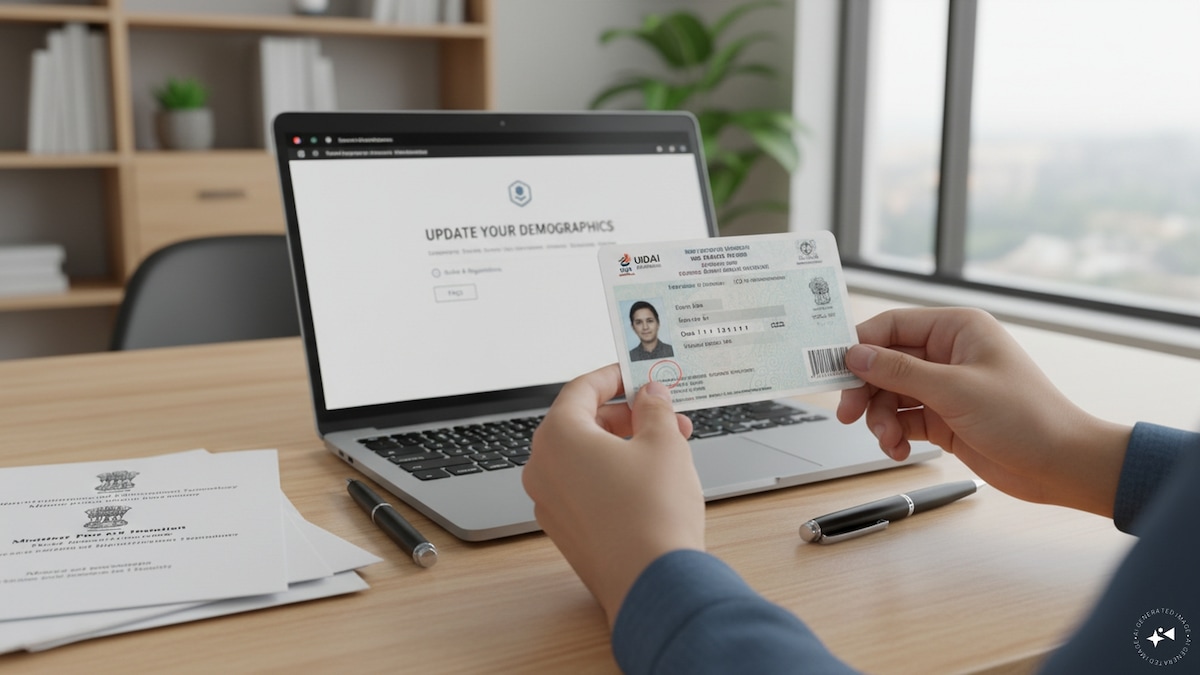
In its latest FAQ, UIDAI said there is no fixed limit on the number of DoB update requests. However, a second or subsequent correction is treated as an exceptional case and is subject to a stricter verification process.
The clarification is important for Aadhaar holders who may have an incorrect or approximate date of birth recorded in their Aadhaar and need to get it corrected.
Can you change your date of birth in Aadhaar more than once?
Yes, but a subsequent update is not treated like a routine correction.
Under UIDAI’s Standard Operating Procedure (SOP) issued on December 24, 2025, an Aadhaar holder can request another DoB update in exceptional circumstances. The process depends on the document that was submitted during the earlier enrolment or DoB update.
For example, if the earlier DoB was established using a document other than a birth certificate, a subsequent correction generally requires a birth certificate. If a birth certificate was submitted earlier, the applicant has to provide a corrected birth certificate with the same Birth Registration Number (BRN) and issued by the same registrar, along with an affidavit.
This means that simply submitting another identity document with a different date of birth may not be enough.
Birth certificate is the key document
UIDAI’s SOP states that a birth certificate is the legal proof of date of birth. Once a birth certificate has been submitted as the proof of DoB, another update should generally not be required under normal circumstances.
If the birth certificate itself needs correction, UIDAI requires the corrected certificate with the same BRN and from the same registrar.
If the earlier DoB was verified using another accepted document, such as a marksheet or passport, the applicant may need to submit the corrected version of the same document or a birth certificate, depending on the circumstances.
What if the mistake was made by the Aadhaar operator?
UIDAI has also made a distinction between a genuine operator error and a request to change the date of birth.
Suppose the Aadhaar contains a different DoB from the document originally submitted, and the applicant wants Aadhaar corrected to match that original document. This can be treated as an operator error.
In such cases, the previously submitted proof of date of birth can be checked. If the document is no longer valid under the current list or is no longer available with the Aadhaar holder, UIDAI may permit a self-declaration stating that the date was incorrectly entered by the operator.
What if the wrong date was deliberately submitted earlier?
UIDAI has specifically addressed cases where a person had previously submitted a false or fraudulently obtained document to record an incorrect date of birth.
The authority says such an individual can get one final opportunity to correct the DoB, but the Aadhaar may be deactivated when the case comes to light.
For reactivation, the person has to submit a genuine, online-verifiable proof of date of birth along with the required affidavit. Depending on the circumstances, legal action, including an FIR, may also be initiated.
UIDAI’s SOP says the objective is to allow genuine correction while protecting the integrity of the Aadhaar database.
What happens if Aadhaar was enroled with the wrong age?
UIDAI has separate safeguards for cases involving enrolment in incorrect age categories.
For instance, if a person enroled in Aadhaar in the 0-5 years age category and later seeks a DoB change that shows the person was actually above five when enroled, UIDAI treats this as a potential case of fraudulent enrolment.
Similarly, cases involving enrolment in the 5-18 years category can face scrutiny if a subsequent DoB change indicates that the person was actually above 18 at the time of enrolment.
Such requests can be rejected and Aadhaar may be deactivated, with legal action possible depending on the findings.