High in the mountains of Gilgit-Baltistan, communities are reviving an age-old practice to answer a modern water crisis: they are ‘marrying’ glaciers. As natural glaciers shrink and meltwater becomes less reliable, local people are carrying pieces of ice from existing glaciers to carefully chosen sites, where male and female ice are brought together and buried to grow into a new source of water. Known as glacier grafting, or Gang Khswa, the practice draws on centuries of local knowledge and is now being revived alongside newer approaches to storing water in the mountains.For the communities involved, however, the work is about more than adapting to climate change. It is also about giving something back to the natural systems that sustain them. As per Dr Zakir Hussain, “We have to contribute to nature, to the climate, to the environment. Because we are consuming snowmelt water for our entire life, and if we don’t contribute something, it would be unjust”. As per ISA Germany, glacier grafting as a meeting point between “ancient knowledge and modern innovation”, showing how the practice is being carried forward as communities search for ways to protect their water supply.
How does glacier marriage create artificial glaciers
Glacier grafting, known locally as Gang Khswa, involves creating an artificial glacier in a high-altitude location selected by the community. Dozens of porters collect pieces of ice from both male and female glaciers and carry them in wooden baskets, travelling as far as possible by car before continuing on foot. The chosen site must meet strict natural conditions: it should be at least 4,000 metres above sea level, have high permafrost, maximum wind exposure, little sunlight and ideally face north. At the destination, the ice is placed inside a well or cave, with clay pots containing water from the Indus separating the two types of ice.The ice is then covered with layers of sawdust, charcoal and apricot kernels, which help protect and insulate it. The journey itself is a race against melting. “It is a marathon activity,” Dr Zakir explained, noting that the process can take up to 48 hours from collecting the ice to planting it. “From the collection of the ice pieces from the source to the destination, the ice has to be kept continuously moving,” he added, explaining that the ice is not allowed to touch the ground during the journey. Grafting takes place in October, when temperatures at high altitude have fallen below freezing but before snowfall begins.
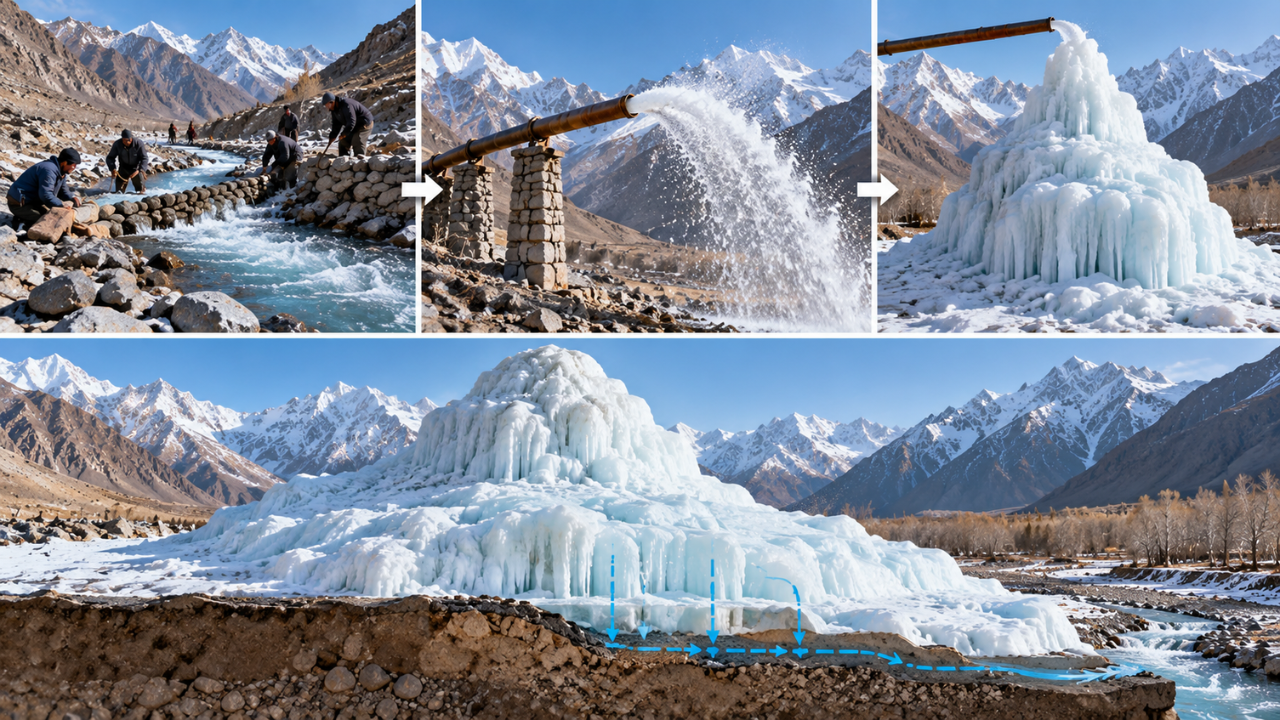
Image AI generated
When did glacier grafting begin in Gilgit-Baltistan
Although glacier grafting was revived in the 1990s, its roots are believed to stretch back centuries. The history is largely passed down orally, according to Nazir Ahmed, CEO of the Baltistan Culture & Development Foundation. As reported by Euronews, he told: “The history of glacier grafting is largely oral, not written, although some books contain references [to the craft],”. Historical accounts are said to trace the practice to the 14th century, when the Persian Sufi saint Mir Syed Ali Hamadani is believed to have grafted a glacier as a defence tactic against invaders.The practice is also surrounded by ritual and folklore. Communities may recite verses from the Quran, sing a folk lullaby to the ‘baby’ glacier and follow spiritual customs while transporting and burying the ice. Ahmed described three traditional beliefs: the ice should be carried at night, the porters should not speak while carrying it, and the buried glacier should not be looked at for at least two years. These customs also have practical consequences: travelling at night reduces melting, silence helps porters maintain a steady pace, and leaving the glacier undisturbed gives it time to develop.
Why do communities protect their ‘baby’ glaciers
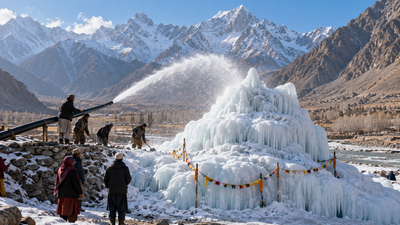
For the people maintaining these artificial glaciers, the work is about more than securing water. A new glacier cannot simply be created and forgotten. The community must first agree to the project, and once the grafting is completed, residents take responsibility for the ‘baby’ glacier. They monitor its development, report changes and add snow when necessary. This relationship reflects a belief that water is something to be cared for rather than simply consumed. In the words of Dr Zakir: “In Bonism, we consider that all forms of water are sentient beings. Water is a life giver, so how can the life giver itself be lifeless?”That responsibility is becoming increasingly important as climate change places pressure on the region’s water systems. Gilgit-Baltistan’s communities are facing shrinking glaciers, changing meltwater patterns and increasing risks from glacial lakes and floods. The Baltistan Culture & Development Foundation has expanded its work, grafting ten glaciers and building six ice towers in different villages in 2025, while other projects are exploring ice towers and avalanche harvesting as related ways of storing frozen water. The challenge now is to ensure that the knowledge survives. As youth leader Zeeshan Abbas put it: “Young people should not be treated as only victims of climate change; they should be allowed to become researchers, innovators, field practitioners and decision-makers.”