Management said it has an aggressive revenue target, with insulin alone expected to hit $1 billion in revenue. This, it says, is more a matter of when, rather than if. THis will be driven by an expansion of its portfolio across markets.
The company also expects the evolving US regulatory framework for biosimilars to support the business. Management pointed to the US Food and Drug Administration’s approach of potentially reducing the need for Phase 3 trials, alongside efforts to lower healthcare costs, as factors that could support biosimilar adoption.
However, Biocon does not expect a significant change in the competitive landscape in the near term.
Malaysia plant positioned for insulin, peptides and GLP-1s
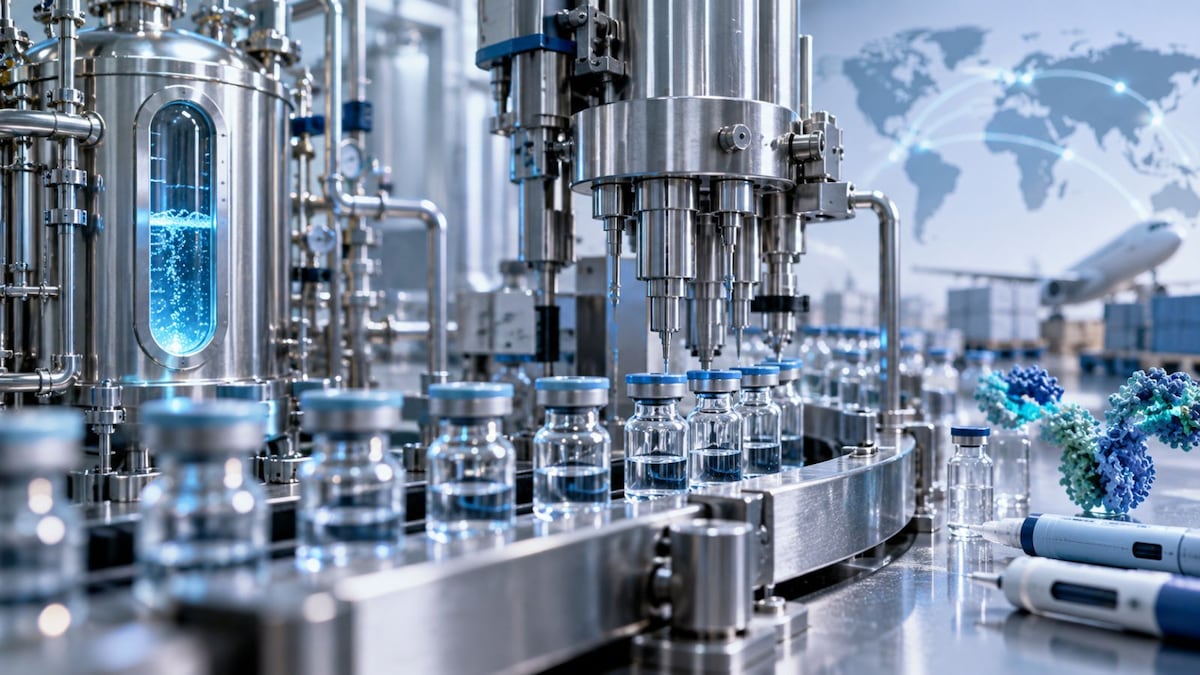
Biocon has invested more than $600 million in its manufacturing facility in Malaysia, which currently produces insulin and supplies more than 80 countries. The company said the facility provides capacity for future growth and could potentially be repurposed to manufacture other peptides and glucagon-like peptide-1 (GLP-1, commonly referred to as weightloss drugs) products.
The company said its GLP-1 strategy is not dependent on a single drug, but instead involves building a portfolio of products targeting diabetes and weight loss. Biocon also highlighted its fermentation and peptide manufacturing capabilities as part of its plans in the segment.
Biocon also said equipment at the Malaysian facility could potentially be used for GLP-1 manufacturing, giving the company flexibility to use existing capacity as that portfolio develops.
Also read: Biocon CEO says biosimilars can reach $1 billion revenue soon, insulin demand strong
Biocon seeks to cut leverage below 2x
Reducing debt remains a key focus area for Biocon as it continues to strengthen its balance sheet. Net debt currently stands at around $1.2 billion. The company’s net debt-to-earnings before interest, tax, depreciation and amortisation (EBITDA) ratio had fallen to 2.3x from 4.3x at the time of its acquisition of Viatris’ biosimilars business.
It added that it wants to bring this ratio below 2x and remains conscious of not carrying high levels of debt over an extended period.
Biosimilars accounted for much of Biocon’s growth in the June quarter. The company reported a more than four-fold increase in consolidated net profit to ₹141 crore for the quarter ended June 30, from ₹31.4 crore a year earlier. Revenue from operations rose 10% year-on-year to ₹4,336 crore.
Earnings before interest, tax, depreciation and amortisation rose 10.6% to ₹847.2 crore, while the EBITDA margin was 19.54%, compared with 19.43% a year earlier. Gross EBITDA stood at ₹902 crore, with a margin of 21%, supported by higher profitability in the Biopharma business.
Biopharma revenue increased 17% year-on-year to ₹3,615 crore. Within the segment, biosimilars revenue rose 16% to ₹2,855 crore, while generics revenue increased 21% to ₹760 crore, helped by recent product launches across key markets.
The services business remained under pressure, with revenue falling 16% year-on-year to ₹736 crore.
Biocon’s interest costs declined 23% to ₹213 crore during the quarter following measures to strengthen its balance sheet. Net research and development expenses increased 17% to ₹240 crore.
Shares of Biocon were trading at ₹394.20 on Tuesday, up 0.72% from the previous close.