
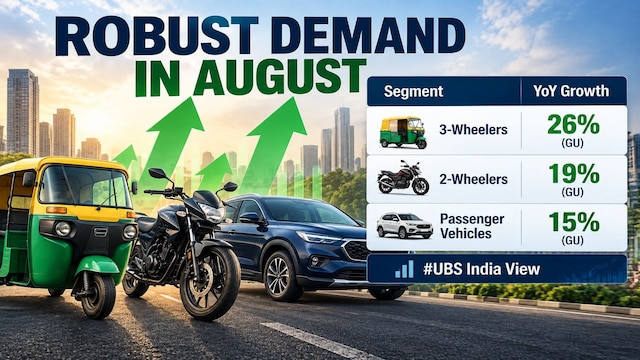
Kumar said the industry now expects high single-digit growth cumulatively through the festive months, measured against a base that already includes last year’s Goods and Services Tax (GST) cuts — a stronger outcome than most had pencilled in.
“The demand momentum has surprised everyone in the industry ever since the GST cut kicked in in September last year,” Kumar said. He added that forecasts for demand to cool off by the festive season, and later by March, had repeatedly proven wrong. Two-wheelers and passenger cars are tracking 22% year-to-date growth between April and September, while medium and heavy commercial vehicles (CVs) are up close to 25%.
Even so, Kumar flagged one risk that could offset strong sales: rising input costs. A pickup in crude oil prices is pushing up the broader commodity basket used in vehicle manufacturing, which could squeeze profit margins even if sales numbers stay healthy. He said the ideal outcome for the sector would be demand beating expectations while commodity costs ease off at the same time.
Within the sector, Kumar pointed to distinct trends driving performance. In two-wheelers, electric vehicles, scooters and premium motorcycles have led gains, a shift he described using the shorthand electrification, premiumisation, scooterisation. In passenger vehicles, a similar pattern is playing out through rising electrification, premiumisation and demand for sport utility vehicles (SUVs).
On which segment offers the best opportunity, Kumar was direct about UBS India’s preference. “Commercial vehicle as amongst the OEMs is the preferred space,” he said, describing it as a segment global markets typically value closer to capital goods stocks but that trades at a discount in India despite a duopoly structure, strong cash flow and limited disruption risk from new technology or regulation.
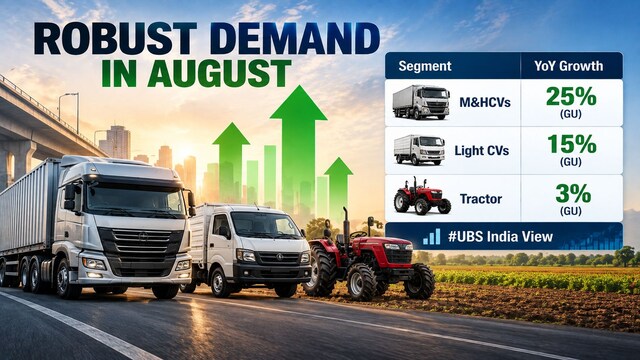
Two-wheelers rank second in UBS India’s preference order. Passenger cars rank last, weighed down by intensifying competition, technological disruption and the prospect of new entrants, including Chinese original equipment manufacturers (OEMs), entering the Indian market.
Kumar said UBS India favours a bottom-up approach in auto ancillary companies, preferring firms with deep research and development (R&D) focus and precision engineering capabilities. He noted ancillary stocks currently rate higher than OEM stocks because they tend to hold up better during downturns, with growth rates that can outpace the underlying original equipment manufacturers.
Asked about the electric two-wheeler market, where new-age players have seen diverging fortunes, Kumar declined to comment on individual companies but pointed to a broader shift in market share. Three years ago, startups controlled more than 60% of the electric two-wheeler market; that combined share has since fallen to around 20%. “The legacy OEMs have doubled their market share,” he said, noting they now hold roughly 60% of the market, up from about 30% three years ago.
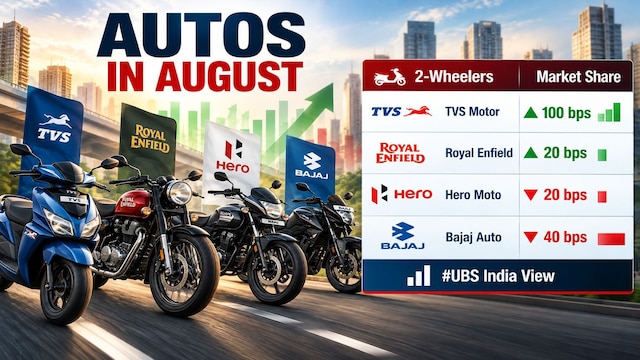
Kumar said the shift reflects the fact that electric two-wheeler technology is not difficult for established manufacturers to replicate, and that legacy players are actively gaining ground rather than ceding the category. He added that market share rankings in the space are likely to keep shifting, and that opportunities exist across both incumbent and startup names for companies well positioned on electrification.
For the full interview, watch the accompanying video

Catch all the latest updates from the stock market here