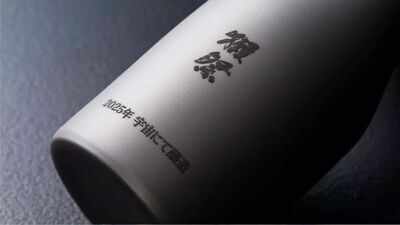
Japan sent rice and koji to the International Space Station in 2025 to test whether sake could be brewed beyond Earth. As part of the DASSAI MOON Project, the ingredients were placed inside Japan’s Kibo module under conditions designed to reproduce the Moon’s gravity. After fermentation, the material was frozen and returned to Earth for analysis. Mitsubishi Heavy Industries later reported that alcohol had formed during the experiment, showing that sake fermentation was possible under lunar-like conditions. The test marked an early step towards exploring whether sake could eventually be brewed on the Moon.
What is the story behind Japan’s space-brewed sake project
The project was designed to explore whether a traditional Japanese brewing process could work where gravity is much weaker than on Earth. DASSAI, the sake maker behind the project, began developing the idea in 2021, while the DASSAI MOON Project formally started in 2024, according to Mitsubishi Heavy Industries.As reported by JapanForward, the experiment involved fermenting 520 grams of sake mash inside the Kibo module. The equipment was designed to create conditions equivalent to about one-sixth of Earth’s gravity, matching the Moon’s gravitational pull.The planned experiment had a clear future purpose. If people eventually establish long-term settlements on the Moon, producing familiar food and drink locally could become part of life away from Earth.
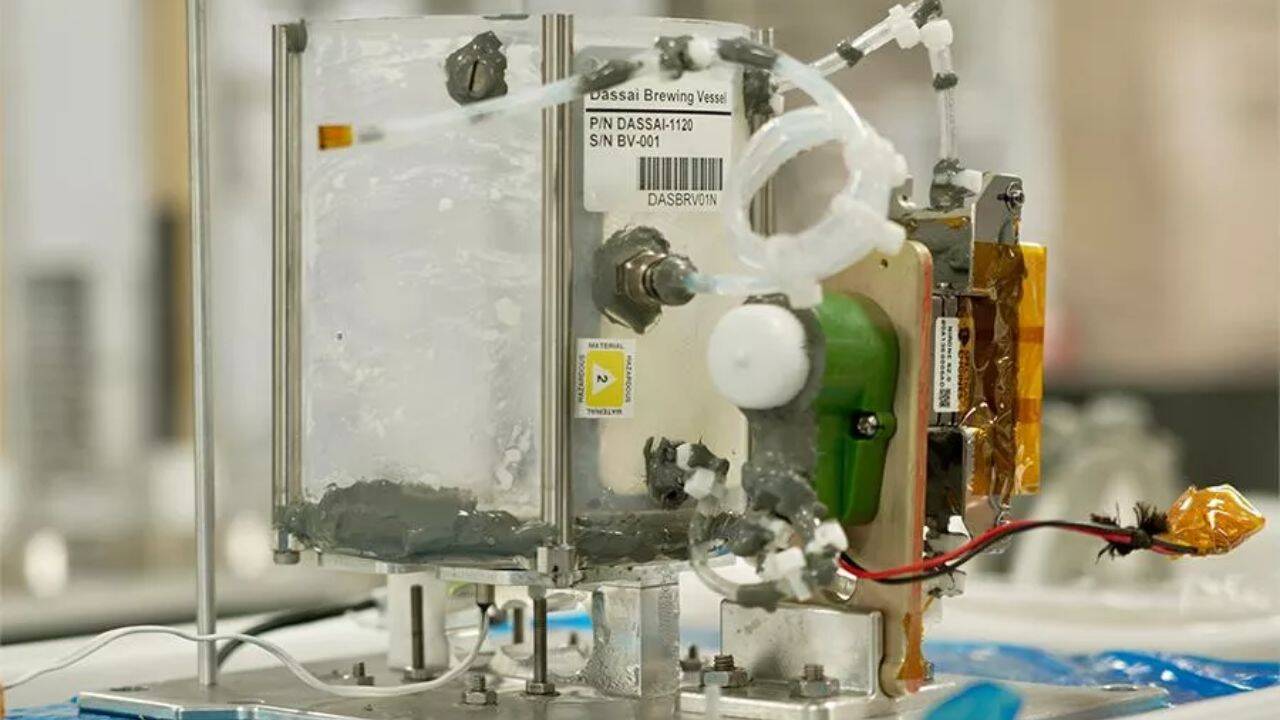
Brewing equipment returned from the ISS. Image Credit: Mitsubishi Heavy Industries
How did fermentation behave in an orbit over the ISS
The brewing experiment began on 25 November 2025 after the equipment and ingredients travelled to the ISS aboard Japan’s H3 rocket and HTV-X1 supply vehicle. Japanese astronaut Kimiya Yui carried out the brewing operation inside Kibo, according to Mitsubishi Heavy Industries.The material was kept in the experimental system for around 2 weeks. During this period, the equipment monitored the fermentation process, including temperature and alcohol concentration, while a stirring mechanism kept the mixture moving.According to Rural Intelligence, fermentation initially started under microgravity instead of in the intended simulated lunar gravity. It was slow at first but became much more active after the conditions were changed to simulate lunar gravity. This gave researchers an opportunity to observe how different gravity levels affected the brewing process.
Formation of alcohol in the space-fermented mash of sake
The experiment showed that fermentation could produce alcohol under the tested conditions. After the brewing period, the sample was frozen aboard the ISS before returning to Earth on 27 February 2026.It reached DASSAI’s brewery in March, where the returned material was processed. Mitsubishi Heavy Industries reported an alcohol concentration of 12% in the fermented mash. The finding confirmed that alcoholic fermentation had taken place during the experiment under lunar-gravity conditions.The result was significant because fermentation in space cannot simply be assumed to behave in the same way as it does on Earth. The scientists found that the process was slower than normal terrestrial fermentation, creating another area for investigation.
Moon is the next target for space-brewed sake project
The ISS experiment was intended as an early test for a long-term goal. According to Rural Intelligence, the DASSAI MOON Project aims to achieve sake brewing on the Moon by 2050.The choice of sake also has a practical side. Rice contains relatively little moisture compared with some other crops used to make alcoholic drinks. Transporting dry ingredients could be more suitable for future space missions, where payload weight is an important consideration.For the project team, however, the lunar ambition is not limited to the drink itself. Producing something associated with everyday life could become meaningful if humans eventually spend extended periods living away from Earth.
What happened to the small amount of sake brought home
Only a small quantity of the experimental material made it back. Mitsubishi Heavy Industries said about 260 grams of fermented mash was returned to Earth. DASSAI processed it at its brewery and produced 116ml of sake.The finished drink was placed into 100ml titanium bottles, making it an exceptionally limited product. Before the experiment, Japan Forward reported that the planned 100ml bottle would carry a price of ¥110 million, with the proceeds intended to support future space development.The price reflected the experiment’s rarity. The finished drink represented the outcome of a brewing test carried out aboard the ISS.
What is the next step for researchers
The returned material can provide information beyond whether alcohol was produced. Mitsubishi reported that the sake lees left from the experiment would be analysed with researchers from Tohoku University.One focus will be whether the yeast experienced genetic changes during the space experiment. Researchers will also compare the space-fermented material with sake produced under normal conditions on Earth.These studies could help explain the slower fermentation and the changes observed when the gravitational conditions were altered. The 2025 experiment provided an important first result for the DASSAI MOON Project. The next challenge is determining whether the lessons from the result can eventually make brewing possible on the Moon.