There is a particular kind of courage that corporate history rarely celebrates. The courage of the custodian. Not the founder’s fury, not a revolutionary’s conviction, but a much quieter, studious, and an equally strange bravery of the person who inherits a raging fire and decides, against every instinct of ego and against the lure of the blankness of a clean slate, to tend what’s already been made rather than tear everything down to replace with their own vision.
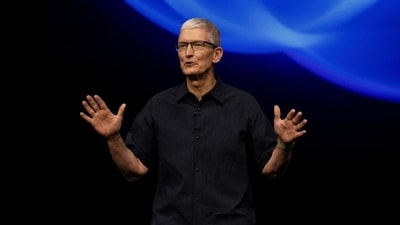
When Timothy Donald Cook walked on to an Apple keynote stage in October 2011, a room held its breath in a way such high profile attendances rarely do. He never intended to be a prophet, but he knew these were the biggest boots he needed to step into. Cook was the Chief Operating Officer (COO) before becoming CEO in August when Jobs’ health failing. Leander Kahney, veteran tech journalist and author of the biography Tim Cook: The Genius Who Took Apple to the Next Level, called Cook “ the man who ran the supply chain”.
In the 14 years and counting as the CEO, with Cook strongly refuting any rumours that he may retire soon, and 28 years at Apple, he had more than spearheaded Apple to the peak market capitalisation of $4 trillion in October 2025. That number represents a much greater than 35x approximate growth in Apple’s stock price from when Cook took over in 2011, with now more than 2.5 billion active Apple devices (iPhones, Macs, iPads, Watches, etc.) worldwide. This is a measure of how deeply Apple’s ecosystem has embedded itself into daily life globally.
To put Cook’s tenure in broader context — only 8% of S&P 500 CEOs have tenures exceeding 20 years, and the median CEO tenure has dropped from 6 years in 2013 to just 4.8 years in 2022. By modern standards, this is rare. Nvidia’s Jensen Huang (1993–present, 30+ years) and Marc Benioff of Salesforce (1999–present, 25+ years), two equally rare illustrations of human establishments.
The inheritance, and building a cathedral
Apple in 2011 was the most valuable company on earth. The keynote at Apple’s Town Hall auditorium on its Cupertino campus, is where Cook unveiled the iPhone 4S, a phone whose marquee feature was called Siri, and this intelligent virtual assistant spoke to users in a chirpy synthetic voice. Though it didn’t always get the question or the answers right, but offered first glimpse of AI before Amazon’s Alexa, Google’s Assistant and Microsoft’s Cortana tried a few things.
By then, iPad was two years old. The Mac was ticking steadily. The iPod portfolio too. These were Apple’s core product lines at the time. Cook’s calming influence painstakingly added to the product lines, widened options, and put major emphasis on the services business. We also lost an iconic product along the way — the iPod, which in today’s scheme of things, would have been in many ways been an ideal device sans the phone risks.
Soon enough, everything Apple touched began to turn into gold, with hardly any misses. The Apple Watch, released in 2015, sold an estimated 12 million units in the first year — and 115 million users by the end of 2022. For context, that’s 10 times more than the entire annual production by Rolex. That wasn’t all. It became not just the best-selling smartwatch, but also the best-selling watch of any kind, in human history. Rolex, Casio, and Seiko, all outpaced by a wearable that told you to stand up once an hour and could detect atrial fibrillation for someone who had no inkling their heart was misbehaving.
For the critics who called the Apple Watch a solution in search of a problem and a luxury object, Apple never held back on the luxury positioning of certain variants either, underlined by a decade long partnership with Hermès, as well as the 18K gold Apple Watch Edition.
This was the beginning of Apple stepping away from the mythology of the original Mac, the iPod with the click wheel, as well as the touchscreen revelation with the iPhone and iPad. A braver Apple, under Tim Cook.
Apple under Cook built something that Jobs, for all his visionary ferocity, never quite managed — a recurring revenue engine of breathtaking elegance. Apple Music launched in 2015. Apple TV+ in 2019. Later, Apple Arcade, Apple News+, Apple Fitness+, and iCloud subscriptions wove themselves into the daily habits (and of course, wallets) of hundreds of millions of users worldwide. While the world still habitually looks at iPhone and Mac sales numbers every time Apple releases their quarterly earnings data, Services has become a crucial business within the business.
Apple’s Services revenue grew 13.5% from $96 billion in 2024 to $109 billion in fiscal year 2025, and up from $20 billion a decade prior. It is perhaps the most under-appreciated pivot of corporate architecture of the past two decades. It effectively gave Apple another lever, that is turning a hardware-first company into something closer to a platform.
The brave-er Apple we began to see emerge under Cook’s leadership years earlier, continues to make clear statements. Cook first articulated privacy as a fundamental human right in 2015, much before data privacy and security became things to debate about — and Apple’s devices as well as software platforms haven’t wavered from that path. A pivotal test came in 2016, when the Federal Bureau of Investigation (FBI) leaned on Apple to unlock the San Bernardino shooter’s iPhone 5C, including obtaining a court order.
“No one should have a key that turns a billion locks. It shouldn’t exist,” Cook said at the time.
Apple refused to create a custom software to disable the phone’s security features, arguing this would act as a ‘master key’ to putting millions of users at risk. They hold that line even today, amidst pressure from regulators including the UK’s demand to withdraw Advanced Data Protection (ADP) on devices sold there — yet, Apple has not removed ADP from 15 iCloud data categories as well as end to end encryption for communication services including iMessage and FaceTime.
In fact, Google’s Android had to follow Apple’s App Tracking Transparency feature which forced apps to ask for a user’s permission before tracking them across other apps, a few months later. The narrative had changed, and consumers demanded it.
Tim Cook, during a visit to India in 2023 (which also marked the company’s 25 years in this market), told HT that the company’s environmental goals for 2030 are “non-negotiable”. The company has set a target to become carbon neutral across its entire business, manufacturing, supply chain, and product life cycle, by the year 2030. Its own operations became carbon neutral, including Apple Stores globally, in 2020.
“We think climate change is the biggest issue of the century. We want to put all of ourselves into solving a part that we can solve, and running our company on renewable energy is a part of that,” Cook told HT.
More on the theme of being brave, Apple had in November 2020, in the middle of a pandemic, marked the beginning of moving away from Intel’s processors and introduced their in-house M1 chip — built on an architecture so efficient it made the rest of the laptop industry look like it was still trying to boot up a steam engine. Apple rendered obsolete the Intel-dependency that had defined its machines for fifteen years, and made clear intentions to control its own destiny from silicon to software to screen.
This was the long game, finally emerging from the research labs at Apple Park. The Apple Silicon project required years of patient investment, enormous engineering resources, and the organisational discipline . It required exactly the qualities for which Cook had always been valued and also, oddly, underestimated. The M series chips, still continue to set the ‘performance-per-watt’ benchmarks, which means the balance of performance and battery stamina, that the likes of Intel, AMD and Qualcomm are still struggling to match. Let alone surpass.
None of this success came without complication. Apple’s manufacturing advantage in China produced efficiency, but also made it a geopolitical debate. The App Store tax, the 30% cut from each digital sale on the platform, became the subject of antitrust investigations on three continents with the same question being asked everywhere — when does a platform become a monopoly?
Added to the long line of gutsy bets, the immersive headset Vision Pro arrived in 2024 to a reception that recalled the Apple Watch’s debut — part fascination, part skepticism. At $3,499 at launch, it was the clearest statement of an Apple bet since the original iPhone — and also the clearest indication that Cook had not lost his appetite for the audacious.
The question history will ask about Tim Cook is not whether he was Steve Jobs — that was never the question. The real question is whether, having been handed the rarity of a business already at the top with a growing legion of fans and greatly mythologised, he will leave it better than he found it. By any honest measure, the answer is a resounding yes.