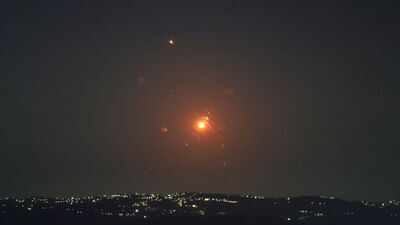
For the first time ever in the history of the Islamic holy city, Saudi Arabia’s Civil Defence issued an emergency alert warning of a possible hostile aerial attack in Mecca.The alert advised residents to move indoors to safe locations and stay away from windows and doors until the danger had passed. Similar warnings were issued for Jeddah and Taif governorates.The alert was lifted within minutes, but it came as Saudi Arabia faces a widening security challenge from the Iran-backed Houthi group, which has intensified attacks on the kingdom while making territorial gains along Yemen’s strategically important Red Sea coast.The Organisation of Islamic Cooperation (OIC) also condemned what it described as “heinous attacks” by the Houthis against Mecca and the Medina region, saying the attacks threatened civilians, violated the sanctity of holy sites and mosques, and provoked Muslims around the world.The OIC described attacks on holy sites, mosques and civilian infrastructure as terrorism and called such violations “unacceptable and intolerable”. It expressed solidarity with Saudi Arabia and backed measures taken by Riyadh to protect its security, sovereignty, civilians and the holy sites.But Mecca is only the most sensitive point in a much wider problem confronting Riyadh.
From Mecca to Jazan: Pressure inside Saudi Arabia
The latest alert followed a series of attacks and warnings across Saudi Arabia.On September 12, a projectile launched by Yemen’s Houthis landed in the Jazan region, injuring two people and damaging a mosque, several buildings and vehicles, according to Saudi Civil Defence.A day later, the Coalition to Restore Legitimacy in Yemen said Houthi forces had attacked civilian areas in Khamis Mushait, Abha and Taif using ballistic missiles and drones.Coalition spokesperson Major General Turki Al-Maliki said 13 civilians suffered minor to moderate injuries, while seven residential homes and two vehicles were damaged. Saudi Arabia subsequently warned that it would respond to further attacks.Saudi authorities also issued alerts for Jeddah and Taif on Tuesday, ordering people to move indoors and stay away from windows and doors while the danger remained.
Oil pipeline: A major pressure point
The threat is not confined to missiles and drones targeting cities.On September 11, Saudi Arabia shut its 1,200-kilometre East-West oil pipeline after it was targeted in a drone attack launched from Iraq. No group claimed responsibility, while US President Donald Trump blamed Tehran, with Iranian proxies known to operate in Iraq, according to CNN.
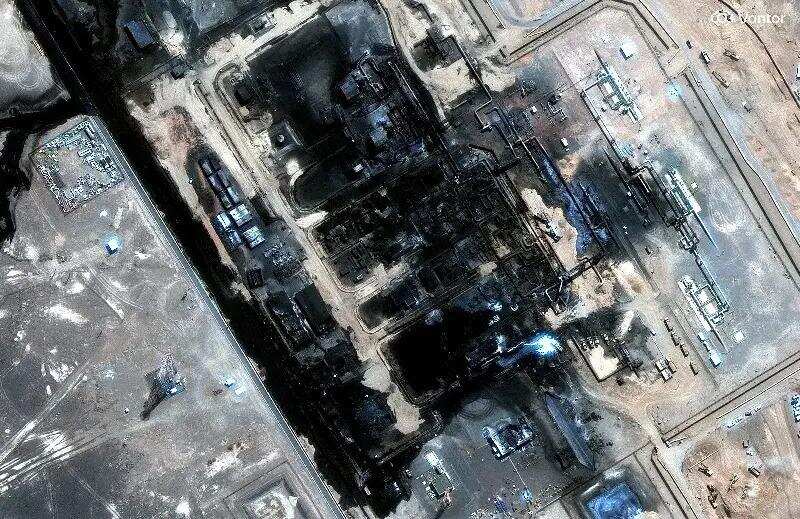
A satellite image shows a closer view of the damage at the Saudi Arabia East-West pipeline, located across the Arabian Peninsula, after a strike that hit it on September 11, 2026, in Saudi Arabia, September 13, 2026. Vantor/Handout via REUTERS
The pipeline has become particularly important because the war with Iran has effectively closed the Strait of Hormuz. CNN reported that Saudi Arabia has increasingly relied on the East-West route to move around 5 million barrels of oil a day that would otherwise have been exported through the Persian Gulf.The attack therefore raised concerns in Riyadh about a wider campaign against critical Saudi infrastructure.CNN reported that Saudi Arabia had already been warned last month about the possibility of “multiple coordinated attacks” involving Iraqi militias working with the Iran-backed Houthis.The pipeline attack was not attributed to the Houthis, but it added to the broader pressure Saudi Arabia faces from Iran-aligned groups operating on multiple fronts.
Red Sea: Houthis push towards a strategic chokepoint
At the same time, the Houthis have been expanding their territorial reach in western Yemen.The group captured the strategic Perim Island at the mouth of the Red Sea and the port town of Mocha as it sought greater control over the Bab al-Mandeb Strait, a key global shipping and energy route.Houthi media also reported that the group had captured fighters recruited by Saudi-backed forces who were stationed on the Red Sea islands of Hanish.The Hanish islands lie roughly 160 kilometres north of Bab al-Mandeb, close to routes linking the strait with the Red Sea and the Suez Canal.The advances give the Houthis greater strategic depth along a major maritime corridor while putting further pressure on Saudi Arabia’s Red Sea interests.
Why Riyadh is running out of room
Though Saudi Arabia has modern military and greater resources compared to a proxy group, the Houthis have shaped into a threat that needs to be taken seriously.Analysts cited by CNN said Riyadh does not want an all-out war but could increasingly be pushed towards one.Mohammed Al-Basha, a Yemen expert and Washington-based risk adviser, told CNN that signs pointed towards a large-scale Saudi retaliation and that “they don’t have an option”.Cinzia Bianco, a visiting fellow at the European Council on Foreign Relations, told CNN that a major Saudi escalation could develop into an open-ended conflict similar to Yemen’s previous war.It could also pull Saudi Arabia deeper into the wider US-Iran conflict.That leaves Saudi Arabia looking for outside support while Washington appears reluctant to directly enter another fight.CNN reported that the US has resisted Saudi pressure to become directly involved militarily against the Houthis.Washington has, however, sent around 100 military advisers to Saudi Arabia to provide intelligence for its military campaign, according to multiple sources.US involvement also faces competing pressures, including the ongoing crisis around the Strait of Hormuz and domestic political considerations in Washington.
Political exit is getting harder
Saudi Arabia has so far shown what analysts describe as “strategic patience”, repeatedly warning and condemning the Houthis and Iran without launching a full-scale retaliation.After the East-West pipeline attack, the Saudi foreign ministry said the kingdom had chosen not to respond at that stage and would support efforts by the Iraqi government, while reserving the right to take measures necessary to protect its sovereignty.But Bianco told CNN that Saudi Arabia had “exhausted the political solutions”.The alternative, negotiating with the Houthis, could also carry a heavy political and strategic cost.Salman Al-Ansari, a Saudi geopolitical analyst, told CNN that the Saudi-backed Yemeni government’s military campaign against the Houthis was already underway and could intensify substantially in the coming days or even hours.He said there could be “major surprises on multiple fronts”.