Industry experts say the move brings the question of how UPI infrastructure is funded into focus, while the relatively low rates and exemptions are aimed at limiting the impact on consumers and smaller merchants.
What is UPI MDR and why is it being introduced?
MDR is a fee associated with processing a digital payment. Under the new framework, MDR will apply to specified merchant transactions, while certain categories remain exempt or are subject to separate rates and caps.
Vivek Mandhata, Managing Director & Partner, BCG, said the move towards a calibrated MDR framework comes after several years in which zero MDR supported UPI’s rapid expansion, while banks and payment providers continued to incur costs related to infrastructure, fraud prevention and technology.
“The government’s move to formally exempt UPI transactions up to ₹2,000 from any charges, while creating room for a calibrated MDR above that threshold, marks a maturing of India’s digital payments story,” Mandhata said.
According to him, the framework could provide a funding mechanism for further investment in areas such as real-time fraud detection and other UPI-related infrastructure.
Anirban Mukherjee, CEO, PayU, similarly said that scaling UPI further would require a platform capable of funding continued investments in reliability, security, technology and innovation.
Will consumers have to pay for UPI?
The MDR is a merchant-side charge and is not a direct fee imposed on consumers for making UPI payments.
Adhil Shetty, CEO, BankBazaar.com and Chairman, FICCI FinTech Committee, said the rule preventing merchants from passing MDR charges directly to customers is intended to preserve a seamless payment experience.
Sarvjeet Singh Virk, CEO of jUMPP, said customers would continue to make UPI payments without being charged, while smaller merchants receiving up to ₹1 lakh a month through UPI QR codes would continue under zero MDR.
This distinction is important because the introduction of MDR does not mean that consumers will see a separate UPI fee every time they make an eligible payment.
Which merchants and transactions are affected?
The impact is concentrated in the merchant-payment segment rather than across all UPI transactions.
Virk said the government’s data indicates that MDR will apply to around 4% of merchant transactions, leaving the overwhelming majority of merchant payments unaffected.
Jyoti Prakash Gadia, Managing Director, Resurgent India Limited, said the framework targets selected merchant transactions above the specified threshold, while low-value and person-to-person transactions remain outside the charge.
The impact can therefore vary significantly depending on the transaction value, merchant category and applicable MDR rate.
Why is the ₹2,000 threshold important?
The threshold creates a distinction between lower-value transactions and higher-value merchant payments.
Mandhata said the threshold-based approach protects retail and small-merchant transactions that account for a large proportion of UPI transaction volumes, while creating room for MDR on higher-value payments.
Shetty said transactions above ₹2,000 represent only around 4% of merchant transaction volume but account for roughly two-thirds of the total value.
This means the framework is designed to target a relatively small portion of transaction volumes while covering a larger share of the value flowing through merchant payments.
What about stockbrokers and investors?
Capital-market transactions have been placed in a separate category with an MDR of 0.02%, subject to a ₹300 cap.
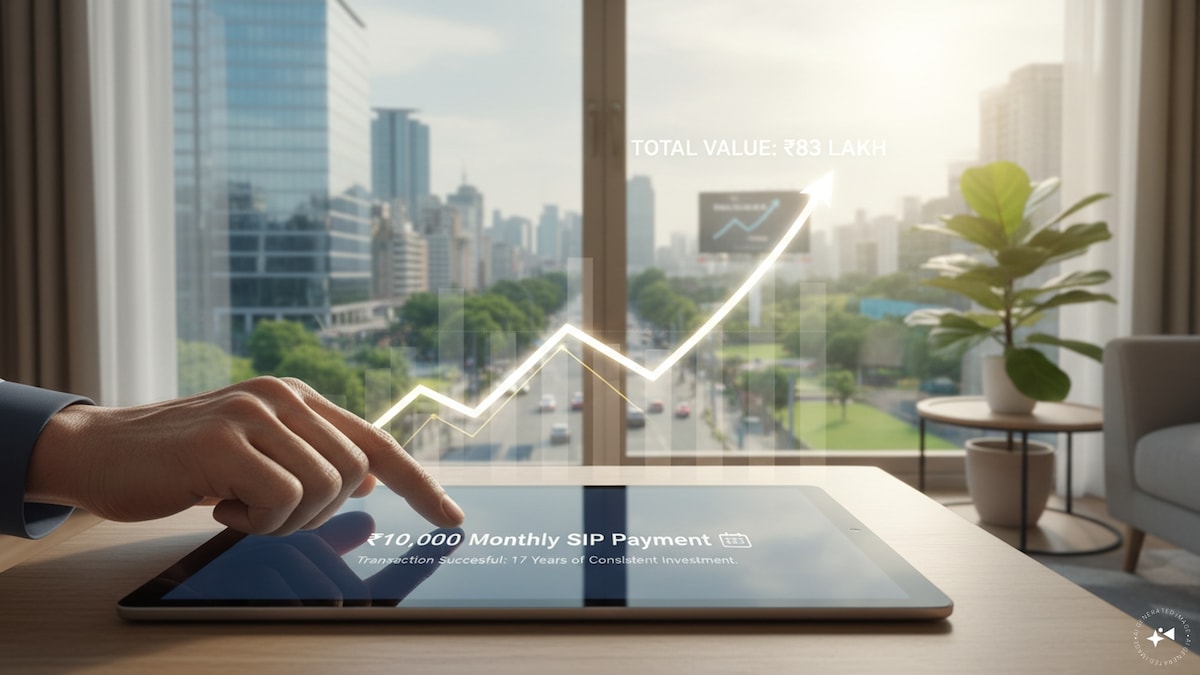
Dhiraj Relli, Managing Director and CEO, HDFC Securities, said this lower rate was significant because UPI has become an important payment channel for retail investing, including IPO applications and SIP-related payments.
Ramakant Yadav, Founder, Scalar Field, said the charge works out to ₹20 on a ₹1 lakh capital-market transfer, subject to the ₹300 cap.
Relli said SIPs set up through UPI AutoPay fall outside this framework, while one-time transfers would carry a relatively small cost.
For investors, therefore, the applicable treatment depends on the type of capital-market transaction rather than UPI payments being treated uniformly.
Why does the industry want a sustainable UPI model?
UPI has grown into a large-scale payments infrastructure, but maintaining such a system involves continuing expenditure on technology, cybersecurity, fraud prevention, reliability and capacity.
PayU’s Mukherjee said the return of MDR could help create a more sustainable funding base for continued investment in the platform.
Virk said the revenue generated through MDR is distributed among ecosystem participants and could support the continued expansion and improvement of UPI infrastructure.
Gadia, however, said MDR revenue may not necessarily cover the cumulative investments made by banks and payment service providers in building and scaling UPI over the years.
The debate, therefore, is not only about the size of the charge but also about how the revenue generated is used and whether it supports further investment in the payments ecosystem.
Could MDR affect merchants?
For merchants, the impact will depend on the applicable category, transaction value and whether the merchant falls under an exemption.
Gadia said the effect on smaller merchants should remain limited because of the exemptions and tier-based structure. At the same time, he flagged the possibility that increased costs within the ecosystem could eventually become a concern if they were to translate into higher costs for consumers.
Mandhata said the calibration of the rate and threshold would be important. A framework that imposes too much cost on higher-value payments, he said, could potentially affect payment behaviour, while a very low rate may have a limited effect on the ecosystem’s ability to fund investments.
What could change for the UPI ecosystem?
The introduction of MDR also opens up a broader question about how payment companies compete as UPI moves beyond basic transaction processing.
Virk said a more sustainable economic model could encourage payment providers to develop additional merchant services such as credit access, cash-flow management, analytics and business insights.
Mandhata similarly said banks and fintech companies could use the additional economic headroom to compete on services such as settlement, fraud protection and merchant analytics rather than competing only on transaction cost.
The immediate impact of MDR will therefore depend on how the framework is implemented across different categories. Over the longer term, its significance could extend to how banks, fintech companies and payment providers fund and develop the next phase of UPI infrastructure.