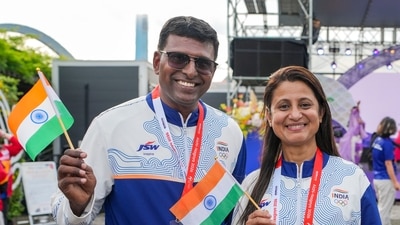
The Indian contingent for the 2026 Asian Games has begun landing in Aichi-Nagoya (Aichi being the prefecture, Nagoya its capital), with the rumblings about small hotel rooms now replaced by fresh murmurs that no breakfasts have been booked for athletes.
For India, these games are already slightly divergent from past Asian Games. The Indian contingent is 501-strong, down from Hangzhou 2023’s 622, as the Sports Ministry applied a criterion of a top-six result in Asia for individuals or top-eight for teams. For the 6/8 rule to be vindicated, India must surpass Hangzhou’s tally of 106 medals, the country’s best-ever Asiad performance.
Over these last two-plus decades, the Indian sports watcher has begun to assess these mega-events with a new gaze. Any Indian stepping into their teenage years and immersing themselves in our sport is used to the idea of women’s boxing and wrestling, with Olympic and world medals being the most basic standard to aspire for. Their view of the CWG-Asian Games is very different from their parents’ and grandparents’ interpretations of athletic excellence and where our athletes stood.
There is now enough information and through it clarity to put every kind of medal in context. The 20 Indian fencers at Aichi-Nagoya won’t be breaking any new ground (Bhavani Devi has already done that) until one of them wins India its first Asian Games fencing medal.
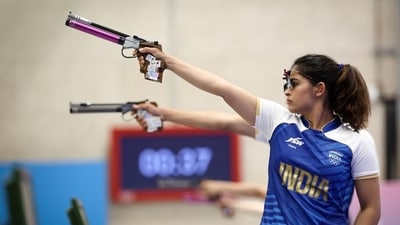
In shooting, the great CWG bonanza came to an abrupt halt in Birmingham 2022, but at Aichi-Nagoya each medal at the range, given the level of competition, will count and matter and be noticed.
Hockey golds will mean a straight entry into Los Angeles Olympics 2028: both the men and women are today ranked No. 8 in the world, with the men highest ranked amongst Asian nations with Pakistan four spots behind at No. 12 and Malaysia at no.15 while the women sandwiched behind China at no. 4 and Japan at No 11.
An Asian Games badminton or table tennis medal – or women’s wrestling – will count for much more than one at the Commonwealth Games in those disciplines.
In athletics and swimming, the CWG-AG medals carry a reverse weightage. For example, India have won a total of 52 CWG athletics medals over nineteen editions starting from 1934 – six gold, 21 silver and 52 bronze – with 52 years between the first CWG athletics gold medal (Milkha Singh 1958 Cardiff) and the second, Krishna Poonia (New Delhi 2010). After Delhi 2010, India’s CWG athletics medal tally reads: 3, 3, 8 and 10. Its Asian Games athletics tally in the same period is: 12, 12, 29, 29.
India’s Glasgow CWG track and field tally of 10 medals is in fact its best since Delhi 2010, which included its first ever double track medal from Gulveer Singh in the 5000m and the 10,000m.
India’s 68-athlete contingent returned from Hangzhou 2023 with 29 medals, the most from any discipline (six golds to shooting’s seven of 22 medals), accounting for a very large 20.1 percent of all athletics medals on offer.
India’s 74-strong Aichi-Nagoya athletics contingent can best be viewed through two benchmarks alongside medals – personal bests/ national records and how they measure up against the continent’s world-class athletes.
Starting with the formidable force that is Bahrain and to an extent Qatar’s naturalised elite native African athletes. Among whom are former and current world champions and record holders, diamond league winners and Olympic medallists.
In the field events, Sarvesh Kushare’s CWG high jump silver and sixth place at the world championship last year was a breakout performance. He will compete in a field minus the Asian record holder and former Olympic champion Mutaz Barsham of Qatar but against Asia’s best high jumper the Korean Sanghyeok Woo, double world championship medallist.
The men’s javelin throwers will be without the peerless Neeraj Chopra and India’s Hangzhou 1-2 will be hard to match given that the reigning world champion Rumesh Pathirage is in form to leave the rest of the field behind, damaged javelins or not.
Shortly before Glasgow 2026, long jumper Murali Sreeshankar said candidly that the reason the Asian Games was the “primary focus” for most Indian athletes was because, “that’s where you make a career or you make a living out of because the government pays a really good, handsome amount in your pocket if you win a medal.”
Whatever else may have changed in Indian sport, trying to create livelihood pathways through competitive opportunities for elite athletes (outside of shrinking public sector jobs) is not a priority for most sports’ federation bosses.
Finally, regardless of medal weightage, a common feature across this years’ twin CWG-AG hosts. Both Glasgow and Aichi-Nagoya have a clear legacy mission beyond the sound, light and fireworks show.
Controlling public expenditure, incorporating sustainability and ecologically-sensitive measures are very much a part of the organisational SOPs of both Games hosts.
Now that the Indian sports ministry has cracked down with its tightly-controlled 6/8 athlete criteria, it should go strict on organisational and financial discipline with those who run, organise and present Indian sport across associations and federations.