
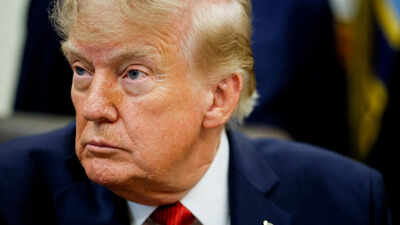
US President Donald Trump announced on Friday that the Washington has reached an “Infinite Life” agreement with Denmark and Greenland giving America “permanent control” over the island’s security.He said the deal also bars any US adversary from keeping a military presence there. Trump called it an agreement with no end and said it would come at no cost to the United States.“This is an “Infinite Life” Agreement, there is no end! We are very honored and proud of what has just taken place, and everything agreed to today will be cherished by the American People. We will immediately begin the process of developing a large Military presence in the appropriate part of Greenland, of which there are many,” Trump wrote while annoucing the deal.
What has actually been agreed
Danish prime minister Mette Frederiksen said the deal does not hand the United States sovereignty over Greenland, describing it instead an arrangement that strengthens shared security in the Arctic and North Atlantic and recognises the Greenlandic people’s right to self determination.The United States, Denmark and Greenland are expected to sign the text next week at the United Nations General Assembly in New York, reported CNBC. The official wording had not been released when Trump made his announcement. America already enjoys near total basing and overflight rights on the island under a treaty signed in 1951. Trump announces agreement with Denmark to secure ‘permanent’ control over Greenland’s security.
Why Greenland matters for the Golden Dome
Golden Dome is Trump’s proposed multi-layered missile defence system designed to detect, track and intercept ballistic, cruise and hypersonic missiles targeting the US. Greenland matters because of its location in the Arctic, particularly for monitoring missile activity from Russia and supporting early-warning capabilities.Greater US access to Greenland could therefore strengthen the Arctic component of Golden Dome, while limiting potential military or strategic access for China and Russia.The shortest route for a missile fired from Russia towards American cities runs over the North Pole, and Greenland sits almost exactly underneath that path. That geography is the whole reason the island matters to the Golden Dome project, because putting sensors, communications gear and interceptors closer to the pole gives defenders a better chance of destroying a missile early in its flight.The island is already doing part of this job. Pituffik Space Base, formerly known as Thule, lies above the Arctic Circle roughly halfway between Washington and Moscow, and its radar can watch deep into Russia and across the likely flight paths of Chinese missiles, buying American decision makers precious extra minutes.Trump wants Golden Dome fully working by January 2029 at a cost of 175 billion dollars, a timetable and price tag that seems doubtful. It has also been point out that interceptor tests over the past two decades have succeeded only about half the time, and under conditions far kinder than a real attack.
Locking out Moscow and Beijing
The second purpose of the deal is to keep rivals out as Trump said no American adversary may ever build a base in Greenland, station forces there, or make sensitive investments, without express written approval from Washington.In plain terms, a Chinese state firm buying a stake in a Greenlandic mine or port would now need an American signature first. That single clause is aimed squarely at the quiet economic route into the Arctic that Beijing has used elsewhere.Moscow has already bristled at the idea, with Russian officials calling Golden Dome provocative and warned of military and technical countermeasures if American missile systems appear on the island.Greenland is also a mineral prize as official Danish and Greenlandic geological surveys estimate the island holds some 36 million tonnes of rare earth resources, alongside graphite, copper, nickel, zinc and tungsten, and it hosts deposits of 25 of the 34 raw materials the European Commission treats as critical. These metals go into electric motors, semiconductors and precision guided weapons.China currently produces roughly 60 per cent of the world’s rare earths and controls about 85 per cent of processing capacity, which is why Western governments want another source. The Tanbreez project in southern Greenland, now 92.5 per cent owned by Nasdaq listed Critical Metals, is the furthest along, with full construction not expected before spring 2027.