
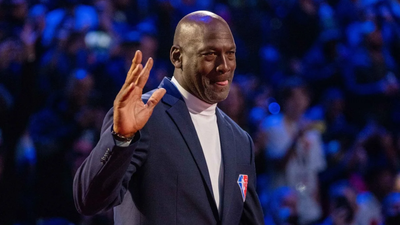
Michael Jordan is widely regarded as one of the greatest basketball players of all time. His name is synonymous with championships, record-breaking performances and an unmatched competitive spirit. However, his journey to becoming a global sports icon was not always smooth. Before he became the face of the Chicago Bulls and transformed basketball into a worldwide phenomenon, Jordan faced rejection, setbacks and moments of self-doubt.
Michael Jordan’s early life and the setback that fuelled his ambition
Born in Brooklyn, New York, on February 17, 1963, Michael Jordan grew up in Wilmington, North Carolina, in a working-class family. His rise from a young basketball enthusiast to an NBA legend is a powerful reminder that early setbacks do not have to define a person’s future. Instead, they can become the motivation needed to achieve extraordinary success.Jordan developed a passion for sports during childhood. He enjoyed basketball, baseball and football, but basketball eventually became his primary focus. His competitive nature was evident from an early age, and he constantly looked for ways to improve his performance.One of the most frequently discussed moments in Jordan’s early basketball journey occurred during his sophomore year at Laney High School in Wilmington. He did not make the varsity basketball team and was instead assigned to the junior varsity squad.The experience became a major source of motivation for the young athlete. Although the story is often simplified as a rejection based on his height, Jordan was still developing physically and competing for a limited number of varsity positions. The setback nevertheless left a lasting impression on him.Rather than giving up, Jordan used the disappointment as motivation to improve. He practised relentlessly, worked on his skills and developed the determination that would later become a defining feature of his career.Jordan eventually earned a place on the varsity team and continued to improve as a player. His high school performances attracted attention from college basketball programmes, opening the door to the next stage of his journey.
Michael Jordan’s college career opened the door to the NBA
Jordan joined the University of North Carolina at Chapel Hill in 1981, where he played under legendary coach Dean Smith. The college programme helped him develop his basketball fundamentals, discipline and understanding of the game.His defining college moment came during the 1982 NCAA championship game against Georgetown. Jordan made the game-winning jump shot, helping North Carolina secure the national title. The performance introduced him to a wider basketball audience and marked an important milestone in his development.Jordan continued to establish himself as one of the country’s leading college players. His scoring ability, athleticism and competitive drive made him a highly anticipated prospect for the NBA.In 1984, the Chicago Bulls selected Jordan with the third overall pick in the NBA Draft. His arrival in Chicago marked the beginning of a professional career that would eventually reshape the franchise and influence basketball around the world.Jordan made an immediate impact during his rookie season, earning the NBA Rookie of the Year award. His explosive playing style, scoring ability and confidence quickly made him one of the league’s most exciting young stars.
Michael Jordan’s Chicago Bulls era changed basketball history
Jordan’s early NBA years established him as an elite player, but winning an NBA championship proved more challenging. The Chicago Bulls faced difficult playoff battles, including repeated losses to the Detroit Pistons.Those defeats tested Jordan’s patience and determination. Instead of allowing frustration to derail his ambitions, he continued to refine his game and strengthen his physical conditioning.The breakthrough finally came in 1991, when Jordan led the Bulls to their first NBA championship by defeating the Los Angeles Lakers. Chicago went on to win three consecutive titles from 1991 to 1993, establishing itself as one of the league’s dominant teams.Jordan shocked the basketball world in 1993 when he announced his retirement from the NBA and pursued professional baseball. Although his baseball career did not reach the same heights as his basketball achievements, the experience became another unusual chapter in his sporting journey.He returned to the NBA in 1995 and soon helped Chicago reclaim its place at the top. The Bulls won three more consecutive championships from 1996 to 1998, completing a second three-peat.Jordan finished his Bulls career with six NBA championships, five regular-season MVP awards and six NBA Finals MVP awards. His performances during the championship years helped cement his reputation as one of basketball’s most accomplished players.
Michael Jordan’s legacy goes beyond championships and fame
Jordan’s influence extended far beyond the basketball court. His partnership with Nike helped turn the Air Jordan brand into a major force in sportswear and popular culture. The shoes became a symbol of athletic excellence and style, reaching audiences well beyond basketball fans.His global popularity also played a significant role in expanding the NBA’s international appeal. Jordan’s performances, competitive personality and memorable championship runs attracted new generations of fans around the world.In 2009, Jordan was inducted into the Naismith Memorial Basketball Hall of Fame, recognising his extraordinary contributions to the sport.His career also offers a powerful lesson about perseverance. Jordan’s journey was not a simple rise from talent to fame. It involved rejection, difficult losses, demanding training and the willingness to keep improving.The high school setback that once disappointed him became part of a much larger story about determination and personal growth. Jordan’s success was built not only on natural ability but also on discipline, resilience and an unrelenting desire to improve.Michael Jordan’s journey from a young player in North Carolina to a global basketball icon shows that setbacks do not have to determine the outcome of a person’s life. His legacy continues to inspire athletes and fans to work through challenges, learn from failure and pursue their ambitions with determination.