
India has consciously chosen to subsidise mature semiconductor nodes ranging from 28nm to 180nm rather than chasing cutting-edge 2-nanometer chips because advanced manufacturing remains “simply too expensive” and beyond the country’s current industrial capability, Ministry of Electronics and Information Technology (MeitY) Secretary S. Krishnan said on Thursday.
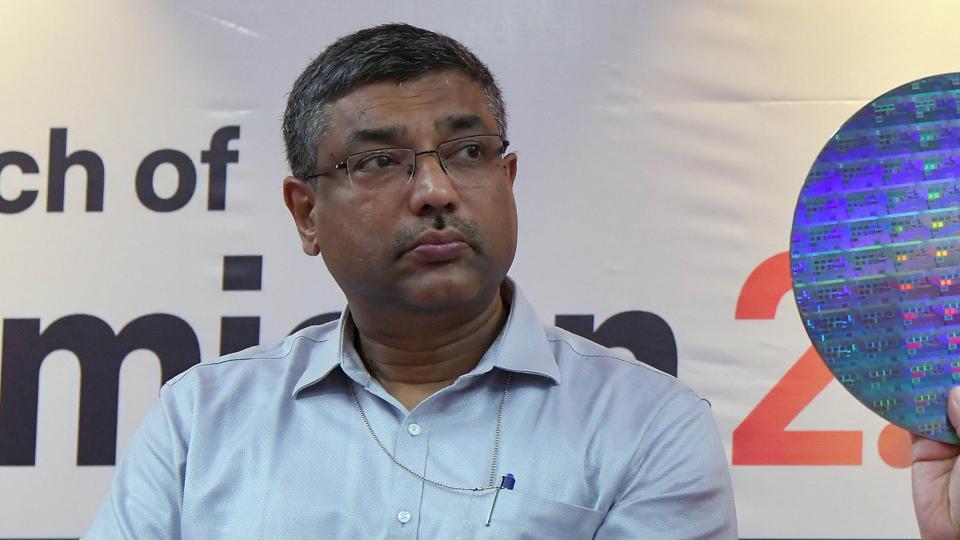
Krishnan made the remark at an event in the national capital where he touched on why the government has not subsidised production of advanced nodes like 2-nanometre chips, which are used in high-end computing and AI servers, under the India Semiconductor Mission (ISM).
These require capital, equipment and manufacturing precision India’s ecosystem hasn’t yet built. Instead, India has focused on mature nodes ranging 28-180 nm. Even now, India isn’t fabricating chips, but packaging them. Tata Electronics’ fab in Gujarat is expected to begin commercial production by mid-2028, starting with the more mature 90nm process before moving to 28nm.
“If I went [to finance ministry] and asked saying I need a 2-nm chip, and this is the subsidy which is there, then I am going to be shown the door,” said Krishnan.
Taking a self-deprecating swipe at his ministry’s aggressive calls for subsidies, Krishnan said his ministry was not particularly popular among finance ministry bureaucrats. “MeitY in some ways is the least liked ministry in the former North Block, in the Ministry of Finance, because we are always standing there and saying give us this, give us that,” he quipped.
MeitY, he acknowledged, needs “reasonable bets which will pay off” and must “build in a logical and rational way.” On why India hasn’t leapt straight to advanced nodes, he was blunt: “It is simply too expensive.”
The case for “sovereign autonomy”
Krishnan began his remarks at the discussion on what he called India’s need for “a degree of sovereign autonomy” – a concept he unpacked in three parts. He noted that as a large country with a growing market, India “strategically cannot depend on things which are produced entirely across the world,” and therefore needs “a legitimate share in every kind of technology – phones, laptops, software, platforms, applications.”
He defined sovereign autonomy as being open to global technology while also building domestic capacity. “While you are open to whatever tech is there in the world, as one tends to fall short and needs to catch up, at the same time you need to build enough capacity in case you are denied any of this,” he said, noting that “denials and disruptions happen all the time.”
The third pillar, he said, was building enough domestic manufacturing capability to become indispensable in global value chains – a strategy he termed “mutually assured disruption.” “You make enough stuff in the country so that you are important enough in the value chain to not be taken lightly,” he said.
He tied this to a broader global shift toward diversification. “The big shift which has happened is everybody recognises that you can’t put all your eggs in one basket,” Krishnan said, adding that companies worldwide are no longer trying to do everything in-house but are instead securing “a significant enough part” of the value chain “to make sure you are indispensable.”
On China and semiconductors
Turning to semiconductors, which he called “one of those strategic and foundational industries,” Krishnan avoided naming China directly, referring to it more than once only as India’s “northern neighbour.”
He explained the government’s rationale for focusing on mature nodes in ISM. “The node we focus on right now, based on our fiscal capacity and on where our level of sophistication in manufacturing stands today, it is easier for us to enter in legacy nodes,” he said, pointing out that many countries have exited this segment, creating room for “an alternate source of supply, in addition to our northern neighbour.”
“A 100% dependence is cut, and it is not necessarily on our northern neighbour – we need to produce some of it ourselves,” he said, noting that semiconductors are increasingly embedded in a widening range of applications, making India’s participation in the industry “vital.”
He added that the ISM’s second phase carries a significant R&D component. “Semicon 2.0 has a big chunk for R&D, so that we can organically grow in the direction of more leading-edge nodes where our presence could be relevant, and also more niche technology where we can leapfrog to some extent,” he said.