
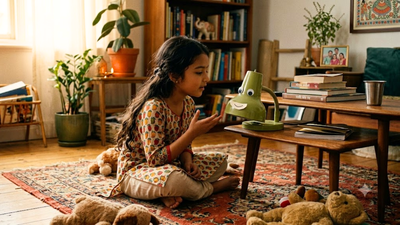
“Don’t wake Teddy, he is sleeping.” “Give the car some food, it is hungry.” “He doesn’t want to go to school.” If your child talks this way about a stuffed toy, doll, toy car or even a pillow, you may have heard plenty of such conversations at home. Children can give ordinary objects names, personalities, feelings and even complicated backstories. A teddy bear can have a birthday, a favourite food and a very specific place on the bed. For parents, it may look like simple imagination. And it is. But developmental research suggests that this kind of pretend play can also give children opportunities to explore emotions, roles and what other people might think or feel.
When a toy becomes a “someone”
22 Sept 2026 | 15:04
What pregnancy purchase turned out to be genuinely useful?
There is a term psychologists use for giving human qualities to non-human things: anthropomorphism. Children do this naturally. A toy may be described as happy, scared, hungry or angry even though the child knows it is an object. A 2022 study involving 139 children aged 3 to 5 examined how preschoolers attributed human qualities to their favourite toys. The researchers found that children were more likely to anthropomorphise toys with faces, while attachment to particular toys also played a role in some measures. They also found that children’s tendency to anthropomorphise varied depending on the task and context.
Giving a toy a name can create a character
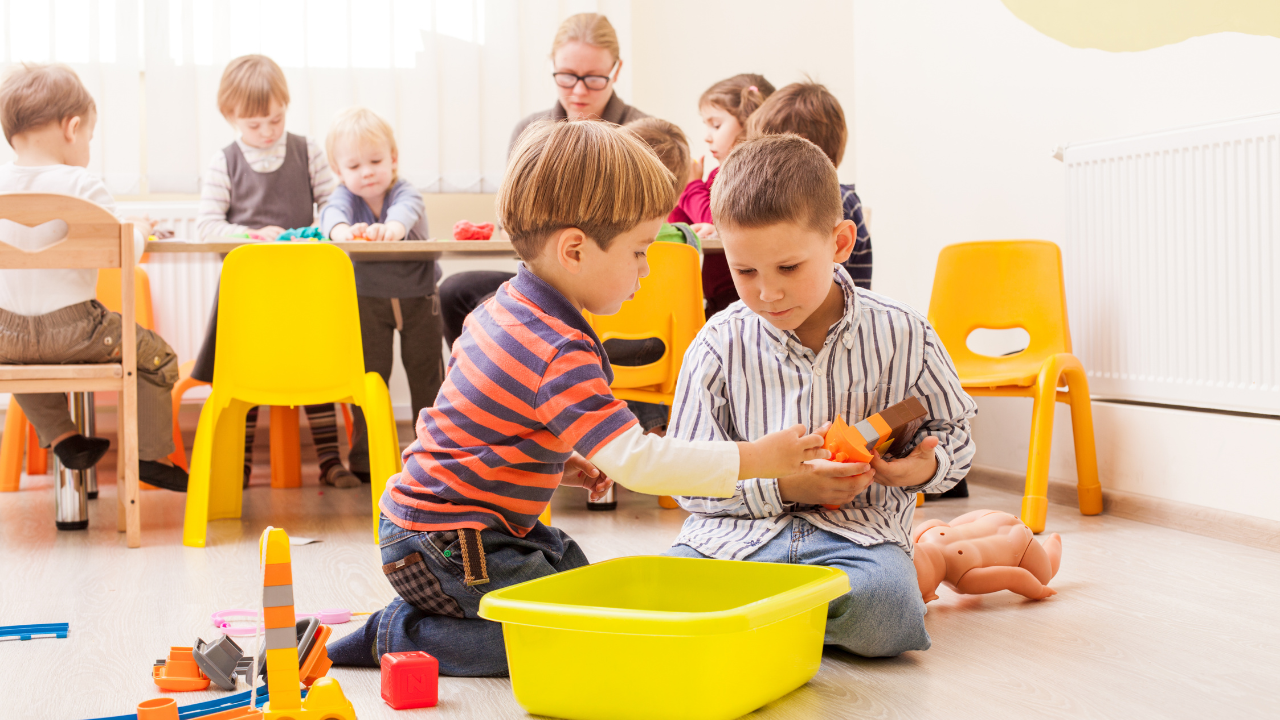
Photo: Canva
Compare two statements: “This is a teddy bear.” “This is Bruno. He is scared because his mother isn’t here.” The second statement creates a whole situation. Bruno has a name, a feeling and a relationship. The child now has something to act out. Research on children’s special objects has also found individual differences in how strongly children give human qualities to such objects. A 2022 study involving 55 children aged 4 to 6 found that children’s anthropomorphic tendencies differed from one child to another and were correlated with their parents’ tendencies. The researchers suggested that some of these tendencies may be learned through parent-child conversations.
They may be trying out different social roles
Watch what happens when a child plays with several toys. One may become the parent. Another becomes the baby. One is frightened, another is angry and another has to solve the problem. The child can switch between these roles and decide how each character should behave. This is where pretend play becomes particularly interesting from a developmental perspective. A study of 50 preschoolers found a strong association between children’s engagement in pretend play and the frequency and nature of their talk about mental states, including what someone knows, wants or is pretending. The study does not prove that pretend play causes better social understanding. But it shows that pretend play and children’s thinking and talking about minds can occur together.
The toy can carry feelings into the story
Children do not always talk directly about emotions. Instead of saying, “I am nervous about school,” a child may make a doll say, “I don’t want to go to school.” Instead of saying, “Nobody played with me,” they may make a stuffed animal sit alone while the other toys play together. Parents should not automatically assume that every pretend story is a hidden message about the child’s real life. Children make up stories simply because they enjoy doing so. But pretend play can give them a way to explore situations involving friendship, fear, conflict, caring, separation and being included or left out.A 2024 meta-analysis examined 34 empirical studies involving children aged 3 to 8 and found an overall positive relationship between pretend play and social competence. The researchers also found that studies measuring the quality of pretend play showed stronger relationships than studies measuring simply how much children played pretend. Importantly, the authors cautioned that the evidence does not establish that pretend play itself causes better social competence.
Naming every toy does not automatically mean better social skills
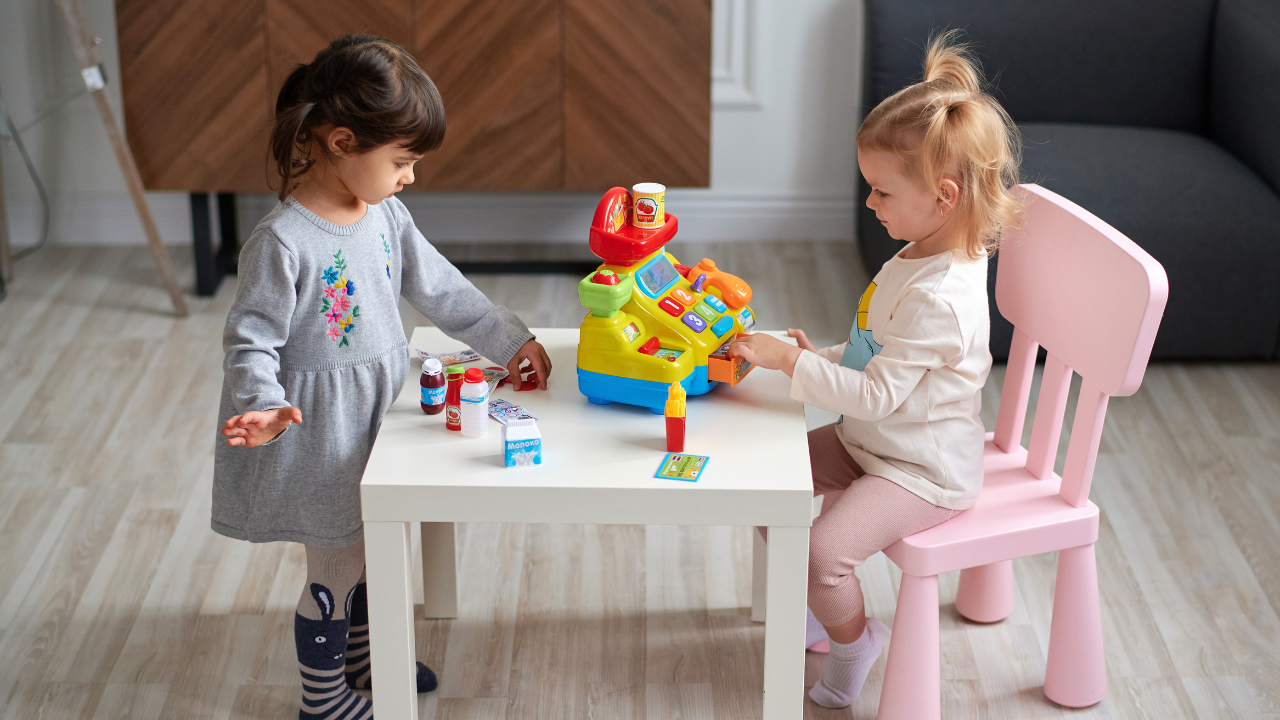
Photo: Canva
A child who has named every stuffed animal in the house is not necessarily more empathetic or socially skilled than a child who has never named a toy. Children vary considerably in how they use pretend play and how much they anthropomorphise objects. The research on children’s special objects found clear individual differences in this tendency, rather than one pattern that applied to every child. So there is no need to turn a child’s imaginary friendship with a teddy bear into a developmental test.
How parents can join the play
Instead of correcting a child with “It’s only a toy”, parents can sometimes follow the child’s lead. Try asking: “What is Teddy feeling?” “Why is she upset?” “What do you think he wants?” “What could make him feel better?” These questions leave the story in the child’s hands while encouraging them to think about feelings, intentions and different points of view. Parents can also let the child lead rather than taking over the game. If the child says, “My doll is angry because nobody invited her,” there is no need to immediately explain what the doll should do. A simple “Why is she angry?” can keep the conversation going.When children create imaginary people, give them feelings, make them disagree, comfort one another or solve problems, they are building small social situations inside their play. Research suggests these richer forms of pretend play are associated with aspects of social competence, although scientists are still cautious about saying that pretend play directly causes those skills. So the next time your child insists that a stuffed rabbit is hungry or that a toy car is upset, there may be no need to correct them. You can simply ask: “What happened to him?”