
Katri said growing concerns around rogue AI agents, data security and potential government oversight could work in favour of traditional IT services companies. For large enterprises, he said it would be difficult to allow AI companies unrestricted access to sensitive data, creating a role for IT services firms in managing a hybrid human-AI model.
“Ultimately, the model will be a hybrid model where humans and agents will be actually driving this,” Katri said.
This shift could be significant for Indian IT companies, which have faced pressure from concerns that AI could reduce demand for traditional technology services. Katri said valuations across the sector remain subdued and institutional ownership is also relatively low. However, the key trigger for a sustained change in sentiment will be stronger growth, which he expects could emerge over the next few quarters.
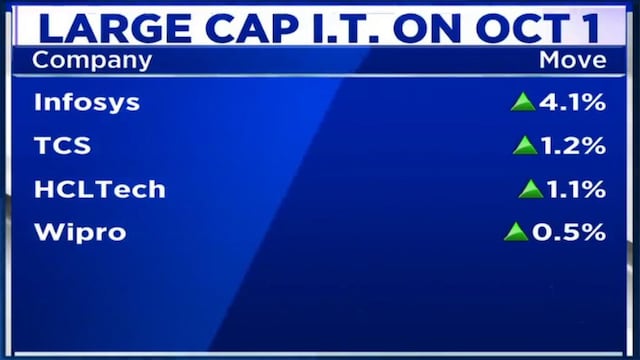
Katri’s comments come after a better-than-feared quarter from Accenture. The company reported strong bookings, while consulting growth matched managed services growth for the first time in many quarters. Headcount also grew after several quarters of decline.
However, he cautioned that the numbers do not yet point to a strong recovery. Accenture’s fiscal 2027 growth guidance of 3-6% includes 250 basis points from acquisitions, meaning underlying growth remains modest.
“So, the growth numbers remain unimpressive, but the general message is stability,” Katri said.
For institutional investors, Katri said Accenture remains the key proxy for the IT services industry, while TCS, Infosys, Cognizant and Wipro are among the other names investors are likely to track. He expects Wipro to remain an outlier because of its historically weaker top-line growth compared with peers.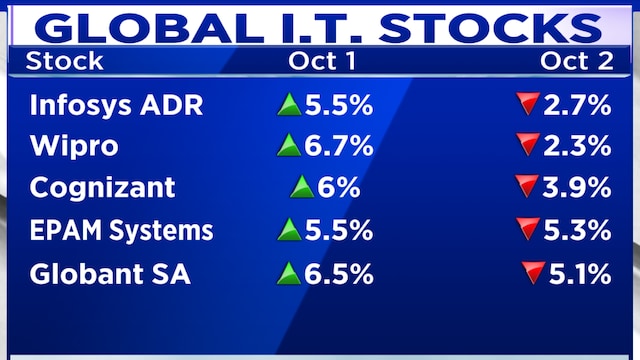
The sector, however, is trading at relatively inexpensive valuations based on historical multiples, while expectations for growth remain subdued. That combination could provide room for a re-rating if growth begins to accelerate.
Katri said investor preference between US-listed IT companies and Indian IT stocks will also depend on where investors can deploy capital. Large institutional investors in the US and Europe are more likely to focus on US-listed names, while investors with access to emerging markets could look more closely at India’s tier-one IT companies.
Watch the full conversation here

For Indian IT stocks, therefore, the potential shift in the AI narrative offers a positive backdrop, but Katri believes the sector still needs one crucial ingredient: stronger growth. “The only thing that we will be looking for as a catalyst for things to change is for growth to accelerate, and I think we could get there in a few quarters.”
Catch all the latest updates from the stock market here