
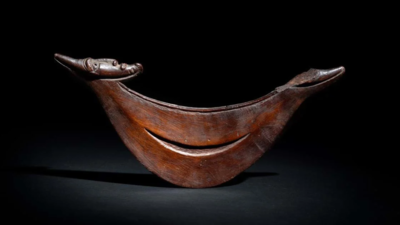
A damaged wooden pendant bought for less than £100 at a provincial auction has sold for £75,800 after specialists identified it as a rare piece of Rapa Nui ceremonial jewellery.The collector spotted the 10.5-inch object at a UK auction house about eight months before its resale. He placed a low opening bid and secured it without competition because no other bidders showed interest.The buyer later took the pendant to Woolley & Wallis, a specialist auction house in Salisbury, Wiltshire, where experts identified it as a late 18th- or early 19th-century rei miro, a ceremonial ornament from Rapa Nui, also known as Easter Island, The Independent reported.The piece was valued at £10,000 to £20,000 despite missing one of its two heads. A complete rei miro could have been worth up to £600,000, according to auctioneers.
Experts identify rare Rapa Nui ornament
The pendant is a rei miro, a crescent-shaped wooden ornament associated with status and authority on Rapa Nui, a remote Polynesian island in the South Pacific.Rapa Nui is best known for its monumental moai statues and is among the world’s most isolated inhabited islands. The island was visited by British explorer Captain James Cook in 1774.The rei miro was part of ceremonial dress and was associated with people of high status. It was reportedly worn mainly by chiefly women but also formed part of the ceremonial regalia of the island’s paramount chief, known as the ariki mau.Hardwood was scarce on Rapa Nui, making the material used for these ornaments particularly valuable. The pendants were often carved and polished from driftwood, with their shapes influenced by the timber available.
Damaged piece sparks international bidding
Despite its missing second head, the pendant attracted strong interest when Woolley & Wallis offered it for sale.The auction house placed its guide price at between £10,000 and £20,000. Instead, bidding pushed the hammer price to £60,000, with fees taking the final amount paid by the buyer to £75,800.A European collector secured the piece, as per the outlet.The final price was 758 times the amount paid by the original buyer in January, turning an inexpensive auction purchase into a substantial return.Woolley & Wallis specialist Luke Hobbs said the original buyer had recognised that the object appeared to be significant even though its importance was not initially identified.“The seller found it at auction in the UK at the beginning of the year. He thought it looked important and ended up buying it for less than £100, so he’s made quite a good return,” Hobbs said.He said only a small number of comparable objects had appeared on the market because many were acquired by museums after reaching Britain during the 19th century.
Missing head affects value
The damage had a major effect on the pendant’s estimated value.“It is sadly missing one of its heads, or it could have been worth £600,000,” Hobbs said.The auction house has no record explaining when or how the object was brought to Britain.Its original use, however, was clearer. Hobbs said the rei miro would have been worn by people of high status during important ceremonies or festivals.The collector who found the pendant had been interested in tribal art for years. Hobbs described the discovery as a significant moment for the seller.The object joins a small group of surviving Rapa Nui rei miro held in major museum collections. A Rapa Nui wooden rei miro sold for €812,000 at a Christie’s auction in Paris in 2021, according to the auction house.Arts of Africa, Oceania and the Americas specialist Will Hobbs described the latest object as a rare surviving example from one of the world’s most remote Pacific cultures.