
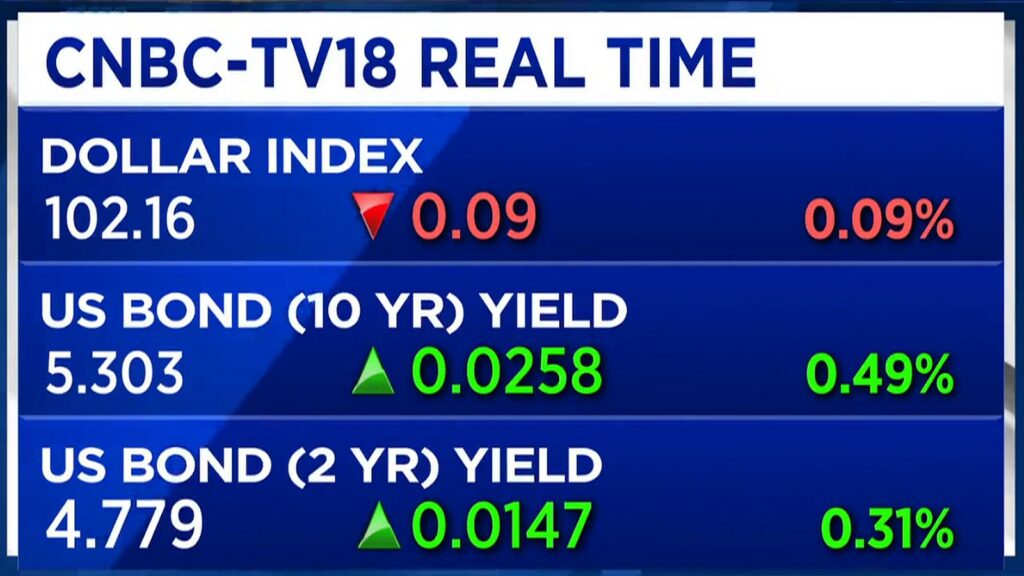
Matt Orton, Chief Market Strategist at Raymond James Investment, expects higher long-term yields to keep pressure on global markets in the near term, even as the Nasdaq continues to hold up. He says the US technology rally remains supported by heavy capital spending from hyperscalers, making the sector relatively less sensitive to rates for now.
On India, Orton believes selectivity is becoming increasingly important as foreign outflows, a weaker rupee and higher rates weigh on the broader market. He sees opportunities in stocks such as Mahindra & Mahindra, Eicher Motors, Nykaa and Adani Ports and SEZ, but says investors should deploy money gradually.
This is an edited transcript of the interview.
Q: It’s a problem here in India. I mean, it’s not a global problem or anything. We can complain and fret about rising yields, but it’s not making too much of a difference to US indices. But it’s making a difference to emerging markets. I mean, the entire trinity — rates, rupee and, of course, what that does to flows as well. What’s your sense on flows? We are starting to — and it’s alarming — get up to about a billion dollars some days, but it’s happening too frequently now.
A: It is. And I think it’s going to be a challenge in the future, especially given the rate backdrop. I would even argue that rates are impacting US markets. You just can’t see it because it’s taking place beneath the surface. It’s a tech-led rally. It’s been a narrow rally in the US, with stocks still sitting pretty close to all-time highs, but rates are taking a bite out of the average stock in the US, as is oil prices, geopolitical uncertainty, and you’re seeing that translate to almost all other markets around the world.
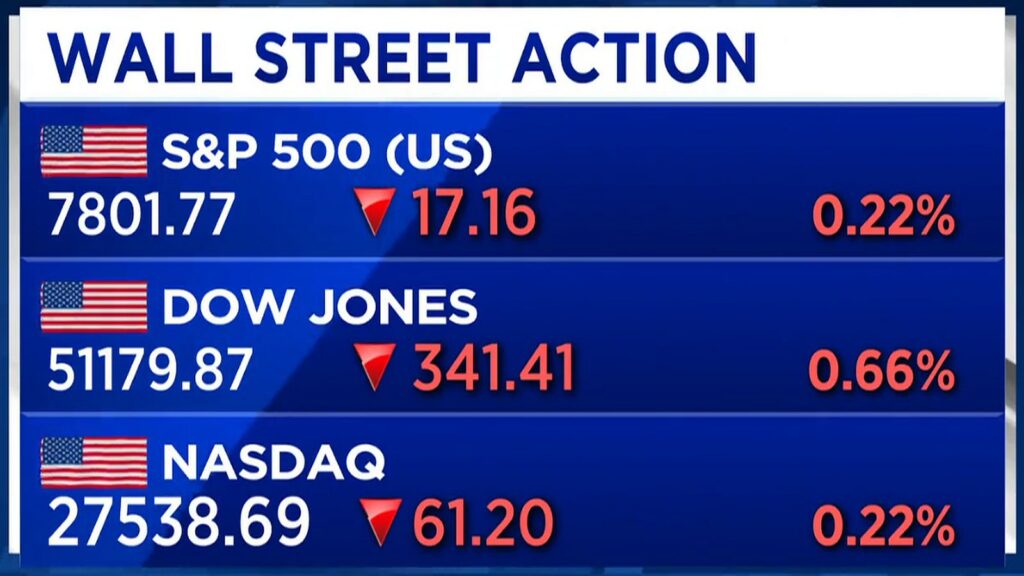
Maybe with the exception of Brazil, where there’s some optimism around elections. And US investors and a lot of global investors that I’ve spoken with over the past couple of weeks, the story is: how can we play defence without giving up too much on beta? And I think that’s why you’re seeing so many global investors go back to the hyperscaler trade, go back to the safety of balance sheets of Microsoft, Apple, Amazon, Alphabet, those traditional names, and wait things out there because at least you have confidence in the business model.
So, until we get some resolution, or at least maybe a pause in the upward move in longer-dated yields, I think it’s going to be tough for a number of markets around the world, and even the average stock in the US, to really stage any sort of meaningful rally in the short term.
Q: The question with regard to the mother market, the US market, because that’s chugging along. But you can’t have the Nasdaq as well as the yields moving in the same direction, right? Both of them are just headed north. One of them needs to budge and needs to snap at some point in time. Your reading of the situation?
A: I don’t know if one necessarily needs to snap. There’ll be a level at which that takes place. I just don’t think we’re there yet because so much of the technology trade is based off of the massive amounts of capex investment that’s taking place from the hyperscalers, and they are fairly rate insensitive.
There will come a point where longer-dated rates, especially around the world, will start to change the capital allocation decisions. But it’s very clear that we’re not there yet, and they continue to increase the numbers that they’re spending on this.
So that insulates technology, especially anyone within the AI halo, and that’s a big component of the overall indices, especially the Nasdaq, which is so heavily weighted towards a number of those names.
So, I think for at least the foreseeable future, the Nasdaq can weather higher rates. At a certain point, it will break, and that’s why investors are flocking there as the safety trade right now, as opposed to fixed income, as opposed to other global markets that you traditionally view as safe.
Q: Your view on HDFC Bank — the valuation argument is well taken. You’ve got new leadership at the helm as well, and it’s a quality bank, right? Would you be interested? I know in the past your preference has been, I think, to ICICI Bank.
A: It has been. I mean, ICICI has at least been bouncing over the past couple of trading sessions, which is encouraging to see.
I think HDFC is still a proven story. I think just because of the hair that’s on previous management, some of the issues that we have to work through, I think that’s going to be a challenge until we get through at least the next one or two earnings seasons, and you see the company deliver stable ROE, improve their guidance overall, and show the market that they are still a quality bank.
So, I think HDFC is a show-me story, whereas ICICI went through some of that earlier this year, with some challenges as well, and they’ve already proven that to the market. And I think that’s why you see them rewarded, and I probably view them as the high-quality bank proxy.
Unfortunately, they’re a smaller weight in the overall index. And, it gets to the broader point of even Indian markets as well. They are suffering from the same sort of average-stock challenges as the US market because there’s a number of stocks that are still working well underneath the surface within the Indian markets.
But because the heavyweights in India are doing the opposite of what they’re doing in the US — they’re moving down, they’re challenged — that’s weighing down the overall index as well.
So, I think my message for investors is that selectivity really pays off. Being in quality that’s being rewarded by the market is a good place to hide until we get a little bit more macro stability in the overall global marketplace.
Q: You’re on stop short of telling us stocks that you like. IndiGo was on your radar, I recall. Mahindra & Mahindra, some of the stocks now they’re giving a bit of a dip. Good time to enter, or do you think the picture is too hazy that you like to keep some cash and gradually deploy?
A: I think gradually deploying is the key, but there are opportunities. You look at the sell-off, like you mentioned in M&M, I think that’s a great buying opportunity. When I was in India last month, when we last spoke and met with a number of different management teams, two names that have really been on my radar that I think — one makes sense to buy the dip on.
Also, in the auto space is Eicher Motors. I think that’s a fantastic growth story both in India and globally. And I also think a name like Nykaa has flashed up. I think their strength — we just got a second-quarter update from management. Their core beauty business continues to fire on all cylinders. House of Nykaa is getting more traction in the market, which is great to see.
So, I think the expectations in the market are probably still too low for what that company can deliver.
And then also you complement that with like an Adani Ports and Economic Zone, which has really weathered geopolitical uncertainty fairly well. Those are the names that I’m really focused on right now.
Watch the full conversation here

Matt Orton sees India stock opportunities despite FII outflows; prefers M&M, Eicher Motors, Nykaa
Q: Are there any global examples that you look at and say this is where Nykaa is headed, or it’s a very Indian situation?
A: Nykaa is a very Indian situation and that should be a message for global investors that the unique situation of the growth of the middle class in India, the empowerment of both women using the platform and then men also starting to use the platform for other purposes — I think that is a great story that is unique to India that you cannot get in other parts of the market. And you look at the global, both kind of luxury beauty market. It’s a challenged place, and you’re not seeing that in India. So again, it’s a good place to look.
Catch all the latest updates from the stock market here
NOTE TO READERS
The views and tips expressed by investment experts on CNBCTV18.com are their own, not of the website or its management. CNBCTV18.com advises users to check with certified experts before taking any investment decisions.