
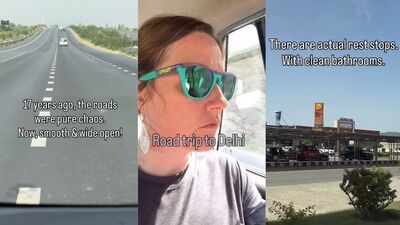
It’s a fact that in India, a road trip can be an adventure in itself. However, for one foreign traveller, the roads of India have changed dramatically over the past 17 years. The woman returned to India nearly after two decades and was left amazed with the present road conditions. She drove from Jaipur to Delhi via expressway and was surprised by the transformation. From smoother highways to clean toilets and proper rest stops, she experienced everything a road trip can offer.The videoKnown as @stayingboundless, she shared her experience on Instagram. The woman recalled how road trips in India once filled her with fear. Bad roads, hours of being tossed around in a vehicle and the lack of clean washrooms made long journeys challenging. She even remembered having to plan her water intake around the availability of bathrooms.Her latest drive left her impressed“This week I drove from Jaipur to Delhi on the Delhi-Mumbai Expressway and honestly couldn’t believe it,” she wrote on her Insta post describing the road as smooth and open, with proper rest stops and clean bathrooms. Calling it one of the most impressive changes she had seen in India, she invited other travellers to share their experiences too.The interesting caption“Seventeen years ago, a road trip in India filled me with dread. Rough roads, hours of bouncing around, and almost no clean places to stop. You planned your water intake around the bathrooms, or the lack of them. This week I drove from Jaipur to Delhi on the Delhi-Mumbai Expressway and honestly couldn’t believe it. Smooth, open road, real rest stops, clean bathrooms and decent coffee. It’s one of the most impressive changes I’ve seen in India. Have you driven it yet? Tell me what you think in the comments.”India’s expanding highway networkThe traveller’s experience comes against the backdrop of a substantial expansion of India’s road infrastructure over the past decade. According to the Ministry of Road Transport and Highways’ Annual Report 2024-25, India’s National Highway network grew from 91,287 km in 2014 to 1,46,195 km. The expressways are designed for faster movement with controlled entry and exit points.Rest stops are an important part of road travelOne of the most impressive features of the traveller’s account is her appreciation of facilities that are often overlooked. Clean toilets and reliable places to take a break may seem like small conveniences, but they can influence whether people feel comfortable undertaking a long road journey.The government’s aim is to offer travellers with more organised places to stop rather than having to depend entirely on whatever facilities happen to be available along a route. For families with young children, elderly passengers and people travelling long distances, this can be particularly valuable.What makes the Delhi-Mumbai Expressway significant?
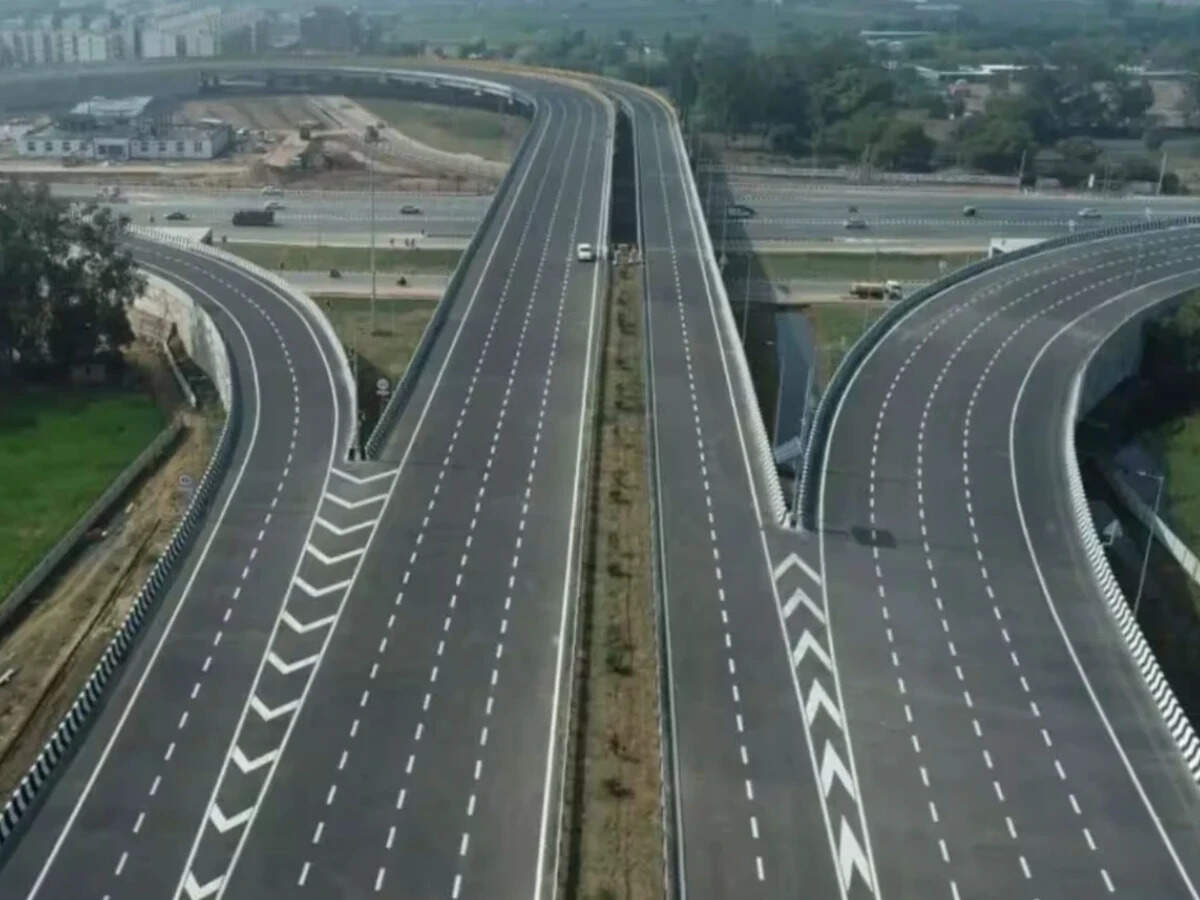
Projects like the Delhi-Mumbai Expressway, the Delhi-Amritsar-Katra Corridor, and the Amritsar-Jamnagar Economic Corridor are set to completely redefine cross-country logistics.
The Delhi-Mumbai Expressway is among India’s major highway infrastructure projects. Planned as a 1,386-km corridor, it is designed to connect the Delhi region with Haryana, Rajasthan, Madhya Pradesh, Gujarat and Maharashtra, improving links between important economic centres. The expressway is intended to improve connectivity and reduce travel time, although the actual journey depends on the operational stretch, traffic conditions, entry and exit points, and the route taken.For the woman returning to India after 17 years, however, the difference was not simply a matter of kilometres or minutes. It was the experience of travelling on a modern highway with facilities that made the drive feel more convenient.She ended her post with a simple reaction that summed up her surprise: “India, you’ve come a long way.”