
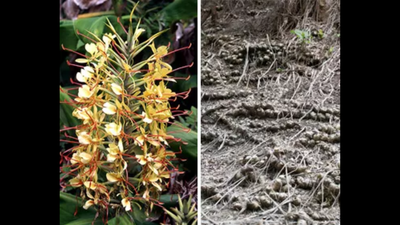
Himalayan ginger, known as Hedychium gardnerianum, reached Hawaiʻi as a garden plant. It was purposely introduced into park housing as an ornamental in the 1940s. According to the Hawaii Invasive Species Council (HISC), it is found on all major Hawaiian islands and is considered one of the world’s 100 worst invasive species by the IUCN. Its shoots reach seven feet and spread through rhizomes and bird-dispersed seeds. Its thickets dominate the understory of many Hawaiian forests and prevent native tree seedlings, such as ʻōhiʻa lehua, from establishing.
Why did Himalayan ginger spread through Hawaii’s native forests
According to the National Park Service, Himalayan ginger was purposely introduced into park housing as an ornamental plant in the 1940s. The species are part of a wider description of Hawaiʻi’s native plants, which developed in the remote island chain and “found their own special niche and fragile balance.” The NPS states that these plants now face major threats from alien invasive plants brought to the islands by humans.The HISC classifies the plant as a horticultural introduction and says it is found on all major Hawaiian islands. It states that the weed originates from the Himalayas and thrives in moist, forested lands. It is a pest in areas worldwide, including New Zealand, the Federated States of Micronesia, South Africa and Jamaica.
Why is Kāhili ginger considered one of Hawaii’s most invasive ginger species
The plant can be identified by its seven-foot-tall shoots and its large, glossy, dark green leaves. In summer, it produces red and yellow flowers. In late autumn and winter, it carries round orange fruit capsules, which open to reveal red seeds. The NPS also describes this variety of ginger as inedible.The height of the stalks is 1.5 to 2 metres. It states that they grow from dense mats of rhizomes, the underground stems of the plant. These mats quickly smother the forest floor. The species is also known as Kāhili ginger because it resembles the feathered staffs of Hawaiian royalty. The HISC gives a similar explanation, saying the name comes from the plant’s similarity to the kāhili feather staffs symbolic of Hawaiian aliʻi.Many people have started calling the plant Himalayan ginger instead, given that the species is native to the Himalayas. In its words, a Hawaiian name can potentially mislead people into believing the species is native. A wide variety of ginger species have naturalised in Hawaiʻi, but only a few pose serious threats to native forests, and none is as problematic as Hedychium gardnerianum.The plant spreads through rhizomes, or through birds that eat the fruit and carry the seeds to remote parts of forests. Kāhili ginger then dominates the forest understory. It hinders the growth of other understory species, such as ferns, and the regeneration of native trees. The HISC reports that the thickets grow easily in shade and dominate the understory of many Hawaiian forests. There, they outcompete native understory species and prevent native tree seedlings such as ʻōhiʻa lehua from establishing.
Which natural enemies are being tested to control Himalayan ginger
On control, the HISC reports that since 2008, CABI, an international not-for-profit organisation based in the UK, has been funded by a consortium of sponsors from Hawaiʻi and New Zealand to find a biological control. Early work has focused on cataloguing the plant’s herbivores and pathogens in its native range and on genetic diagnostics of plants found in New Zealand and Hawaiʻi. Testing in the UK and field testing in India have covered flies from the genus Merochlorops, weevils from the genus Metaprodictes and moth larvae from the genus Artona. The HISC says some of the natural enemies tested may not be specific or damaging enough and could be ruled out. Current work is focused on obtaining permits so that prioritised natural enemies can enter New Zealand for further testing.