
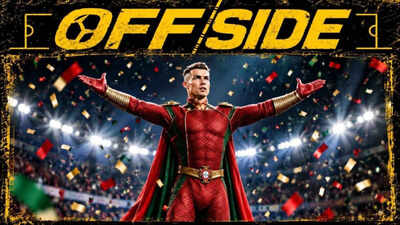
Hello and welcome to another edition of Offside.The most sublime TV shows often spiral into mediocrity. Game of Thrones was very hard to care about after Season 5, when they ran out of George RR Martin’s books and had to come up with something on their own, which was AI slop even before generative AI had hit our lives. House MD went downhill the moment they started focussing more on the Doc’s drug issues than the actual medicine. The same goes for Mad Men, where Don Draper’s personal issues became an albatross around a great show’s neck. And the same happened with The Boys, which began as an apt satire of our superhero-obsessed culture before becoming so bad in subsequent seasons that only Homelander’s narcissism – which started to resemble that of another man with blonde/orange hair who thinks he’s omnipotent – and Billy Butcher’s cussing kept the show from becoming completely banal. By the last season, it was running on fumes, and there was only one scene that made it worth watching all of them: Homelander losing his powers and getting tea-bagged by Butcher.It was worth the wait to see the world’s most powerful creature with a God complex being reduced to a mere mortal, more so since he had just killed Frenchie. And oddly, that final battle is starting to resemble the late-stage international careers of Lionel Messi and Ronaldo. And to put a cherry on the comparison, late-stage Ronaldo is starting to look even more like Homelander.Jeffrey Archer – a novelist known as much for his lifelong mendacity as his ability to pen compelling stories – had a format he first introduced with Kane and Abel and perfected over the years. In this format, he would take two contrasting Archer-types (pun intended) and run the rule over their entire lives from birth to death.Now, if he were to write about Messi and Ronaldo, he would probably begin with their lives. One, a tiny kid born in a middle-class neighbourhood in Rosario to the manager of a steel manufacturing plant and his wife, who worked in a magnet manufacturing plant.The other, a boy born into considerably more modest circumstances on the Portuguese island of Madeira, whose father worked as a municipal gardener and kit man at a local football club, named him not after the Brazilian footballer of the same name but after Ronald Reagan.Both would leave their homes soon. Messi, whose growth hormone deficiency threatened to derail any career in sports, finally signed a contract with Barcelona – famously signed on tissue paper – while Ronaldo joined Sporting’s academy in Lisbon, eventually attracting the attention of a Scotsman who knew a thing or two about forging youngsters into world-beaters.After torturing United’s stalwarts in a friendly – this was a time when they were Premier League beaters and not a banter club – the aforementioned Scotsman refused to leave the Sporting ground till they signed him. Ronaldo spent six years in Manchester, where his insouciant petulance was kicked out of him – sometimes literally – by Messrs Keane, Scholes and other members of the United first team, resulting in three Premier League titles, the Champions League and his first Ballon d’Or.Meanwhile, Messi progressed through La Masia to Barcelona’s first team, learning at the feet of Ronaldinho before Pep Guardiola pulled off football’s greatest switcheroo by moving him to a false nine role. He slowly became the footballer who looked like he had a button that allowed him to go into bullet-time mode.Messi’s and Ronaldo’s destinies – like football’s Karna and Arjuna’s – were always intertwined, and the Argentine got the first laugh when Pep Guardiola’s Barcelona beat Manchester United 2-0 in a match where the Blaugrana made the Red Devils look like a Sunday league team. The cherry on top for Messi fans was the fact that at a time when Ronaldo was known for his aerial prowess, it was the 5’7” magician who scored a header.Ronaldo would eventually move to Madrid in 2009 for a then-world-record £80 million, bringing the two men into direct conflict in what would become football’s greatest individual rivalry, consuming everything like a supernova. Between them, they broke every scoring record, shared every Ballon d’Or, and the only meaningful interruption to their rivalry came when someone had to collect the trophy from the podium and hand it to one of them.But all great stories have to end, with Ronaldo moving to Juventus, returning to United and then leaving for Saudi Arabia after an almighty fit.Messi, leaving a debt-riddled Barcelona, went to PSG, where even the Neymar-Messi-Mbappé troika failed to recreate the magic before settling in Miami in Mammon’s, sorry, David Beckham’s warm embrace.Their international careers, however, had different trajectories, with Messi failing to replicate his club form for his country, a Maradona-esque burden that seemed to hang heavy over him, with every failure treated as evidence that he wasn’t as great as his coke-loving predecessor. He even announced his retirement in 2016 before eventually winning the Copa América in 2021 and leading Argentina to the World Cup in Qatar in 2022.The 2026 World Cup ended in heartbreak, but Messi was never a burden for his team, and it appeared that the rest of the Argentina team would run through a brick wall for Messi, and perhaps if they had bothered to play a little football too, the final result could have been different. Messi signed off with one final match after his father and manager passed away.Ronaldo, on the other hand, won Euro 2016 with Portugal, though during the final he was off the pitch with an injury, and two UEFA Nations League titles. During the World Cup, it actively felt like Ronaldo was becoming a burden on his Portuguese teammates. Throughout his career, Ronaldo’s sphere of influence had decreased, first from the entire pitch to a small area in the penalty box, and even that skillset appeared to desert him in his final days.And yet Ronaldo appeared to persist with his national team, showing the sort of insouciance that was associated with a pre-Ferguson Ronaldo before storming off after a disagreement.And then, in an extraordinarily long Instagram post of nearly 2,000 words that could masquerade as an Offside column, Ronaldo wrote the sort of explainer that SEO guys dream about and released it hours before Messi’s final farewell.The 11-slide Instagram manifesto began with a revelation that Ronaldo had prepared his retirement letter after the 2026 World Cup, but the 41-year-old claimed he was persuaded to stay and that the board had consulted him before appointing Jorge Jesus. Ronaldo also invoked Simão Coutinho, Al-Nassr’s sporting director, pointing out that Jesus, in a previous avatar, had reported to Coutinho. That felt oddly like the Portuguese version of the Delhi saying: “Tu jaanta hai mera baap kaun hai?”In every single way, it was reminiscent of late-stage Homelander becoming more and more convinced of his own immortality and becoming increasingly unhinged before meeting his fate at Billy Butcher’s hands.
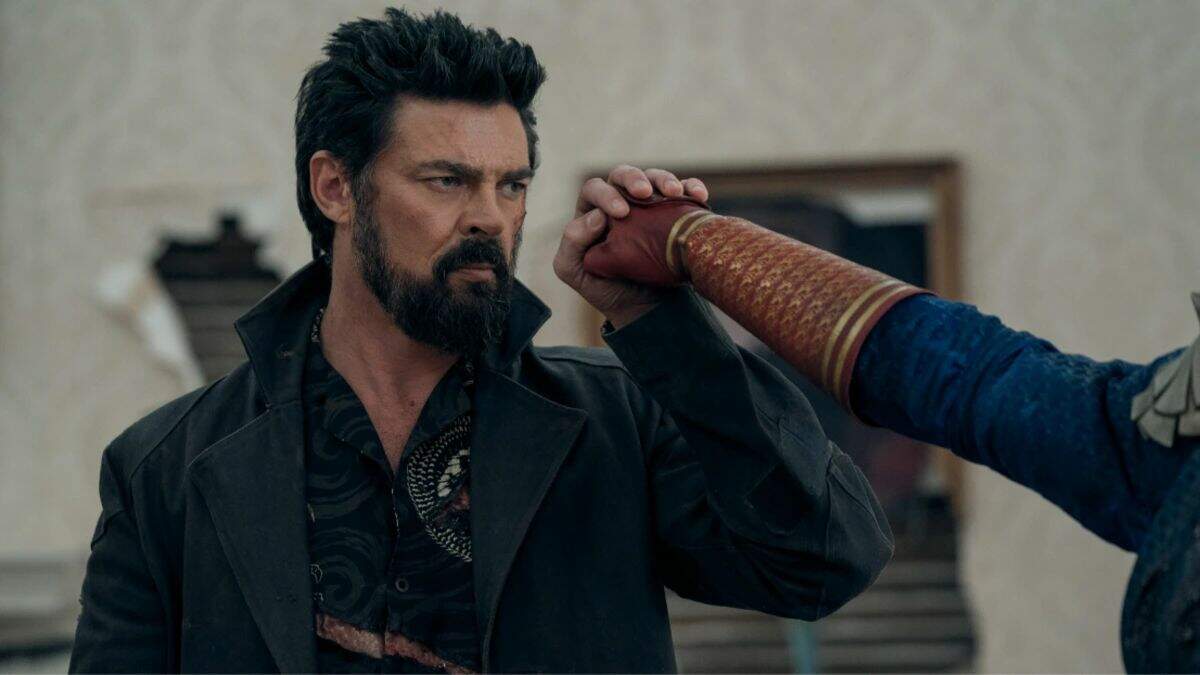
There was a time when the Messi vs Ronaldo GOAT debate had an inkling of merit.At that time, when Ronaldo said he was the “best in the world”, the world might have disagreed with him, but the way he went toe-to-toe with Messi suggested there was some merit to the debate. But in recent years, it feels more like a hollow chant, one that doesn’t convince anyone except Piers Morgan or iShowSpeed.Many years ago, Sir Alex Ferguson’s firm hand had forged Ronaldo’s career, turning a gifted teenager into a world-beater. In the late stages of his career, it’s quite clear there’s no Ferguson-like figure to lend him a shoulder, or perhaps Ronaldo has become a person who no longer listens to anyone else. Either way, it’s sad for anyone who has followed his career with interest to see what has become of the teenager of touch and tease who first made his Manchester United debut against Bolton and blew everyone away with his skills.And if Jeffrey Archer were to write the final chapter of these two intertwined lives, he would probably relish the irony that the boy from Rosario, who needed help to grow, eventually learnt when to say goodbye, while the boy from Madeira, whom Ferguson taught to grow up, appears unable to do the same. Homelander had to lose his powers before realising that he was a mere mortal. Ronaldo, thankfully, still has time to write a different ending. After all, the greatest tragedy would be for a man who spent his entire career defying the limits of human ability to be remembered for his inability to accept them.