
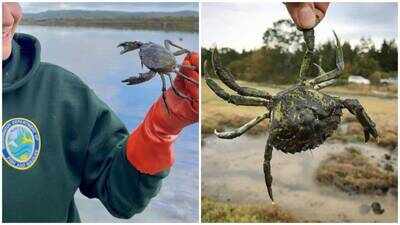
Washington state removed more than 2.16 million invasive European green crabs from its marine waters during the 2026 fiscal year, marking a major effort to control a species threatening coastal ecosystems. According to the Washington Department of Fish and Wildlife (WDFW), the crabs were captured between July 1, 2025, and June 30, 2026. Despite the record catch, researchers warn that established populations have not been eradicated and the invasion could continue to worsen, putting native marine life at risk.The WDFW report said the Coastal Branch accounted for 2,133,725 of the captured crabs, while the Salish Sea Branch removed another 24,827 during the fiscal year.Green crab catches reached record highs in multiple months during the period. The department said the increase could be linked to greater funding for capture efforts, weather changes and continued growth in established populations.Despite the scale of the removal campaign, Washington has yet to eradicate any of its established invasive green crab populations.The department estimated that removing more than two million crabs may have prevented tens to hundreds of billions of green crab larvae from being released into state waters, potentially limiting further spread.
Researchers warn invasive crab population remains a concern
The growing numbers have raised concerns among researchers monitoring the species. In 2022, former Washington Governor Jay Inslee declared an emergency over the invasive green crab population, after which the state legislature allocated more than $8 million to address the problem.Researcher Brian Turner acknowledged the scale of the increase, telling KUOW that officials had “seen some pretty dramatic increases”.“It’s not good news,” he said.Researcher Emily Grason also warned that the invasion remains ongoing and could become more severe.“It’s not hard to imagine the numbers could become worse. We are still in the middle of an ongoing invasion that hasn’t necessarily reached any sort of equilibrium,” she said.
How invasive green crabs threaten marine ecosystems
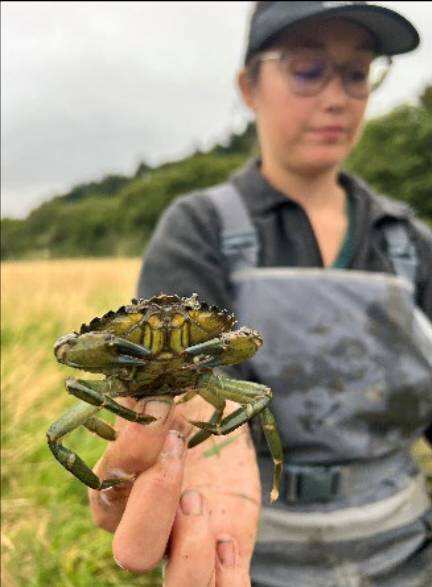
First detected in Washington in 2016, invasive green crabs threaten clams, oysters and other marine life, prompting a continuing state removal effort. (Photo: Washington Department of Fish and Wildlife)
European green crabs are considered an invasive species because they can disrupt ecosystems where they become established. According to the Washington Sea Grant Crab Team, the crabs can be accidentally transported to new habitats through marine vessels and seafood distribution.The first green crab was captured in Washington in 2016. The species is also invasive in places such as South Africa and Australia.Green crabs prey on clams, oysters, mussels, marine worms and small crustaceans. In environments where they have few natural predators, their feeding habits can put native marine species under pressure.The species has already been blamed for reducing soft-shell clam populations in Maine. Evidence also suggests that green crabs threaten aquatic plants, including eelgrass, which provides important habitat for marine life.
Early detection and monitoring remain key to controlling the invasion
The Washington Sea Grant Crab Team identifies early detection, rapid response, monitoring and population suppression as key strategies for managing invasive green crabs.The species can have red, brown or orange colouring, according to WDFW. One identifying feature is the presence of five spines on either side of its eyes.Although the removal of more than two million crabs represents a significant control effort, researchers caution that continued monitoring and sustained intervention will be necessary to limit the species’ spread and protect Washington’s coastal ecosystems.