
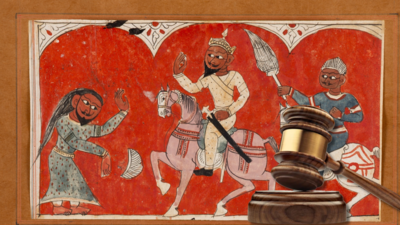
Around 1500, artists in North India painted six scenes of Alexander the Great; 526 years later, the illustrations sold for £70,760, over 88 times their estimateSix small paintings created in North India around 1500, depicting episodes from the life of Alexander the Great, were reported to have sold for £70,760 at Lyon & Turnbull’s June 10, 2026, auction. The illustrations, made more than five centuries ago for a manuscript known as the ‘Iskandarnama,’ had been estimated at just £600 to £800. According to the official website of UK’s auction house Lyon & Turnbull, the six illustrations were produced during the Sultanate period in North India and came from a private collection in Spain. The reported price of £70,760 was more than 88 times the £800 high estimate.
Six scenes from Alexander’s legendary journeys
The paintings illustrate different episodes involving Alexander, known as Iskandar in Persian literary tradition. The scenes include encounters with unusual beings, a meeting with an astrologer and a royal audience. According to Lyon & Turnbull’s catalogue, the illustrations depict Alexander meeting a hybrid human being; encountering male figures emerging from tall jars while riding a horse; consulting an astrologer; encountering a ‘makara,’ a mythical creature associated with the Eastern seas; riding alongside an attendant who waves a ‘chauri,’ or ceremonial fly-whisk, while receiving a bowing courtier; and scenes featuring a swirling ocean.The works are painted in gouache on paper. Each measures approximately 11 by 15.8 centimetres. The catalogue notes that the paper was cut down from a manuscript and mounted on brown paper. The auction house described the paintings as “vivacious illustrations”. It also noted their distinctive use of colour, particularly bright brick-red shades, and figures outlined in black with broad brushstrokes.
What is the Iskandarnama?
The ‘Iskandarnama,’ or Book of Alexander, belongs to a long literary tradition that retells the life and adventures of Alexander the Great. In Persian literature, Alexander is known as Iskandar, and stories about him combine historical elements with legendary encounters and philosophical journeys. The Iskandarnama is associated with the Persian poet Nizami Ganjavi and forms part of his ‘Khamsa,’ a collection of five narrative poems. Alexander’s story became a subject for illustrated manuscripts across regions influenced by Persian literary culture.These manuscripts combined written narratives with paintings that helped readers follow the stories. The six works sold in 2026 are surviving illustrations from such a manuscript tradition, rather than a complete book.
Why the paintings are associated with the Sultanate period
Lyon & Turnbull dates the illustrations to around 1500 and identifies them as works from the North Indian Sultanate period. According to the auction catalogue, the manuscript was commissioned by early sultans of Delhi, who retained Persian language, customs and Islamic religion. The auction catalogue links the manuscript to the Persian-language and cultural traditions retained by the early sultans of Delhi. Illustrated manuscripts offered a way to bring these stories into visual form, with artists adapting the narrative to their own techniques and colour choices.
From a private collection in Spain to an auction
The auction catalogue lists the illustrations as coming from a private collection in Spain. It does not provide a detailed account of when or how the six works entered that collection. Their appearance at Lyon & Turnbull’s June 2026 sale brought together a group of small paintings that had survived for more than five centuries.The sale does not establish who originally painted the illustrations or identify the individual artists. The auction house attributes them to North India during the Sultanate period, around 1500, rather than to a named painter. More than five centuries after they were made, the six scenes from Alexander’s legendary journeys were reported to have sold for a price far beyond the auction house’s estimate.