
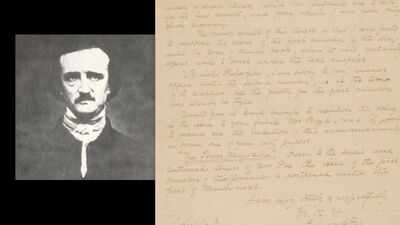
The author of The Raven and The Tell-Tale Heartspent years pursuing a dream. But it was a far-fetched one: establishing his own literary magazine. Now, a handwritten letter from Edgar Allan Poe, dated December 30, 1840 and signed “Edgar A. Poe” was recently sold at auction through RR Auction for $206,266.The letter addressed to poet and banker Lewis J. Cist was listed as Lot #5083 in the auction house’s Remarkable Rarities sale. It’s a one-page document offering a glimpse into the practical difficulties behind the celebrated writer’s literary ambitions. The letter offers a glimpse into one of the earliest setbacks in the ambition of having his own magazine, when illness forced him to postpone the launch of a journal he hoped would transform his literary career.More than a historical collectibleThe letter documents a moment when a writer known for his dark imagination was struggling with illness, deadlines and uncertainties over business making it more than a historical collectible.A letter written from a sickbed
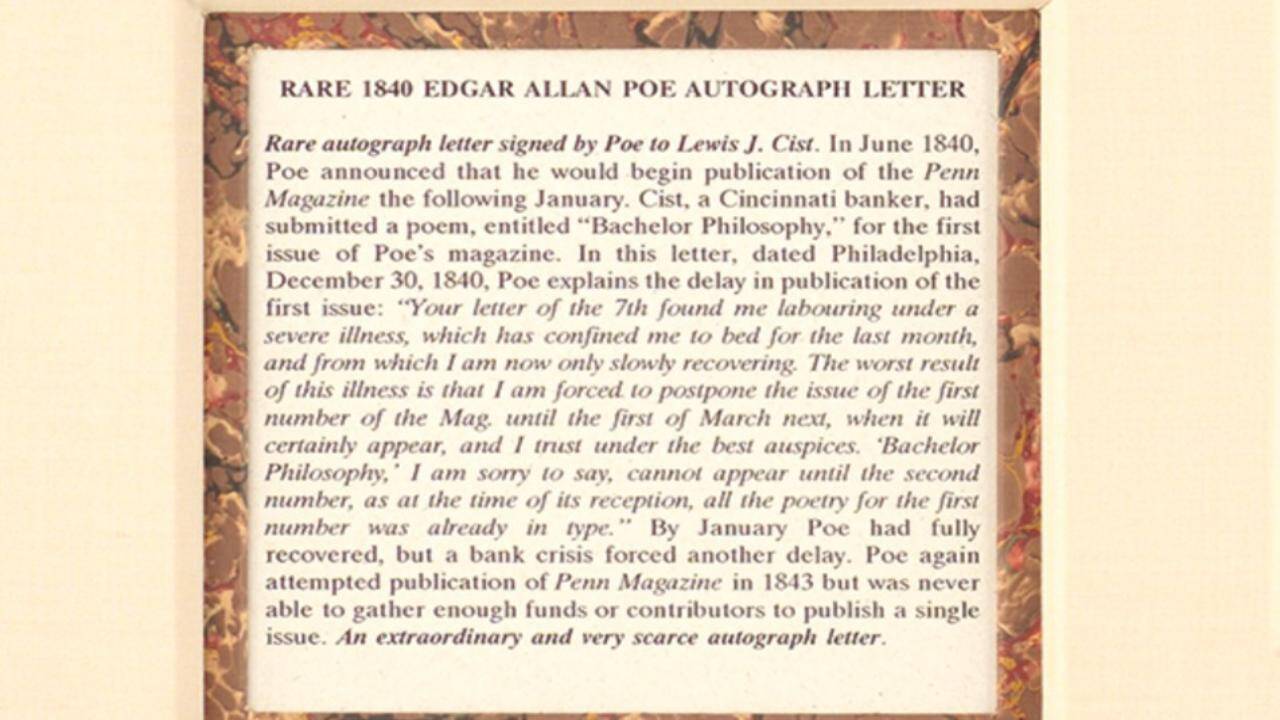
Rare Edgar Poe letter
Poe has written the letter from a sickbed. In the letter he tells Cist that he had been suffering from a serious illness which has confined him to bed for a month. He also writes that his recovery was slow and the illness had forced him to postpone the first issue of his planned magazine, The Penn Magazine, from January 1841 to March 1.“The worst result of this illness,” Poe wrote in the letter. He explained the delay but assured his correspondent that the journal would appear in March.The letter also reveals the routine editorial work taking place behind the scenes. Cist had submitted a poem titled Bachelor Philosophy for the proposed first issue. Poe apologised that it could not be included until the second number because all the poetry intended for the first issue had already been typeset.He also asked Cist to inform a mutual acquaintance, Mr Boyd, of the delay. If possible, also arrange for an announcement to appear in a local newspaper. Poe even supplied the wording of the notice, stating that the first issue of the magazine was being postponed because of his illness.Poe wanted a magazine of his own

In 1849, American writer Edgar Allan Poe was found delirious on a Baltimore street, wearing someone else’s clothes, and died days later without explaining what happened
Poe announced plans for the magazine in 1840, with publication initially envisaged for January 1841. The project promised a platform where he could bring together literature, criticism and discussions of American writing. He wanted more than a publication bearing his name. He sought editorial independence.That ambition was important and mentionworthy in an era when writers frequently relied on magazine editors and publishers for income and exposure. A publication of his own could potentially have offered him a stronger position.From The Penn Magazine to The StylusThe illness was only the first obstacle. Because there were financial issues as well. In 1841, a financial crisis involving Philadelphia’s banks had disrupted the publishing environment. Poe had to postpone his magazine indefinitely. He then joined the editorial team at Graham’s Magazine, accepting a salaried position.Yet his magazine dream never died. Poe continued to explore ways to revive the venture, and developed a new version under the name The Stylus. Its prospectus appeared in Philadelphia’s Saturday Museum in 1843.A rare glimpse into the writer behind the classics
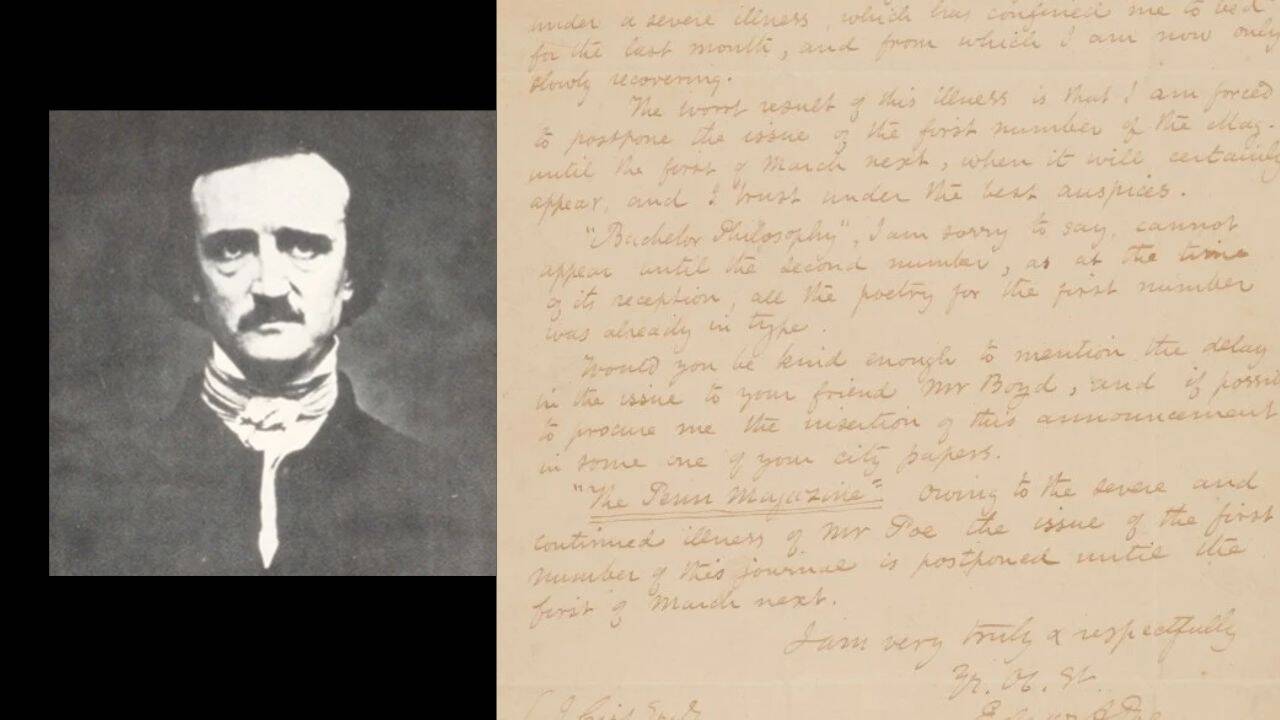
Poe delays the launch of The Penn Magazine (PC: RRAuction)
Today, Poe is remembered for his influence on horror and detective fiction along with Gothic literature. Some of his famous stories include The Fall of the House of Usher, The Murders in the Rue Morgue and The Tell-Tale Heart.But this letter offers a different perspective on that legacy.The value of a page of literary historyAccording to RR Auction, the letter measures 7.5 by 9 inches and is signed by Poe. The document sold for $206,266, including the buyer’s premium, against an estimate of $100,000 or more. For collectors, the significance lies in the story preserved on the page of a specific moment.Ultimately, the first issue of The Penn Magazine never reached readers, and The Stylus remained a plan.