
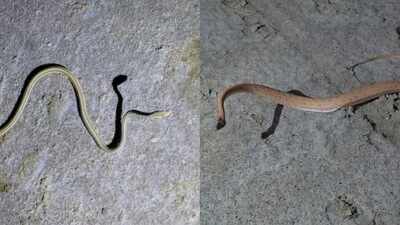
A routine evening patrol in Kutch has turned into one of the more unexpected wildlife stories of the year. According to the Gujarat Forest Department and reports by India Today, forest officers near Bhuj stumbled on a slim, fast-moving snake that hadn’t been conclusively recorded in the region for over 150 years. The reptile is the Afro-Asian sand snake, also called the Schokari Sand Racer, and it was photographed near Kala Dungar earlier this month. The sighting links a record from the 19th century with a confirmed observation today, and it offers a rare peek at the quiet wildlife that survives in Kutch’s dry landscape.
An unexpected meeting on the road
The discovery happened on the evening of September 6. Range Forest Officer Jayesh Dumadiya, 32, of the Gujarat Forest Department’s Bhuj North Range was returning from patrol with his team. At around 7:30 pm, they stopped after spotting a common black-headed royal snake on the road. While the team was busy handling it, a second snake appeared. Dumadiya, who had only recently been transferred to Kutch, didn’t recognise it. He quickly took photographs, shot a video and shared them with snake experts.
Identified by the experts
The reply came back soon enough. The experts identified the snake as the Afro-Asian sand snake, a slender, fast-moving species that’s rarely encountered in this part of India. It’s built for dry, sandy ground, and in India it’s mainly known from parts of Rajasthan and Gujarat. It’s mildly venomous, but it poses little danger to people and feeds on small animals such as lizards and rodents. A calm road at dusk turned out to be the perfect place for a very elusive meeting.
Last seen in 1872
What makes the sighting special is how far back the last record goes. Czech naturalist Ferdinand Stoliczka collected specimens of the snake while surveying Kutch in 1871 and 1872. According to the Gujarat Forest Department, he described a sand snake from the region in 1872 in the Journal of the Asiatic Society of Bengal. The name he gave it, Psammophis sindanus, was later folded into Psammophis schokari. Officials say there have been a few possible sightings since, but none was conclusively confirmed until now.
What the long gap really means
A century and a half sounds dramatic, but it doesn’t mean the snake vanished and then came back. One report notes that the gap likely reflects the absence of organised reptile surveys in Kutch during that period, rather than the animal actually disappearing from the landscape. The species is also listed as Least Concern by the IUCN. In other words, the snake was probably there all along, quietly going about its life, and it took the right patrol, on the right evening, with someone ready with a camera.
A glimpse of Kutch’s rich wildlife
The find has put Kutch’s wildlife back in the spotlight. The region may look barren at first glance, but its deserts and scrublands support a wide range of species that remain understudied. Forest officials plan to document the sighting further and publish the findings in scientific journals, which could add a new chapter to the natural history of Kutch. If a snake could go unconfirmed for so long, there may be many more surprises waiting out there.
Disclaimer:
This article is based on published reports and statements from the Gujarat Forest Department. Details of the sighting and the species’ status may be updated after formal documentation and scientific review. Snakes should never be handled without training. If you come across one, keep your distance and contact your local forest department or a trained snake rescuer.