
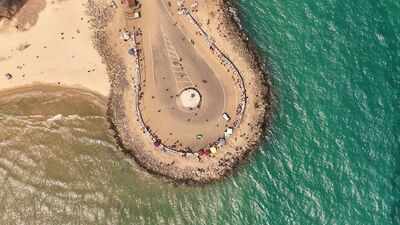
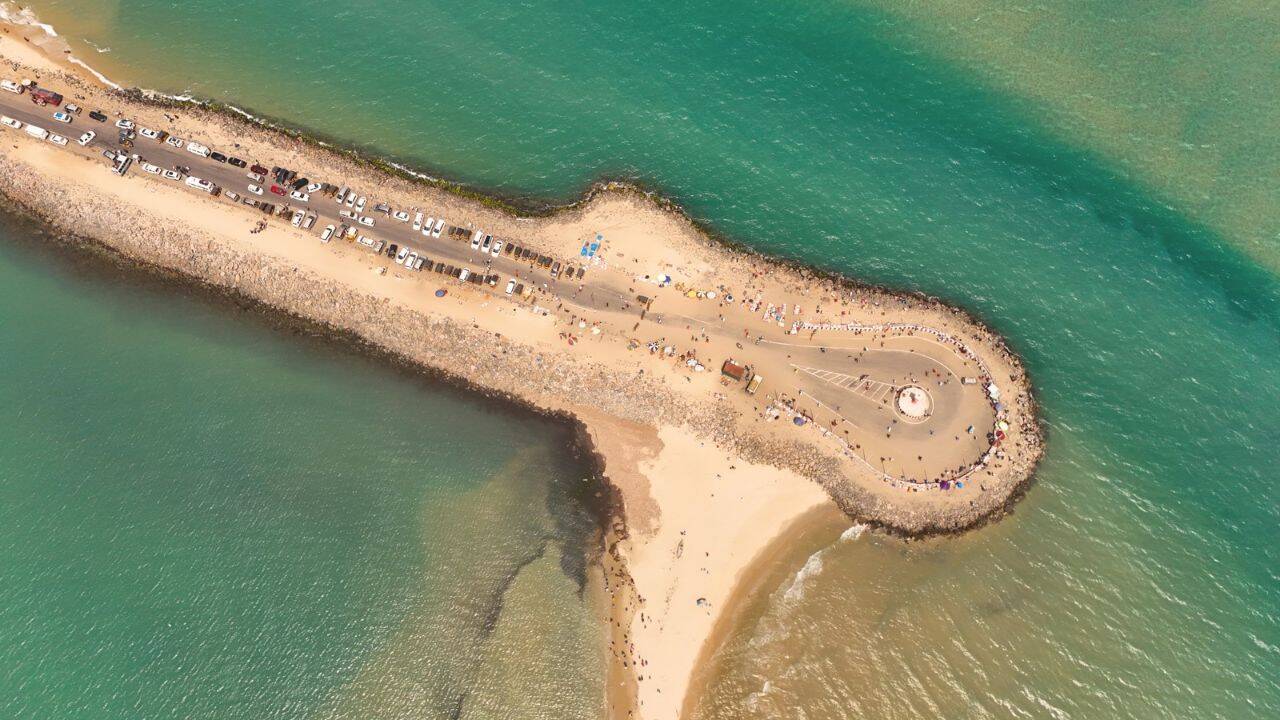
Among the world’s ghost towns, Dhanushkodi holds a special place on that list. This is the ghost town where myths meet reality and the town’s history remains intact in its ruins. Dhanushkodi is a place from where one can witness the point called ‘Arichal Munai,’ where the Indian Ocean and the Bay of Bengal meet. The Dhanushkodi beach often witnesses high tides, despite this, the town’s mystery has made it a particularly popular spot for tourists from all around the world.Located on the southern tip of Tamil Nadu, it lies at the southeastern tip of Pamban Island. The 1964 cyclonic destruction swept away homes, railway infrastructure, schools and office buildings alike. The loss of life and property led the government to declare Dhanushkodi a “ghost town,” unfit for habitation. More than six decades later, its ruins have become an unlikely destination for travellers drawn to history, solitude and nature’s extraordinary power.Today, Dhanushkodi is popularly known as India’s ghost town. But before the cyclone, it was very much alive.
A town that the sea took away
Before the disaster struck this town, Dhanushkodi was a flourishing town connecting the Bay of Bengal to the east and the Indian Ocean to the west. As recorded by the International Organization for Marine Aids to Navigation (IALA), it was an ancient port for more than 200 to 300 years, as recorded in the ancient history of Agananuru and by the renowned historian Marco Polo.
(Image Credit: Canva)
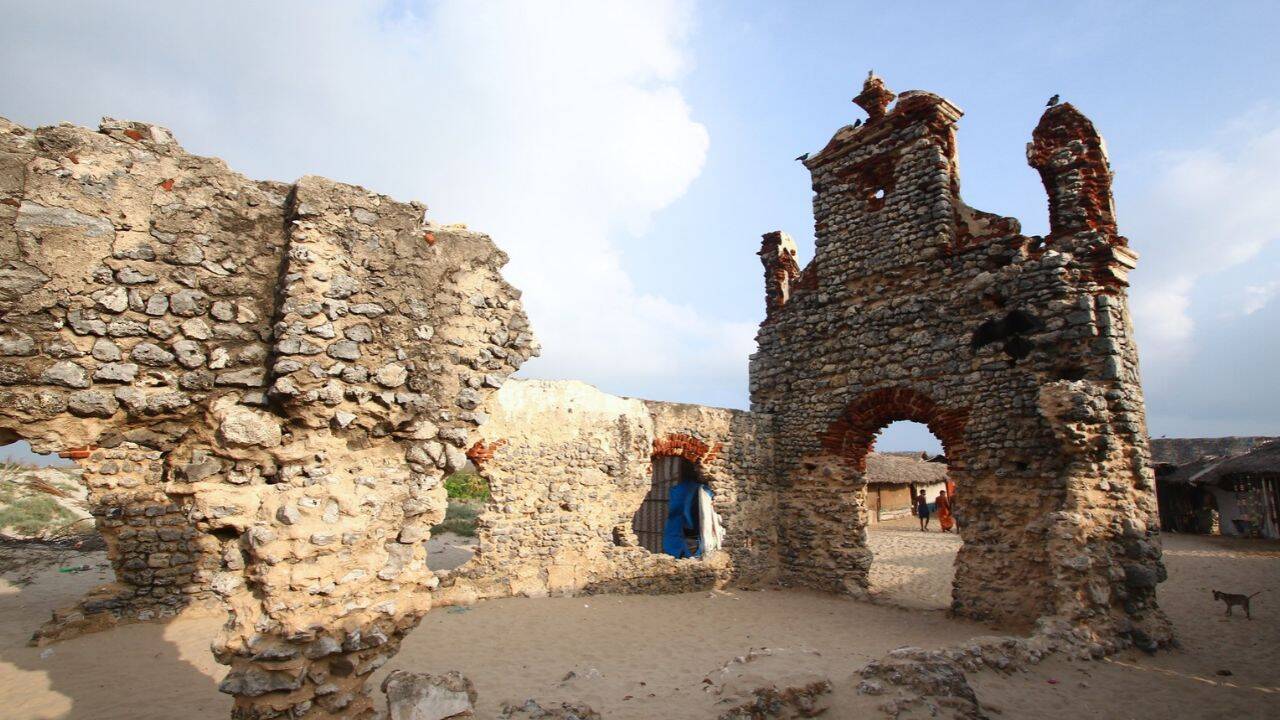
Records show various ferry services running from Dhanushkodi to Thalaimanaru, Yazhpanam and Colombo in then Ceylon (present-day Sri Lanka). These ferries transported goods and services across the sea and hotels, textile shops and other services catered to pilgrims and travellers. Moreover, the British Government in India introduced a train service from Chennai Egmore to Dhanushkodi. Pamban railway bridge was also constructed connecting Mandapam and Pamban of Rameswaram Island. The first passage of the train called Mail Boat commenced on February 24, 1914.Along with the small railway station, Dhanushkodi also had other infrastructure such as a small railway hospital, a higher secondary school, a post office, customs and port offices etc. The cyclone, however, wiped the entire town away and today one can only observe the sad ruins of this once flourishing township.
The mythological connection
Dhanushkodi as a word means ‘Tip of the bow’. It is believed that Lord Rama, upon reaching the tip of the landmass, pointed to the end of his bow and asked his army to build a bridge. The bridge was built to reach the demon king Ravana’s Lanka to save Rama’s wife, Sita. Ravana had kidnapped Sita and Ram had to go to the island to rescue her. Thus, the place occupies a crucial position in Indian mythology as well.
Walking through the ruins
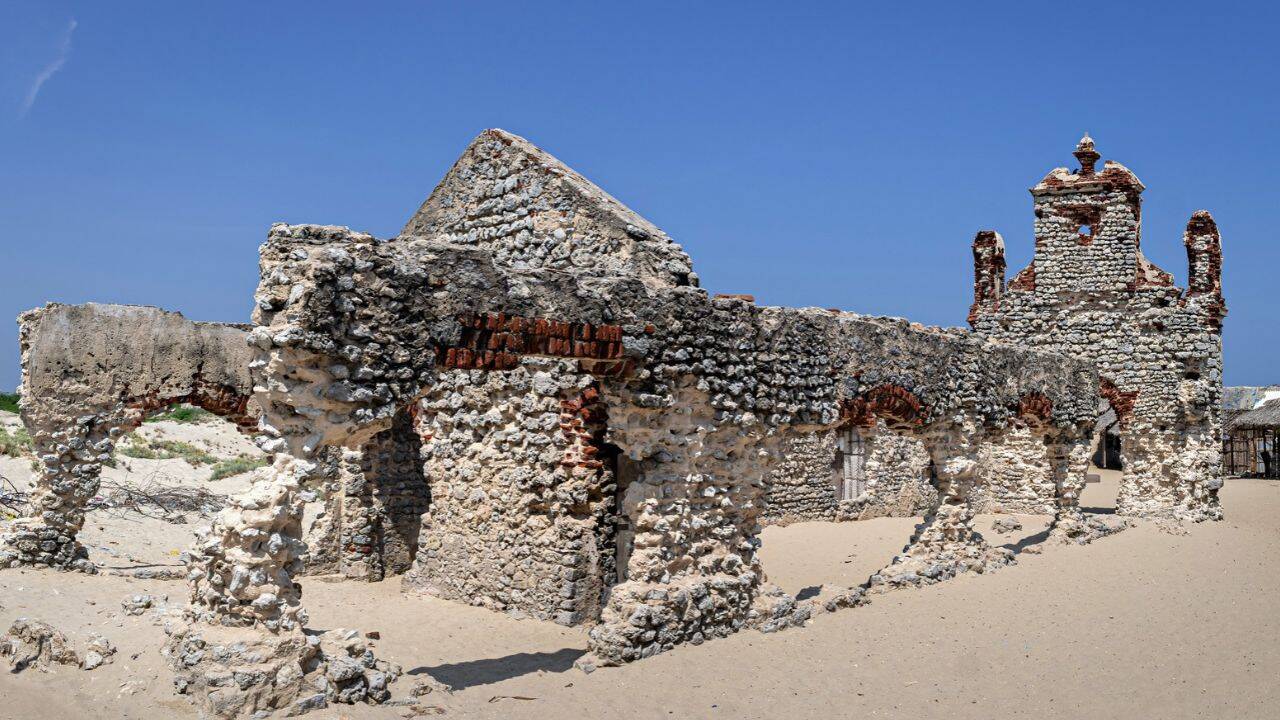
The town’s destiny changed on the night of December 22, 1964 when a powerful cyclone battered the coast and wiped out almost everything in the town. A daily rail service, Pamban-Dhanushkodi Passenger, had left Pamban with 110 passengers and 5 railway staff but was hit by a massive tidal wave before reaching its destination. The six coaches were swept away, killing all 115 on board. The tragedy also washed away the Pamban bridge which connected mainland India and Rameshwaram island.
(Image Credit: Canva)
The ruins of the railway line, schools, and churches remain on the island and are now reused by the 500 inhabitants who stay there. These are not grand monuments restored for tourists. They are fragments of an interrupted history, exposed to the same elements that transformed the town.
What else should you see?
While Dhanushkodi can be an exciting and revealing destination to visit, it can easily be combined with Rameswaram, one of Tamil Nadu’s important pilgrimage destinations. The revered Ramanathaswamy Temple, known for its long corridors and sacred significance, offers a striking contrast to Dhanushkodi’s abandoned landscape.
(Image Credit: Canva)
You can also visit the Kothandaramaswamy Temple, associated with the Ramayana and traditionally believed to be where Vibhishana surrendered to Lord Rama. Unlike much of the surrounding settlement, the temple survived the 1964 cyclone.Together, these places reveal the region’s many layers: faith, maritime history, natural beauty and the fragility of life along a vulnerable coastline.
Planning your visit
Dhanushkodi is around 18–20 kilometres from Rameswaram, making it a convenient half-day excursion. Rameswaram is the best base, with rail connections and road access. Madurai is the nearest major airport commonly used by visitors.The best time to visit the coastal town is in the cooler months, broadly October to March. They are more comfortable for exploring as one can escape the scorching summer heat. Still, it is recommended to visit during early mornings and late afternoons for less intense heat and a clearer view. Moreover, carry travel essentials such as water, sun protection and snacks, as facilities become limited towards the tip. Finally, check local access restrictions and weather conditions before leaving, since the road may close during unsafe conditions.