
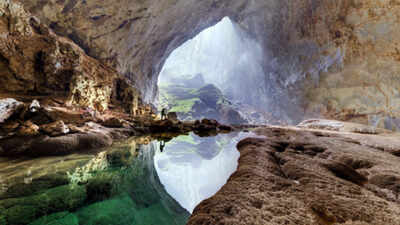
“Leap of faith”, a three-word phrase, encompasses a world of philosophy, one that many stories of adventure and discovery begin with. But some journeys do not lead you towards faith; instead, they bring it right to you, becoming a “leap for faith”. In December 1990, what began as a journey through the forests of what is now central Vietnam took an unexpected turn when heavy rains forced Ho Khanh, a local man, to seek shelter beneath a cliff. What was initially a refuge from the rain serendipitously led him to what would later come to be known as Son Doong Cave. According to the account shared by Oxalis Adventure, he noticed cold air and mist billowing out of the opening.Some places in the world that make us reconsider how much of the natural world remains unknown to us, and Vietnam’s Son Doong cave is one such discovery. Hidden within the limestone landscape of Phong Nha-Ke Bang National Park, this enormous underground passage contains a world of its own, with towering rock formations, an underground river and stretches of vegetation growing where sunlight finds its way through the cave’s collapsed ceiling.
The discovery that began with a storm
At the time in 1990, Khanh was among the local men who ventured into the jungle in search of agarwood, a valuable fragrant wood found in certain trees. These journeys could take him deep into the limestone mountains, where caves often offered shelter from the weather. Although he had encountered numerous cave entrances during his travels, the one he had seen this year stayed with him till long after and this leap he undertook here would be something he returned to years later.
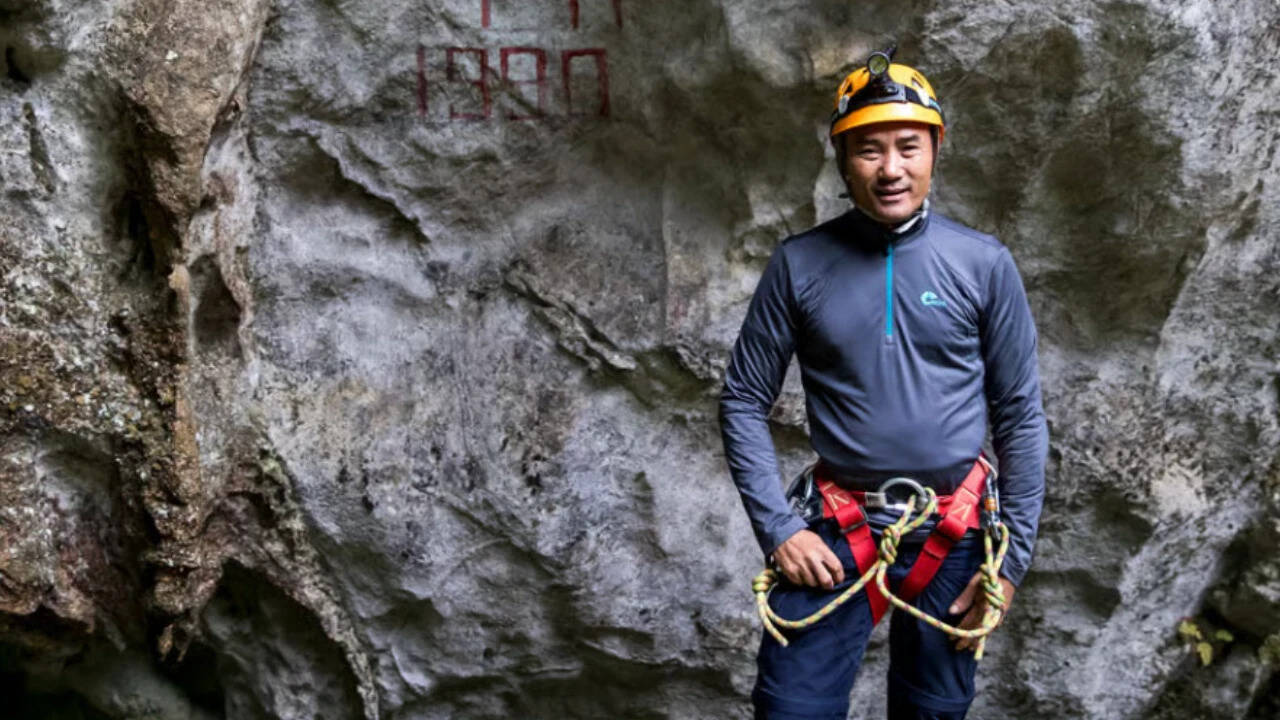
Ho Khanh (Image credit: Oxalisadventure.com)
His account eventually reached Howard Limbert, a British caver who was exploring the region with a team. Khanh tried to relocate the entrance in 2007 however he was unable to find it. But, he returned to the jungle alone in 2008, searching until he found the opening again and marked its location this time and this instance he had a route that he had remembered for nearly two decades that could lead the explorers to the cave.
A hidden world beneath the limestone mountains
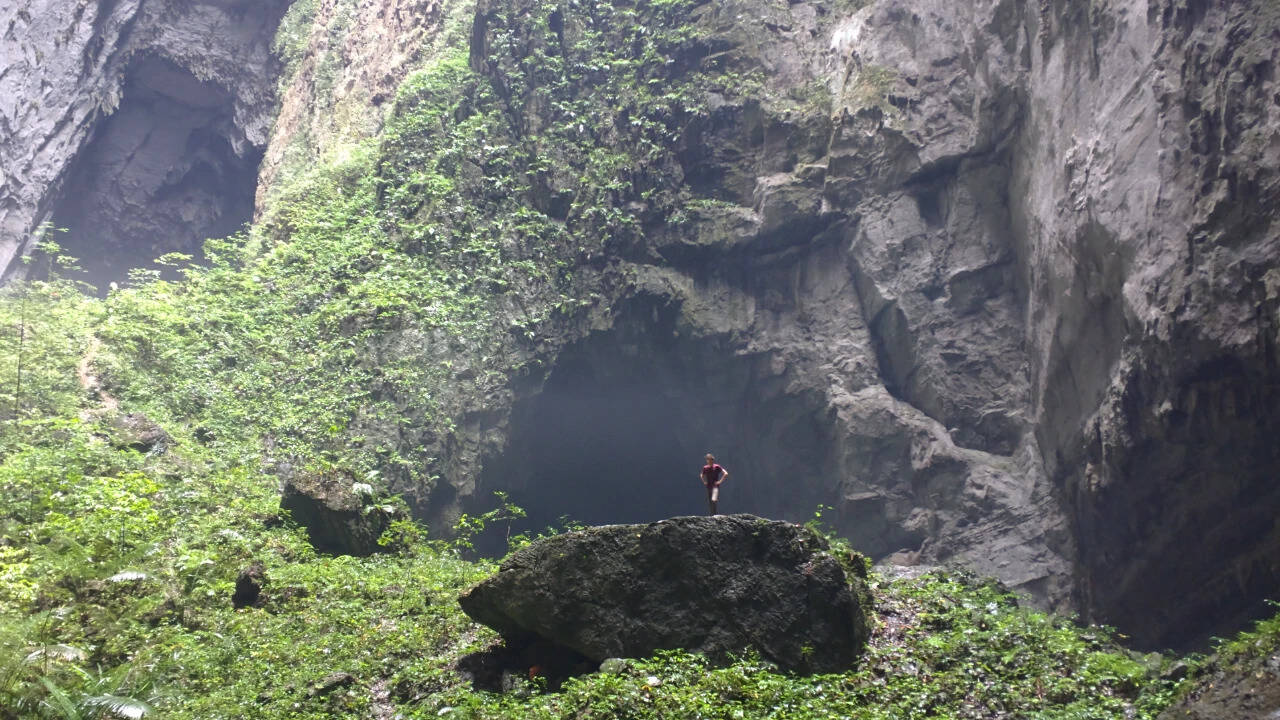
In 2009 ,a British-Vietnamese caving expedition led by Limbert explored Son Doong and surveyed its immense, magnificent chambers. Their findings revealed the cave as the world’s largest known single cave passage given its overall dimensions. According to Guinness World Records, it measures approximately 200 metres in height and 150 metres in width, extending for at least 6.5 kilometres. These measduremtns further explain why Son Doong is so often described as a natural wonder.
(Image credit: Wikimedia Commons)
What makes the cave particularly fascinating, however, is not just its size. Parts of its ceiling have collapsed over time, having created openings through which the daylight reaches the ground below. Vegetation has seen an expedited growth in these areas, having formed what has been commonly described as an underground jungle. The cave also contains a river, while its enormous chambers and mineral formations reveal the effects of water moving through limestone over geological timescales.Son Doong is believed to have formed millions of years ago as water gradually eroded the limestone, creating underground passages. Over time, sections of the cave roof collapsed and enabled some of the larger chambers to open towards the sky. These geological shfits helped produce the unusual landscape that now makes the cave so remarkable.
Protecting a natural wonder
The discovery of Son Doong brought international attention to the Phong Nha-Ke Bang region, already known for its extensive limestone formations and cave systems. But exploring such a vast and delicate environment also presents challenges. Its remote location, difficult terrain and fragile formations mean that access requires careful planning rather than an unrestricted flow of visitors.Organised expeditions began taking visitors into Son Doong in 2013, opening up the possibility of experiencing its immense chambers and underground landscape firsthand. The journey is an adventure in itself, involving trekking through forest terrain and navigating the cave with trained guides and support teams. Its appeal lies in entering a landscape that is not simply dark and enclosed, as caves are often imagined, but one where geological time, water and sunlight have created something unexpectedly alive.But the story of Ho Khanh does not begin and end with the search for agarwood, for it continues to unfold alongside the growing possibilities of cave tourism in Vietnam. The human endeavour to explore, discover and preserve has brought the world a natural wonder that might otherwise have remained hidden beneath the forests. Plato, the ancient Greek philosopher, explored the limits of human understanding and the illusions we mistake for reality through his allegory of the cave. However, in exploring a cave vast enough to shelter an entire forest, we encounter a different perspective: not the limitations of what we know, but the possibilities that lie beyond what we cannot yet fathom. Son Doong is a reminder that some of the world’s most extraordinary wonders remain hidden until curiosity leads us towards them, with a little bit of fate and a great deal of faith.