
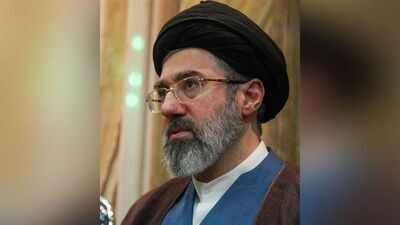
Iranian President Masoud Pezeshkian said on Monday that Supreme Leader Mojtaba Khamenei had granted the government “certain powers” to pursue talks with the United States aimed at ending the Middle East war.“We are striving to resolve the issue through dialogue. In this regard, the Supreme Leader has also conferred certain powers on the government,” Pezeshkian was quoted as saying by state news agency IRNA.His remarks came shortly after Iran’s foreign ministry said Tehran was exchanging messages with Washington through mediators.Earlier in the day, Iran said it had a two-day plan to reopen the Strait of Hormuz and resume nuclear talks with Washington, shortening the timeline from an earlier proposal that was expected to take seven days. The plan is conditional on the US meeting Tehran’s demands.Iran has said that ships passing through the reopened strait would have to follow a route agreed upon by Iran and Oman and travel under Iranian supervision.Its other demands reportedly include the lifting of the US blockade on Iranian ports, the removal of sanctions on Iranian oil sales and a ceasefire that would also cover Lebanon.Iranian foreign ministry spokesperson Esmail Baghaei said the proposal remained the basis for negotiations with Washington through mediators, despite the shorter implementation timeline.“This once again demonstrates Iran’s good-faith approach,” he said.Baghaei did not indicate whether Tehran had changed its demands or whether Washington had accepted the proposal.The announcement comes amid uncertainty over the possibility of renewed fighting in the region. Iran’s top diplomat said on Sunday that he hoped the US would choose “diplomacy over other paths”.US President Donald Trump has alternated between pursuing diplomatic efforts and threatening heavy bombing of Iran in his public remarks.Meanwhile, more than 300,000 people have fled renewed fighting in Yemen, according to the United Nations migration agency.The displaced families are struggling to find shelter and basic necessities, while aid organisations face difficulties accessing those in need.The latest fighting between Iran-backed Houthi rebels and forces supporting the Saudi-backed Yemeni government has broken a four-year truce, worsening the humanitarian crisis in one of the Middle East’s poorest countries.Earlier, China also said that it would send a special envoy to Iran, Oman and Saudi Arabia in early to mid-November to help ease regional tensions and promote stability.Chinese foreign ministry spokesperson Mao Ning said the envoy would focus on efforts to reduce tensions in the region, the Associated Press reported.The announcement followed a meeting between Chinese President Xi Jinping and Oman’s Sultan Haitham bin Tariq Al Said on Monday. According to a readout of the meeting, Xi said the Gulf region “should not become an arena for great-power rivalry and geopolitical conflict”.