
India’s foreign exchange defence is becoming increasingly expensive for the Reserve Bank of India (RBI), even as the central bank continues to attract record dollar inflows and step up its intervention in the currency market.
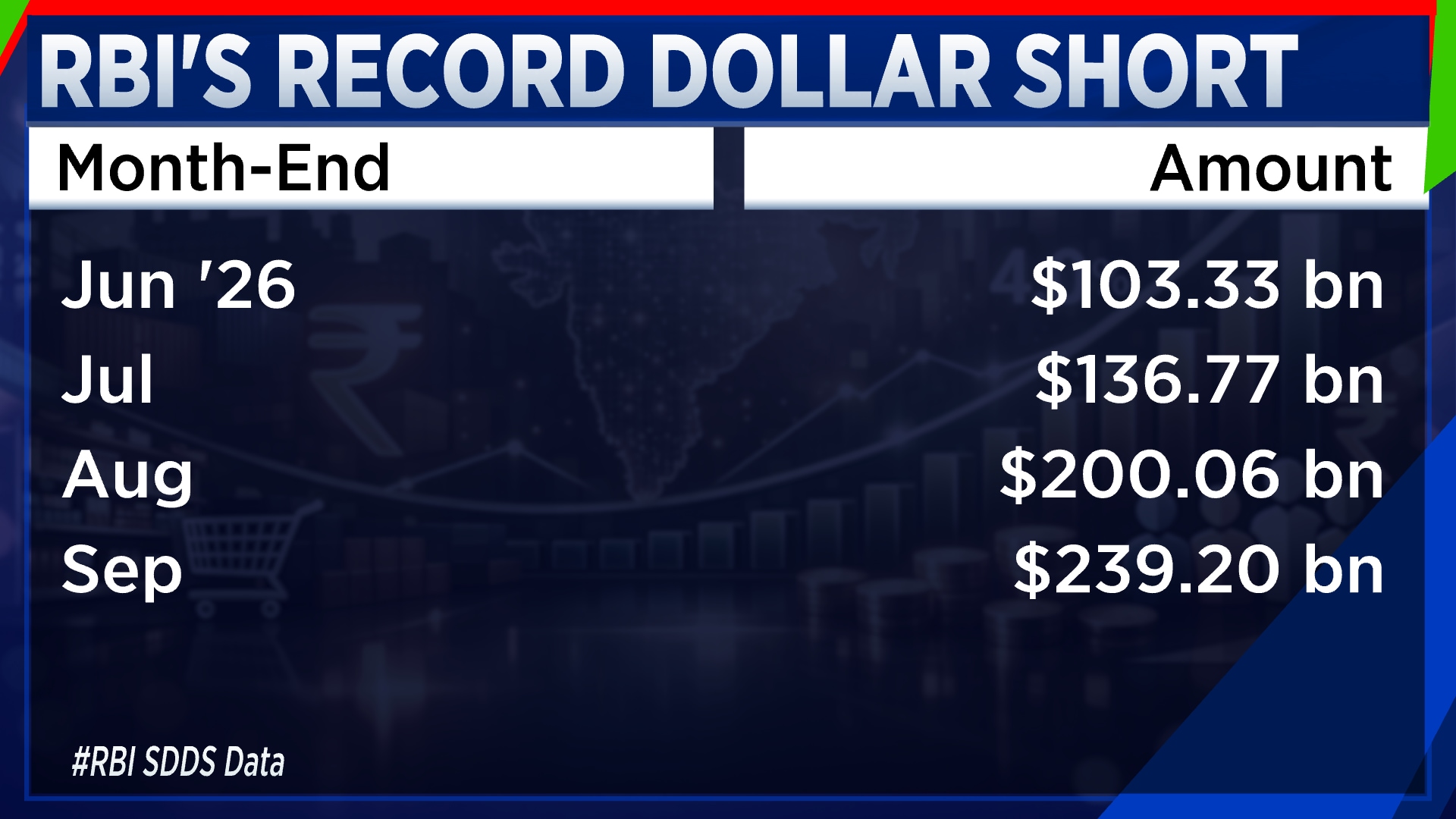
The rupee remains under pressure, with the RBI’s net short dollar position in the forward market touching a record $239.2 billion as of the end of September.
The central bank’s forward dollar position increased by more than $39 billion in just one month and has more than doubled since June, when it stood at around $103.3 billion.
A major factor behind this increase has been the RBI’s special dollar-rupee swap window, introduced in June to attract foreign currency inflows. The facility mobilised nearly $144 billion by September, with around $133 billion coming through foreign currency non-resident (FCNR) deposits.
However, these inflows also create future dollar delivery obligations for the RBI, which are reflected in its forward book. This means that while the swap facility has helped attract foreign currency, it has also contributed to the central bank’s rising forward dollar position.
The RBI’s intervention in the spot foreign exchange market has also increased significantly. The central bank was a net buyer of $43.26 billion in August, more than double its net purchases of $18.65 billion in July.
During August, the RBI purchased $74.4 billion and sold around $31.2 billion. This took its cumulative net dollar purchases in FY27 to approximately $47.43 billion by the end of August. This compares with net dollar sales of $53 billion during the entire FY26.
However, the August purchases need to be viewed in the context of the special swap facility, as the dollars mobilised through this window also influenced the RBI’s buying activity. Therefore, these purchases should not be entirely interpreted as direct intervention to support the rupee.
Meanwhile, India’s foreign exchange reserves have declined from their record highs despite the RBI’s efforts. The country’s forex reserves stood at around $719.75 billion for the week ended October 23, nearly $66 billion below the record $785.7 billion recorded in the week ended September 4. This marks the seventh consecutive weekly decline in the country’s reserves.
The latest movement in reserves also reflects valuation changes. Foreign currency assets increased by around $1.3 billion during the week, while the value of gold reserves declined by nearly $2.6 billion. Therefore, the fall in overall reserves cannot be attributed entirely to dollar sales by the RBI.
The bigger concern for the central bank is that substantial dollar inflows through the swap facility and increased spot market purchases have not eased the pressure on the rupee. Instead, the strain is increasingly visible in the forward market, where the RBI’s short dollar position has reached a record high and the cost of hedging the rupee has risen sharply.
A large part of the RBI’s short forward position is in contracts maturing beyond one year, adding to the challenges of managing its foreign exchange exposure.
A study by NK Global also highlights the possibility of further pressure from the external environment. The firm expects India’s current account deficit to widen to 1.7% of GDP this year, assuming crude oil prices average around $100 per barrel. It also estimates a balance of payments deficit of nearly $60 billion in the second half of the year.
This suggests that dollar demand could remain elevated even as sustainable foreign currency inflows become harder to maintain.
For the RBI, the challenge is to manage the rupee’s weakness without stretching its foreign exchange resources further. Continued intervention could become increasingly expensive, while also leaving the central bank with less room to manoeuvre on interest rates and monetary policy.
Watch accompanying video

RBI’s forward short dollar position hits record $239.2 billion amid currency defence
RBI’s forward dollar position hits record $239.2 billion as rupee stays under pressure