
The US midterm elections have changed the political balance in Washington, with Democrats winning control of both the House of Representatives and the Senate in a setback for President Donald Trump and his Republican Party. For Indian-Americans, the outcome raises questions about whether the change in congressional power will translate into any meaningful shift in policies affecting their lives.The result comes amid growing concerns within the community over immigration restrictions, employment opportunities and questions of identity and belonging. These concerns have become particularly significant for Indian professionals, who form a substantial part of the US technology workforce, but extend beyond skilled migration to the wider treatment of immigrants.The shift is notable because Indian-Americans had shown greater openness to Republicans in the 2024 presidential election. Trump’s second term, however, has brought a series of policy changes and political developments that have tested that support.
Democrats win Congress: What changes for Trump’s agenda?
Democratic victories have given the party control of both chambers of Congress for the first time during Trump’s second term. The new Congress will have greater powers to investigate the administration, summon officials for hearings, scrutinise immigration enforcement and challenge budgetary decisions.
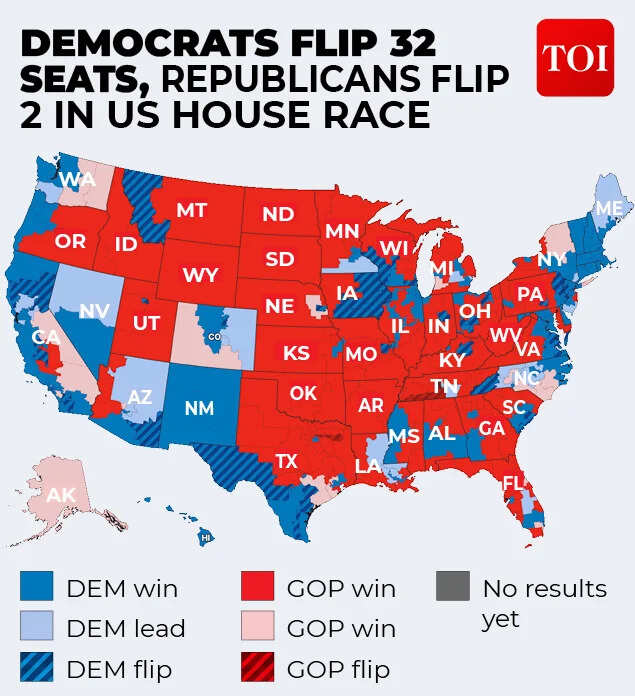
Democrats gain control of House
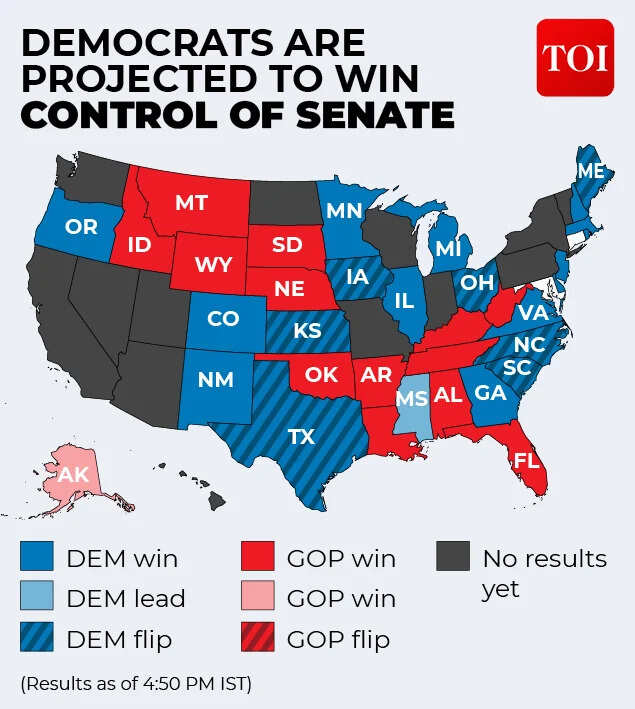
Democrats gain control of Senate
For Indian-Americans concerned about immigration restrictions, this creates a political counterweight to the administration. Democratic lawmakers can question the implementation of measures affecting skilled foreign workers, including H-1B sponsorship and visa scrutiny.However, Trump retains the power to veto any bill passed by Congress, and Democrats would need a two-thirds majority in both chambers to override his veto.The immediate significance, therefore, is greater scrutiny and a more difficult legislative environment for Trump, rather than an automatic rollback of his immigration agenda.
Are Indian-Americans moving away from Trump? What the data shows
The October 2026 Carnegie Endowment for International Peace survey offers an indication of how these concerns are reflected in voting preferences. Conducted in partnership with YouGov between October 7 and 27 among 1,000 Indian-American adults, it found that 62% of Indian-American citizens intended to vote for Democratic congressional candidates, compared with 19% for Republicans. Another 12% were undecided. The voting analysis was based on 861 US citizens.The survey also points to a distinction between party identity and voting preference. Forty-six per cent of respondents identified as Democrats, 19% as Republicans and 26% as independents. These figures were virtually unchanged from January 2026, even as voting intentions shifted towards Democratic candidates.Another finding is particularly relevant to the idea of a vote against Trump. Among respondents who intended to support a Democratic congressional candidate, 35% said their primary motivation was opposition to the Republican candidate or party, rather than support for the Democratic side. The remaining 65% cited support for the Democratic candidate or party as their main motivation.Here are some factors that directly affected Indians:H-1B restrictions: A direct hit on Indian professionalsThe H-1B programme is one of the most consequential areas for Indian-Americans because of the community’s strong presence in the US technology and professional workforce. People born in India accounted for 69.9% of all approved H-1B petitions in fiscal year 2025, or 283,772 of 406,348 approvals, according to US Citizenship and Immigration Services (USCIS) data.The Trump administration has sought to make the programme more expensive and selective. It introduced a $100,000 payment requirement for certain new H-1B petitions involving workers outside the US, with specified exceptions. In September 2026, Trump extended the restriction for another 12 months, until September 21, 2027. However, federal courts have blocked its implementation, and the fee is not currently being collected.The administration has argued that the programme has been exploited by employers to replace American workers with lower-paid foreign labour. In the September 2026 proclamation, Trump said it had been used to “replace, not supplement” American workers. The measure has, however, raised concerns among Indian professionals and employers over the cost and uncertainty of hiring foreign workers.Deportations: Crackdown beyond skilled migrationThe administration’s immigration enforcement has also affected Indians outside the skilled-worker visa system. The first US deportation flight carrying 104 Indian nationals under Trump’s second administration arrived in Amritsar in February 2025. Images of deportees in handcuffs and leg restraints triggered criticism in India, with the government raising concerns with Washington over the use of restraints, particularly on women.The ministry of external affairs said 3,567 Indian nationals were deported from the US in 2025 and another 1,273 between January 1 and July 22, 2026.These figures concern deportations and should not be conflated with legal migrants or H-1B workers. But the operations have brought the wider immigration crackdown into focus for Indian families and communities, including those with relatives living in the US.Jobs, layoffs and scrutiny of Indian IT companiesEmployment concerns have added another dimension. Layoffs in the US technology sector can leave H-1B workers with limited time to find another qualifying employer or change their immigration status. This makes job security particularly important for foreign professionals whose ability to remain in the country is tied to their employment.The administration’s scrutiny has also extended to employers. In October 2026, the US Labour Department suspended eight technology companies, including Indian IT firms Tata Consultancy Services, Infosys, Wipro and HCLTech, from the Permanent Labour Certification programme, or PERM. The action prevents the companies from filing new or processing pending applications under the employment-based green-card process.The move does not mean these companies have been removed from the H-1B programme, nor does it automatically cancel the visas of their existing employees. But it can affect foreign workers seeking permanent residency through employer sponsorship.The administration has defended its actions by alleging that some employers have used the system at the expense of American workers. On October 8, Vice-President JD Vance described foreign workers brought in through the process as “foreign indentured servants” while announcing the action against Microsoft and other companies. Microsoft disputed the administration’s characterisation of its H-1B filings, saying most were for extensions or changes in status of existing employees.US-India ties: Another source of dissatisfactionUS-India relations have also become a point of concern among Indian-Americans. A Carnegie survey conducted between November 2025 and January 2026 found that 55% of respondents disapproved of Trump’s handling of bilateral ties, compared with 20% who approved. A quarter expressed no opinion.Concerns over trade, tariffs and the future of strategic cooperation have added to the unease, particularly among those with business, family or professional links to both countries. The administration’s approach to India has therefore become another factor shaping perceptions of Trump’s presidency.Racism and MAGA rhetoricBeyond immigration rules and employment, the political climate has raised concerns about identity and belonging among Indian-Americans. Trump has repeatedly portrayed immigration as a threat, often without distinguishing between undocumented migrants and those legally living in the US.In his final television speech before the midterms on November 3, election day, Trump defended his immigration crackdown, claiming that millions had entered the US under the previous administration, “many criminals and murderers”. He also alleged that migrants had been released from prisons in countries across Africa, Asia and South America.
When I took over, the border was open. We were having millions and millions of people pour in, many criminals and murderers,
Trump to Fox News & Friends
A controversy involving Bo French, the Republican nominee for Texas Railroad Commissioner, brought these tensions into focus. French posted a photograph of University of Texas students of South Asian origin celebrating a football victory, claiming it showed how many Americans had been “displaced by foreigners”. In another post, he wrote: “I heard UT graduation this year looked like this. I didn’t believe it. The problem is now obviously far worse than anyone imagined.”Also read: Texas railroad commission – Bo French, Republican who sparked anti-India row, defeated by Democrat Jon RosenthalThe posts drew criticism from students and several Texas Republicans. The students’ citizenship status was not established, but the incident highlighted how people can be perceived as outsiders based on their appearance.A Carnegie Endowment for International Peace survey conducted between November 25, 2025, and January 6, 2026, found that half of Indian-American respondents had experienced discrimination since the start of 2025. Forty-eight per cent said they encountered racist social media posts targeting Indians or Indian-Americans somewhat or very often, while one in four said they had been called a slur.The impact has been visible even among Indian-Americans who are US citizens. In Frisco, Texas, Burt Thakur, a US citizen, Navy veteran and Trump supporter serving on the city council, told The Texas Tribune that he had faced racist remarks directed at him and the wider Indian community.In April 2026, Trump himself shared a podcast transcript describing India and China as “hellhole” countries and questioning the loyalty and integration of immigrants from those countries.
Indian-origin candidates: Wins and losses in US midterms
The election also saw several Indian-origin Democratic candidates secure victories, while Republican Vivek Ramaswamy lost the Ohio governor’s race despite Trump’s backing. The results add to the picture of Indian-Americans making their presence felt in US politics, but with contrasting fortunes across party lines.
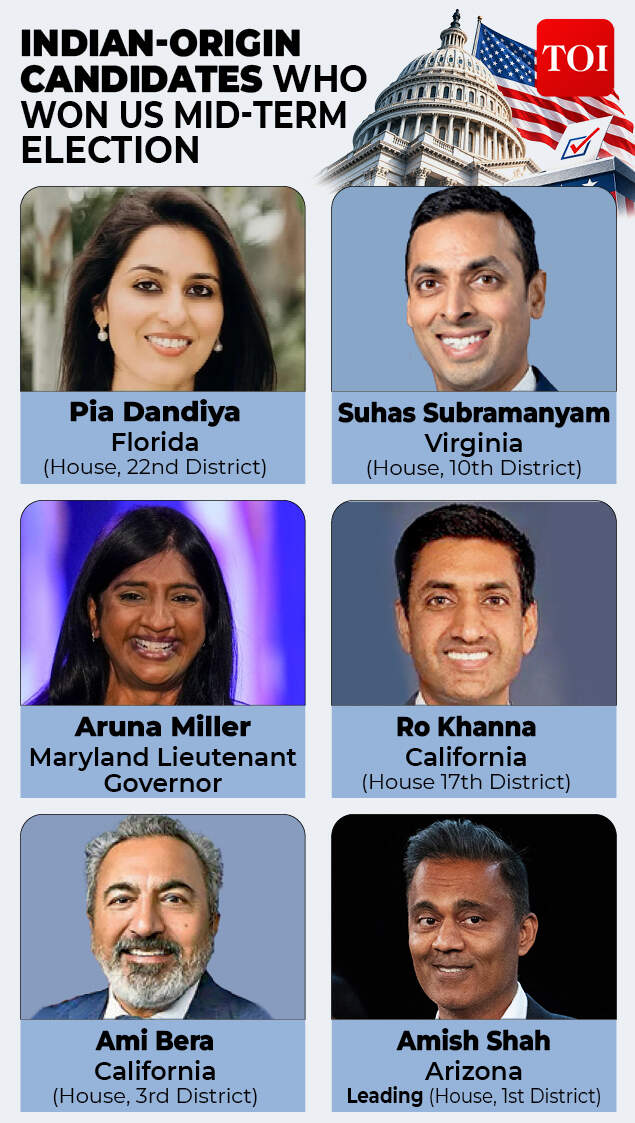
Indian-origin candidates who won
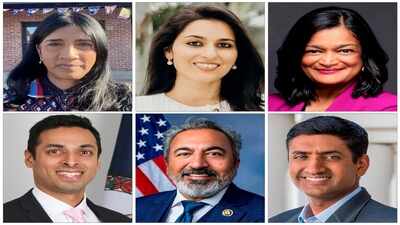
Democrat Pia Dandiya won Florida’s 22nd Congressional District, while Suhas Subramanyam secured re-election from Virginia’s 10th Congressional District. Maryland Lieutenant Governor Aruna Miller also won another term alongside Democratic Governor Wes Moore.Other prominent Indian-American Democratic lawmakers, including Ro Khanna, Ami Bera and Pramila Jayapal, also secured victories.Ramaswamy’s defeat, alongside the wins by Indian-origin Democrats, is also significant in this regard, even if indirectly.Also read: Indian-American candidates shine in US midterms 2026: Who won from where? Full list
H-1B workers: Will Democrats be able to offer relief?
The H-1B programme has an annual statutory cap of 65,000 visas, with another 20,000 places for applicants holding advanced degrees from US institutions. It allows American employers to recruit foreign professionals for speciality occupations generally requiring at least a bachelor’s degree or equivalent.India has a significant presence in the programme. In FY2025, Indian-born beneficiaries accounted for 77.6% of approved petitions for continuing employment, compared with 50.3% of approvals for initial employment. Computer-related occupations accounted for 62% of all approved petitions, underlining the programme’s importance to the technology workforce.Another major change is the wage-weighted selection system, effective February 27, 2026. It gives applicants in higher-paid positions a greater chance of selection in the cap-subject process, replacing the traditional random selection system. This could affect entry-level applicants and employers relying on lower-wage positions.The long green-card wait is another challenge. USCIS data as of June 2026 showed 356,360 approved Indian EB-2 petitions and 106,214 EB-3 petitions awaiting visa availability. These are approved employment-based petitions awaiting a visa number, not simply pending applications. The backlog can leave Indian professionals dependent on temporary work status for years.With control of Congress, Democrats can use hearings and oversight to examine the impact of these changes and push for legislative alternatives. However, reversing administrative rules such as the wage-weighted selection system would require action beyond a change in congressional leadership, as immigration agencies remain under the executive branch.The midterm results do not establish a permanent shift in Indian-American political loyalties. But concerns over immigration, jobs, discrimination and US-India ties have made the community’s support less predictable. Whether Democrats can turn this into lasting support will depend on how effectively they address these concerns, while Republicans will have to reckon with changing voter preferences.