
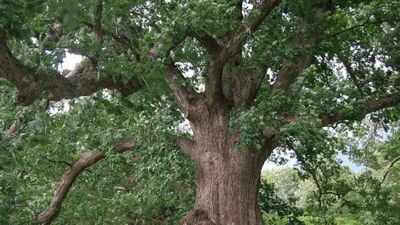
A New Jersey homeowner who repeatedly warned officials about a dangerous oak tree on neighboring utility-owned land has won a major legal victory after the dying tree eventually fell onto her house. The Superior Court of New Jersey, Appellate Division, upheld a jury decision awarding the homeowner $173,000 in property damages. The ruling, recorded under docket number A-2181-23, rejected the utility property owner’s attempt to overturn the jury’s decision that it was responsible for the damage. The appeals court made clear that property owners cannot ignore warnings about dangerous conditions on their land. This is especially important when dying or unstable trees could fall and damage nearby homes.
Repeated warnings preceded structural damage
According to official court records from the Superior Court of New Jersey, Appellate Division, the dispute began when the homeowner noticed a large, damaged oak tree growing near the boundary of a neighboring property owned by a utility company. Worried that the tree could cause serious damage to her home, the woman made several attempts to warn the utility company and local officials about its rotting condition. She raised her concerns through both written messages and direct conversations over an extended period. Despite these warnings, the property owner failed to carry out the needed maintenance, check whether the tree was structurally safe, or remove its dangerous branches. The situation eventually became serious when the dying oak tree was uprooted and fell directly onto the homeowner’s house. The impact caused major damage to the roof, the building’s frame, and the inside of the home. The homeowner faced high repair costs and was also forced to leave the property temporarily.
Trial court jury finds utility negligent
After the incident, the homeowner filed a civil lawsuit over the property damage in the Law Division of the New Jersey Superior Court. She accused the utility company of negligence under common law and private nuisance. Her complaint argued that the company had a legal duty to keep its property reasonably safe and deal with known dangers that could predictably damage neighboring homes. During the trial, the homeowner presented records of her earlier communications with the utility company. These documents showed that the company had been informed about the tree’s dangerous condition well before it fell. Experts in tree care and property valuation also gave evidence about the tree’s visible decay and the full extent of the damage to the house. The jury ruled in favor of the homeowner. It found that the utility company had acted carelessly by failing to deal with a known danger despite receiving clear warnings. The jury awarded the homeowner $173,000 in total property damages. This amount was intended to cover the cost of repairing the structure and other related work needed to fix the damage.
Appellate panel rejects appeal and affirms award
The utility property owner did not accept the jury’s decision and filed an appeal with the Appellate Division. The company asked the court to cancel the verdict or order a new trial. It argued that landowners should not automatically be held responsible for natural conditions on their property. It also claimed that the trial judge had made procedural mistakes when explaining a landowner’s legal duties to the jury. In its written opinion reviewing docket number A-2181-23, the appeals court rejected these arguments and upheld the full $173,000 award. The appeals judges explained that property owners are generally not responsible for harm caused by purely natural conditions. However, this protection does not apply when an owner knows, or should reasonably know, that a tree in an urban or suburban area is dangerous or badly decayed and fails to take reasonable steps to fix the problem. The court also pointed out that there was strong evidence showing the utility company had received clear warnings about the specific danger posed by the oak tree. The appeals panel found that the trial judge had correctly explained the legal responsibilities of urban property owners to the jury under established New Jersey common law. With the Appellate Division upholding the decision, the trial court’s judgment remains in place. The utility property owner must now pay the homeowner $173,000 to cover the losses caused by the fallen tree.