
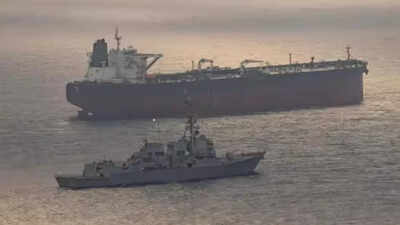
Iran has secured control of oil terminals and storage facilities at several locations in China to help transport and sell its sanctioned crude despite US restrictions, according to a confidential letter obtained by Iran International and accounts from sources in Iran’s Oil Ministry.The arrangement involves Iranian-controlled port facilities, long-term leases and oil storage tanks that allow sanctioned tankers to unload crude directly in China, reducing the need to transfer cargoes between vessels or rely on conventional shipping routes.In a confidential letter written by Hamid Bovard, former head of the National Iranian Oil Company (NIOC) and current acting oil minister, in response to correspondence from Ali Shamkhani, a former secretary of Iran’s Supreme National Security Council and political adviser to then-supreme leader Ali Khamenei.In his letter, Bovard criticised the oil-trading policies of former president Ebrahim Raisi and described an alternative arrangement developed under President Masoud Pezeshkian, involving what he characterised as covert cooperation from China.According to Bovard, Iranian authorities instructed trusted oil intermediaries to continue using sanctioned vessels capable of docking at designated Chinese ports. The Iranian foreign ministry negotiated access to port facilities and oil terminals, while Tehran secured long-term leases on storage infrastructure to facilitate the direct sale of Iranian crude in the Chinese market.Two Iranian oil ministry sources told Iran International that Tehran had acquired control of facilities at three locations in China. These include a terminal in the Ningbo-Zhoushan free trade zone, where Iran reportedly gained control after helping build smaller transit facilities, as well as stakes in smaller docks at Qingdao and Pant in Shandong province.The docks are located close to pipelines, allowing crude to be transported to Chinese refineries without being transferred to other vessels, the sources said.Iran has also purchased seven oil storage tanks in China, according to the report. Four are located at the ports of Dalian and Huizhou and in the coastal cities of Dongying and Weifang. The oil ministry controls three others in the Zhoushan area of the Ningbo-Zhoushan archipelago, including facilities on Aoshan and Shulanghu islands and in the Zengyamuo oil zone.The facilities are reportedly being used by tankers linked to Hossein Shamkhani, son of Ali Shamkhani, who operates a shadow fleet. Iran International said the arrangement allows these vessels to continue delivering Iranian crude despite US sanctions. The US Treasury has sanctioned 51 vessels linked to Hossein Shamkhani.
How Iran and China keep oil trade flowing
China has long been central to Iran’s efforts to sustain oil exports despite US sanctions. It is the biggest buyer of Iranian crude, with independent Chinese refineries, commonly known as “teapot” refineries, purchasing much of the oil through intermediaries.China accounted for more than 80% of Iran’s shipped oil exports in 2025, averaging around 1.4 million barrels per day, according to Kpler data cited in a Reuters report.The two countries have also developed a barter-like payment mechanism that allows Iran to convert oil proceeds into credits for purchasing Chinese goods, bypassing conventional international banking channels.Under the arrangement, proceeds from Iranian oil sales are channelled through a special-purpose vehicle (SPV), which pays Chinese suppliers for goods ranging from medicines and vehicles to communication equipment.The system allows Chinese companies to receive payments without directly dealing with Iranian buyers or using conventional international banking channels, limiting their exposure to US sanctions. China, meanwhile, continues to access discounted Iranian crude.
China seeks deeper discounts as Iran faces pressure
Despite the arrangements, Bovard’s letter suggests that Tehran has faced growing resistance from Beijing over its oil trade. According to the correspondence, China rejected Iran’s request to increase crude import quotas for Chinese refineries, raised purchases from Venezuela and demanded deeper discounts on Iranian oil.The letter also exposed tensions within Iran’s oil-trading network, particularly over the role of Hossein Shamkhani and other intermediaries.Bovard alleged that Hossein Shamkhani had used loans from the Iranian government to purchase vessels but deployed them to transport Russian oil rather than Iranian crude. He also accused him of receiving Iranian oil on consignment without providing collateral and selling it on the market.Bovard portrayed the United Arab Emirates as Shamkhani’s exclusive trading domain, alleging that the oil ministry had effectively become an agent for his business interests.The letter also disputed Ali Shamkhani’s assessment of the discounts at which Iranian oil was being sold. Shamkhani had reportedly told Khamenei that the discount stood at 50 cents per barrel under Raisi, compared with $9 per barrel under Pezeshkian.The latest disclosures follow an earlier Iran International report in September, which said that Mohammad Javad Bavand, a special assistant to the oil minister, had instructed four intermediaries, including Hossein Shamkhani, to sell 86 million barrels of Iranian crude at an 8.5% discount.Although China remains Iran’s most important oil customer, the reported demand for larger discounts and restrictions on import quotas suggest that Beijing’s willingness to accommodate Tehran may have limits.