
Indian equities have lost their valuation discount relative to global peers, but strong bottom-up corporate performance makes double-digit earnings growth in the second half of the year highly achievable, according to Sanjay Mookim, Head of Indian Equity Research at JPMorgan.
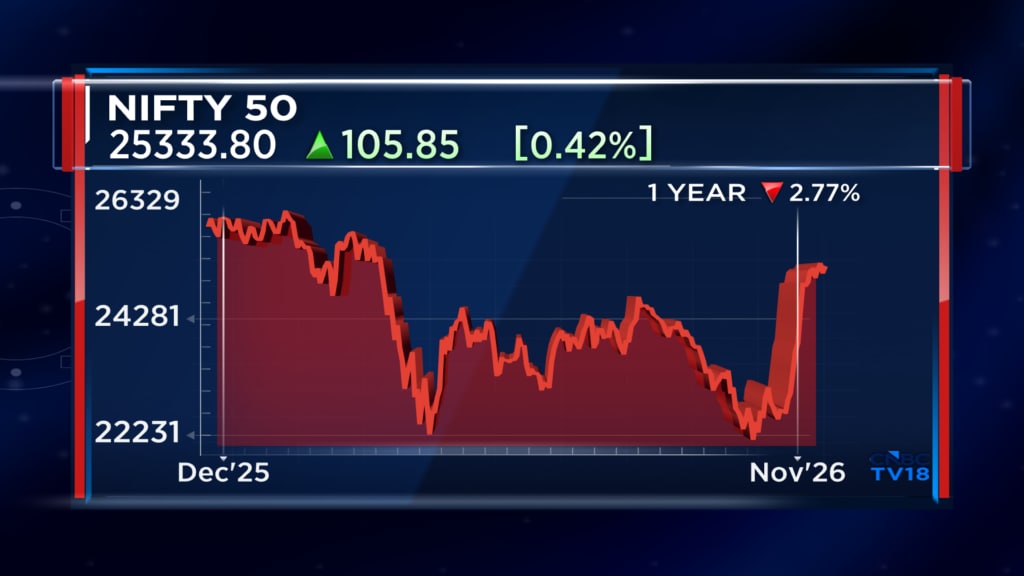
The price-to-earnings ratio for the Nifty 50 index is now slightly higher than that of the S&P 500 following the recent market bounce. Despite this eroded discount, corporate outcomes remain robust. The September quarter print delivered healthy numbers, and the December quarter is expected to follow suit.
This shifts the investment rationale for India from a value play to a fundamental argument based on strong earnings and reasonable valuations, making a buy-and-hold strategy in the large-cap basket viable for future returns.
The domestic economy was already in an upcycle before the West Asia conflict, driven by strong high-frequency data earlier in the year and a surge in exports catalyzed by lower tariffs and a weaker rupee. This momentum is expected to sustain.
For foreign investors looking to allocate new capital, the banking sector remains the top recommendation due to its near-term earnings momentum and favourable growth-to-valuation trade-off.
On the commodities front, ongoing supply disruptions and financial interests will likely sustain price volatility. While lower raw material costs present a potential margin boost, competitive pressures may force business leaders to pass these savings on to consumers to stimulate demand.
“It is very difficult to model an outcome where company volumes remain healthy at a time where you are expanding margins and not passing on savings,” Mookim explained, noting this trade-off will dominate corporate strategy over the next four to five quarters.
With interest rates hardening globally, high-growth stocks trading at steep multiples face significant risks if they miss earnings estimates. Similarly, consumer-facing categories experiencing high end-price inflation will likely see a volume response.
Global artificial intelligence (AI) capital expenditure, meanwhile, is projected to exceed $1 trillion in 2027. “Whether Indian service sector companies have a role to play in the implementation of AI as it diffuses, let us say, into the enterprise world is a question that will be relevant to stocks and to the employment at Indian IT companies going forward,” Mookim stated, describing the outcome as a known unknown.
Watch the full conversation here

Nifty valuations no longer cheap, but strong earnings can drive double-digit growth: JPMorgan
The primary macroeconomic threat stems from external account challenges. A scenario combining elevated oil prices, a high current account deficit, and scarce capital flows could trigger a net balance of payments outflow of dollars. Although rising domestic inflation will likely prompt the Reserve Bank of India to raise interest rates, the underlying economic data shows sufficient headroom to absorb a tighter monetary cycle without derailing bottom-up corporate outcomes.

Catch all the latest updates from the stock market here
NOTE TO READERS
The views and tips expressed by investment experts on CNBCTV18.com are their own, not of the website or its management. CNBCTV18.com advises users to check with certified experts before taking any investment decisions.
Indian stocks lose valuation discount after rally, but earnings growth remains strong: JPMorgan