
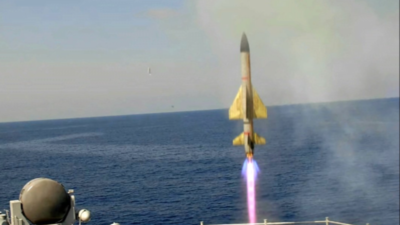
The defence ministry has signed a Rs 1,976.40 crore contract with Israel Aerospace Industries for the upgradation and obsolescence management of the Barak point defence missile system fitted on Indian warships. Under the deal, IAI will carry out a comprehensive overhaul of the system’s hardware and software, which the ministry says will give naval platforms enhanced features and a potent anti-air defence capability.The announcement stresses capability, but obsolescence management is arguably the heart of the contract. The Barak-1 entered service around 2000 and has been deployed for over two decades on Delhi-class destroyers, Shivalik-class and Brahmaputra-class frigates and the aircraft carrier INS Vikramaditya. Many of its electronic components, processors and sensors are now ageing, and in several cases the original manufacturers no longer produce spares, making readiness increasingly expensive to sustain.Two practical considerations explain the need for modernisation of the point defence system. Replacing every installation would cost far more and disrupt operations more than upgrading systems already integrated into the fleet, and many of these ships will serve for years. DRDO‘s indigenous VL-SRSAM is meant to succeed the Barak-1, but fleet-wide induction will take time. The upgrade ensures no capability gap in the interim. Better software, computing power and fire-control can improve reaction time, reliability, availability and resistance to jamming, even if the missile itself remains the same.The deal also underlines why point-defence systems matter. They form the last layer of an integrated air-defence network, protecting specific assets such as ships, airbases, radars and command centres against threats that slip past outer defences. On a warship, the Barak-1 is that final missile layer against aircraft, drones and anti-ship missiles. Warships are also equipped with gun based close in weapon systems such as the AK-630 which form the final line of defence.Cheap drones, loitering munitions and faster, low-flying missiles shorten reaction time, while the Russia-Ukraine conflict has shown how massed drones can be used against airbases and logistics hubs. Using costly long-range interceptors against inexpensive drones is an unfavourable trade, so shorter-range systems help conserve missiles for graver threats. The danger is saturation, where a defender runs out of interceptors even after intercepting everything.For India, with airbases and forward positions spread along the northern and western borders, layered cover is essential. DRDO’s VSHORADS cleared three flight trials on February 27 this year, and the Integrated Air Defence Weapon System, combining QRSAM, VSHORADS and a laser-based weapon, had its maiden trials on August 23, 2025. The Defence Acquisition Council cleared VSHORADS and medium-range missile procurement for the Army on July 3.The Barak contract is thus less a missile purchase than a sustainment effort. It also reinforces the India-Israel defence partnership, which includes the jointly developed Barak-8.