
“Here’s a satellite!” says Awais Ahmed, founder of Pixxel, one of Bangalore’s buzziest startups. He is pointing to a small rectangular box, about the size of a suitcase. Its inner walls are packed with circuit boards, chips and batteries. Unfoldable solar panels supply power to a large camera that will capture Earth in dozens of wavelengths invisible to the human eye.
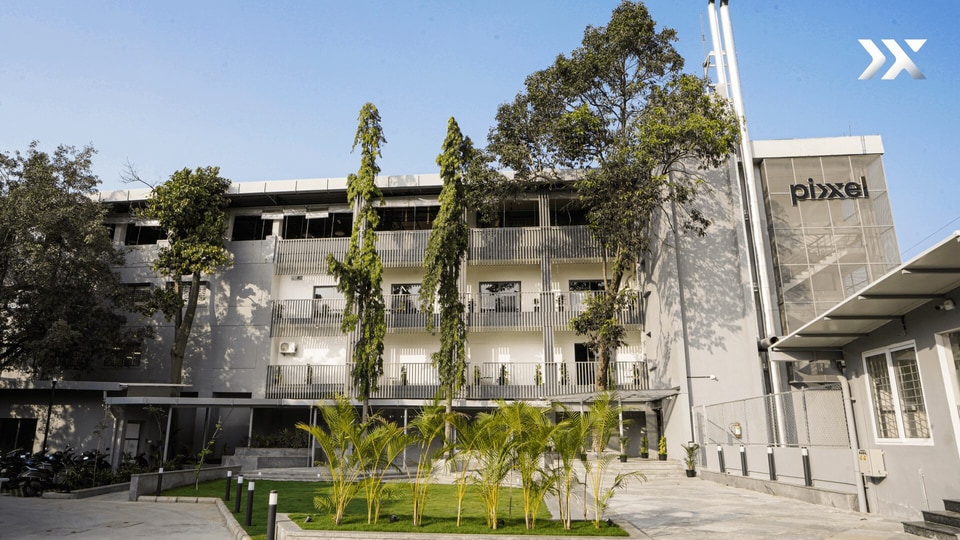
Mr Ahmed founded his company eight years ago, at the age of 20. He has since raised $200m and won contracts with India’s air force and America’s spy-satellite agency. Six Pixxel satellites are orbiting Earth; the company hopes to quadruple that number in a year. For now its main product is hyperspectral data, images so detailed that they can be used to identify stressed crops, oil leakages, mineral deposits and camouflaged military positions. But the goal, says Mr Ahmed bravely, is to build “the world’s most comprehensive Earth-observation company”.
For decades Bangalore has powered India’s software and IT industry, as the home to giants that include Infosys, Wipro and TCS. In the 2010s it produced dozens of companies focused on India’s giant consumer market (like Flipkart and Ola, Indian equivalents of Amazon and Uber). Now the buzz in India’s startup capital is “deep tech”—a somewhat loosely applied term for products supposedly based on scientific breakthroughs or advanced engineering in sectors like space, defence and semiconductors. Bangalore claims to have more than 1,300 deep-tech companies. Across India funding for deep tech is growing almost twice as fast as for other startups, according to Nasscom-Zinnov, which collects data (see chart).
India’s first tech boom happened largely in spite of the government. Despite bad schools and shoddy infrastructure, enterprising IT companies found ways to train up armies of workers and tap into the markets that opened up as the internet era took off. Politicians were broadly happy to stand back and reap the rewards. This time is different. India’s notoriously bureaucratic government has become highly involved in what it considers to be strategic sectors. When it loosens its grip, things take off. But as the sector grows, the axis between Delhi, India’s capital, and Bangalore will not only become more important, but probably more fraught.
The most impressive results have been in the space sector. A decade ago there was only one space startup in India. Now there are more than 400, and many are attracting global attention. In May Skyroot, a rocket company, became India’s first space unicorn (it is now valued at $1.1bn), shortly before completing its first satellite launch. It is one of a handful of companies working on reusable rockets, following the trail blazed by Elon Musk’s SpaceX, which completed a mammoth initial public offering in June. Within a few years Mr Ahmed hopes to be able to launch his satellites in India with Skyroot rather than in California with SpaceX.
Elsewhere in the city defence startups producing solar-powered drones and radar systems are booking big orders, as India’s armed forces undergo a revamp. Indian chip designers and executives are starting to set up their own firms. In October C2i, which designs power-management chips for artificial-intelligence servers, was bought by a German company for a figure thought to be around $100m. Agrani Labs is looking to raise a similar sum to develop advanced chips. Sarvam, India’s government-backed effort to build an indigenous AI model, is now valued at over $1.5bn, following a $234m funding round in June.
All this reflects India’s underlying strengths. The country has a huge talent pool, with more than 30m engineering graduates and countless brainy, ambitious people. Bangalore is a magnet for them, which is why hundreds of foreign companies have built so-called global-capability centres there. Though Indian founders are still more likely to head for Silicon Valley if they want to build an AI startup, many others, such as the founders of Tonbo Imaging, are choosing to stay or return, partly because of tighter immigration rules in America. Though India has long been a manufacturing also-ran, it is starting to show that it can compete in some areas–Mr Ahmed claims he can build satellites more cheaply than his competitors in America.
Indian deep tech also got a big push from the government of Narendra Modi, which has used a mix of deregulation, procurement and state largesse. It opened up the space sector in 2020 and created a new agency, IN-SPACe, to champion private enterprise. The prime minister’s office has helped startups to get security clearance and win sensitive contracts. An $11bn pot for high-risk research is being disbursed through venture-capital funds; in October it made its first awards.
It is not all plain sailing. Mr Modi’s government has established a dizzying array of technology missions, yet little co-ordination exists among them. Founders gripe that some dusty corners of the Indian state—such as the mining ministry, which has influence over rare earths—have not yet been touched by the deregulation drive. Indian deep-tech companies also struggle to find enough growth capital, a problem not helped by a weak currency and by worries that many foreign investors still have about getting their money out of India.
A bigger risk is that the government’s new relish for speed could falter. Some officials are concerned at how quickly things have taken off. They worry that they lack the oversight tools for companies developing sensitive technologies. Their fears could grow as startups expand abroad and seek foreign equity (if you are trying to develop pioneering technologies, domestic order books and investors will probably not be sufficient). Already some critics—including national-security hawks as well as more established companies—have raised questions about Indian startups’ loyalties. One test of how this plays out will be export controls for tech that might in theory be used by India’s enemies, especially Pakistan.
A final question mark is Bangalore itself. Its urban governance is a disaster. A reputation for interminable traffic jams, unreliable utilities and broken pavements may come to hinder the city’s rise as a global technology hub. Krishna Byre Gowda, the minister for urban development in the Congress-run Karnataka government, says that in the next five years or so the government plans to build nearly 100km of metro tracks and a lot of roads, including two city-spanning tunnels. But Mr Ahmed, like many of Bangalore’s residents, says he will believe that when he sees it–step out of Pixxel’s spacecraft factory and you immediately hit a crater-sized pothole. But he remains optimistic. Although “the infrastructure sucks,” he thinks Bangalore’s ambition and talent will matter more. “If an Indian wants to build something world-changing, this is where they’ll come.”