
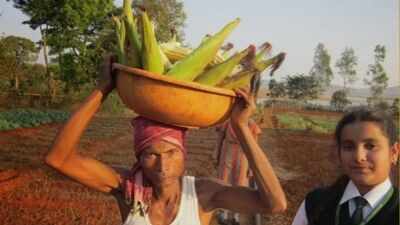
Lalita Prasida was only 13 years old when she won a Google Science Fair award for her incredible water purifier. Also, she was the only Indian among the eight global winners, making her country proud in 2015! At an age when most teenagers remain busy with school assignments and playground games, Prasida was noticing something most people barely noticed which was discarded corn cobs. While people looked at it as an agricultural waste, this Class 9 student from Delhi Public School, Damanjodi, in Koraput district saw an opportunity. She had an incredible idea of solving a problem that affected millions of lives; water pollution.Her curiosity eventually led to an unusual water filtration project which eventually earned her the Community Impact Award at the 2015 Google Science Fair. She also received a $10,000 prize along with an opportunity for year-long mentorship from Scientific American to develop her idea further.An ordinary agricultural waste product caught her attentionIn an interview published by Google’s official blog in August 2015, she shared that corn had been one of her favourite vegetables since childhood. She had even dressed up as a corn cob for a nursery-school fancy-dress competition and won a prize. But as she grew older, she began noticing something about the vegetable that others rarely thought about.While the kernels were consumed, the central cob was discarded. Living in Odisha, agriculture was an important part of people’s daily life. She increasingly became interested in finding practical uses for agricultural waste.In her interview, Lalita explained how she experimented with a corn cob by making a hole through its centre and pouring dirty water into it. When she examined the water that came out, she noticed that suspended particles had been removed.That small observation encouraged her to investigate whether corn cobs could do more than simply trap visible dirt. But the main question was that could they also absorb chemicals, detergents and other pollutants?And surprisingly her experiments suggested that they could.How she turned discarded corn cobs into a water filtration system
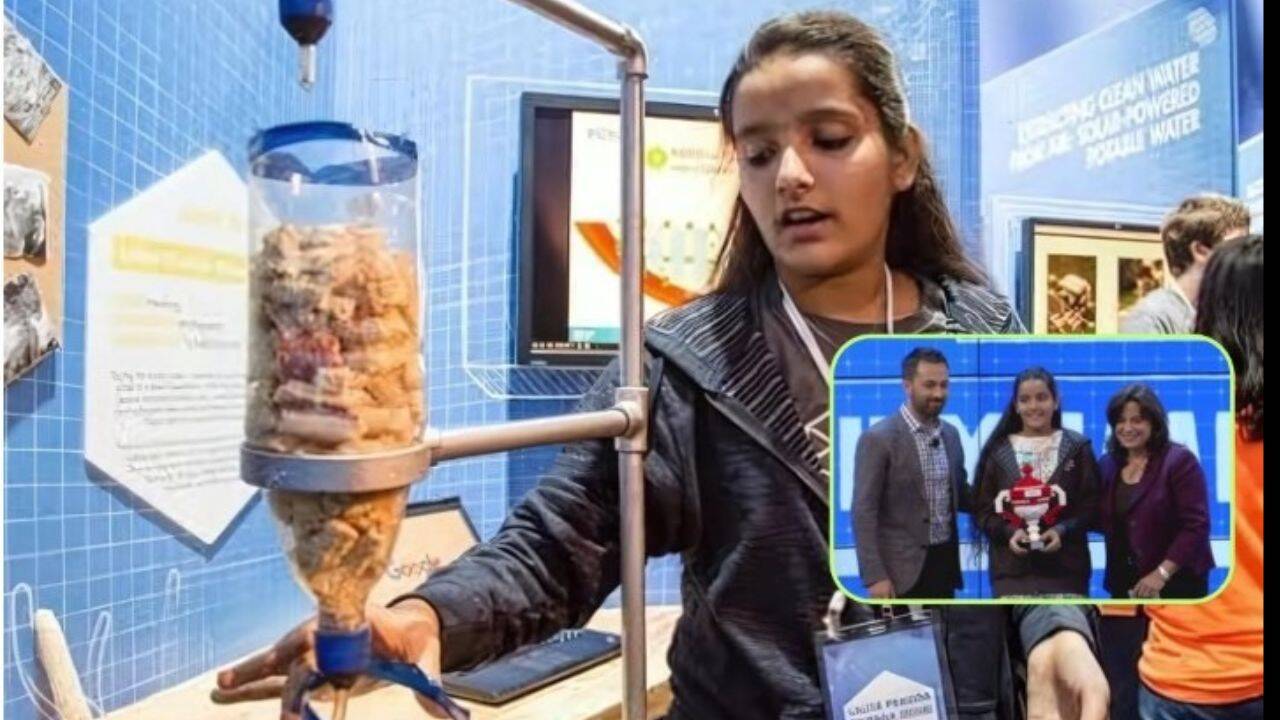
Lalita Prasida with her product (PC: techworm_in)
Lalita called her project ‘Low Cost Bio-Adsorbent’. The idea was to create an affordable method of treating wastewater. Instead of relying on a single layer of material, she designed a filtration system through which contaminated water passed through different layers.The filtration arrangement included:
- Long pieces of corn cobs
- Small pieces of corn cobs
- Powdered corn cobs
- Activated charcoal made from corn cobs
- Fine sand
The science behind her experiment involved adsorption as corn cobs have a porous structure, making them interesting materials to investigate for their ability to retain certain pollutants.Lalita tested the system against several contaminants found in domestic and industrial wastewater. These included detergents, suspended particles, coloured dyes, oils, grease and certain heavy metals.International recognition
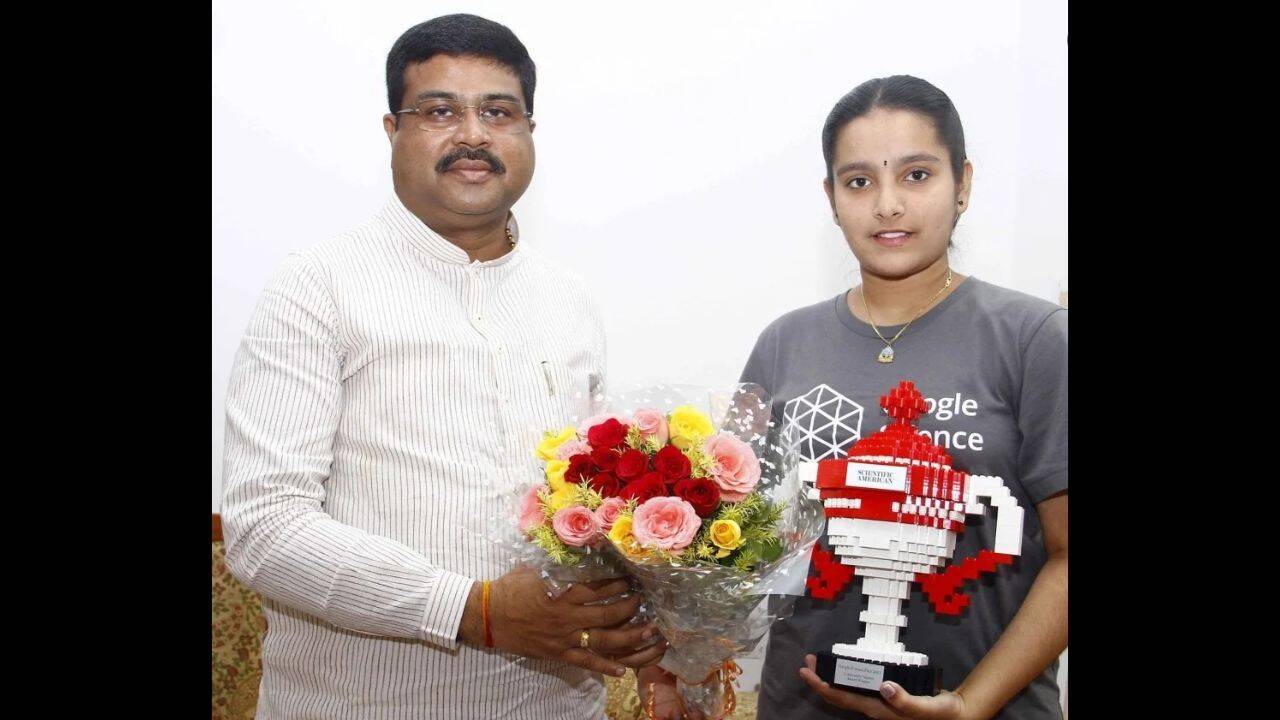
Lalita Prasida Sripada Srisai From Odisha being felicitated by Dharmendra Pradhan in 2015 (PC: FB)
Lalita was selected as one of the finalists at the 2015 Google Science Fair, which is an international competition that brought together young innovators working on solutions to real-world problems.The final awards were announced in September 2015 in California. Lalita won the Community Impact Award in the 13–15 age category, becoming the only Indian participant to receive an award at that year’s competition, according to The New Indian Express.The recognition came with a $10,000 prize and a year of mentorship from Scientific American, which sponsored the award.For a teenager from a small town, this was a major achievement and opportunity. Her work had taken an idea rooted in the everyday experiences of farming communities to an international platform where scientists and educators evaluated innovations from across the world.The people and experiences behind the young innovatorShe credited both her parents for encouraging her project. Her father was a science teacher and often took her to the chemistry laboratory. Here she got opportunities to observe experiments and work with chemicals. Her mother, meanwhile, introduced her to the everyday processes of cooking.In February 2016, Lalita was also among the achievers felicitated by Prime Minister Narendra Modi during the inauguration of the new campus of the National Institute of Science Education and Research in Odisha, as reported by The New Indian Express.Sometimes, innovation begins with looking at the discarded things differently, just like Lalita did.