
Tip of the day: Paying only the minimum amount due on your credit card may offer temporary financial relief, but it could significantly increase your repayment burden. Here’s how.
Paying just the minimum amount due on your credit card may seem like a smart way to manage a tight month. But it could end up costing you thousands in interest and taxes, while keeping you in debt for months or even years.
Here’s how it works.
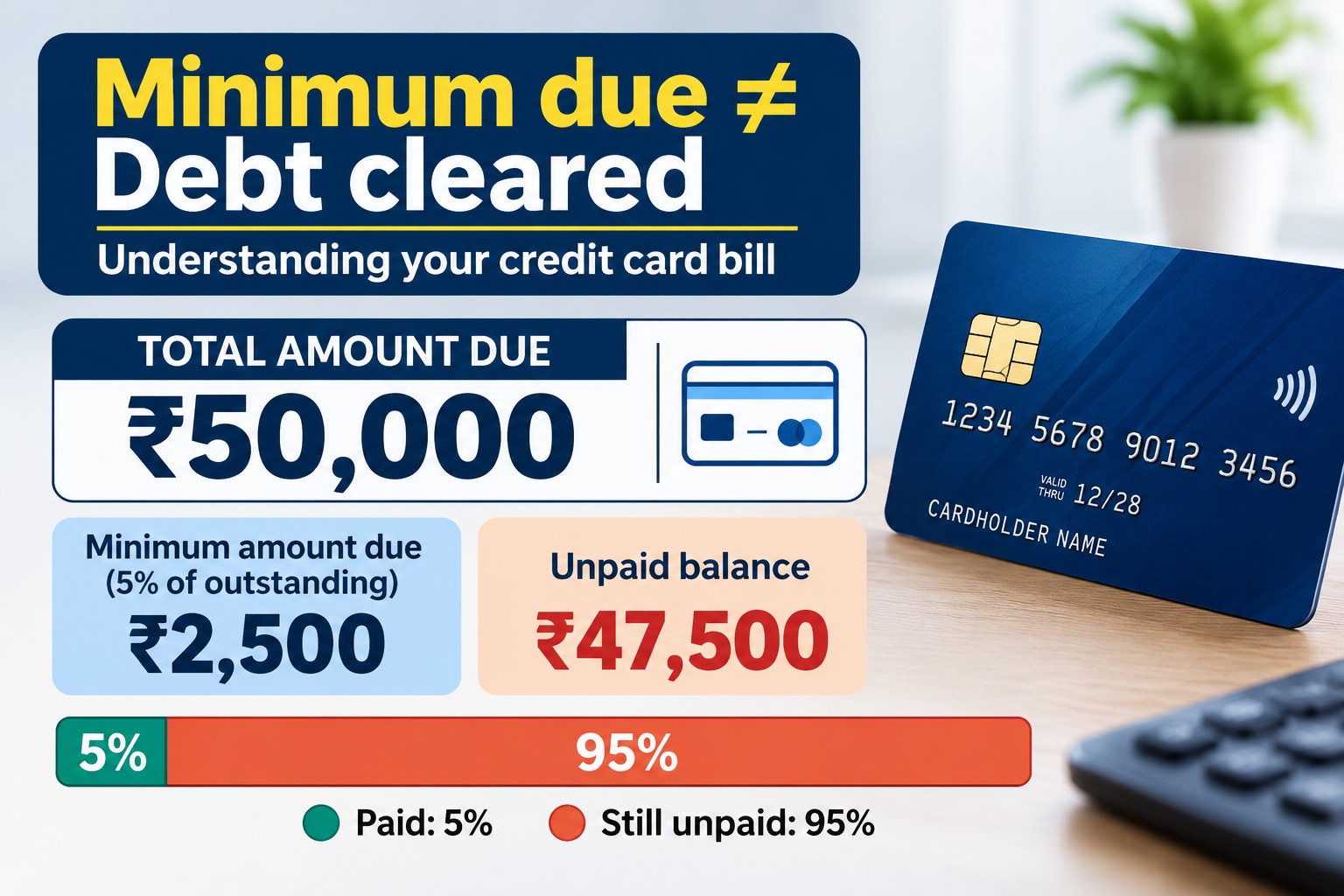
When you receive your credit card statement, you are given two figures: the total amount due and the minimum amount due. The minimum due is the smallest amount you need to pay by the due date to avoid being treated as having missed a payment. But it does not mean your debt is cleared.
Let’s take an example. Suppose your credit card bill is ₹50,000 and your bank asks you to pay a minimum amount of ₹2,500 (assuming 5% of the outstanding bill).
If you pay only ₹2,500, the remaining ₹47,500 is carried forward. Now, assuming your card charges 3.5% interest per month, you could be charged approximately ₹1,663 as interest on this balance. Add 18% GST on the interest (around ₹299), and your next outstanding could rise to approximately ₹49,462, even though you have made a payment.
And the cycle continues. Interest and applicable charges increase the outstanding balance, making it harder to bring down the original debt. Meanwhile, you could also lose the interest-free period on fresh purchases, meaning new transactions may start attracting interest from their transaction dates, depending on your card’s terms.
The Reserve Bank of India (RBI) has cautioned customers against paying only the minimum amount due, pointing out that it can stretch repayment over months or years, with compounded interest increasing the burden.
What happens if you keep paying only the minimum due for a year?
Consider two credit card users who spend ₹50,000 every month. While one pays the entire bill by the due date, the other pays only the minimum amount due every month and clears the remaining outstanding balance at the end of the year.
The difference in their total repayment can be substantial.
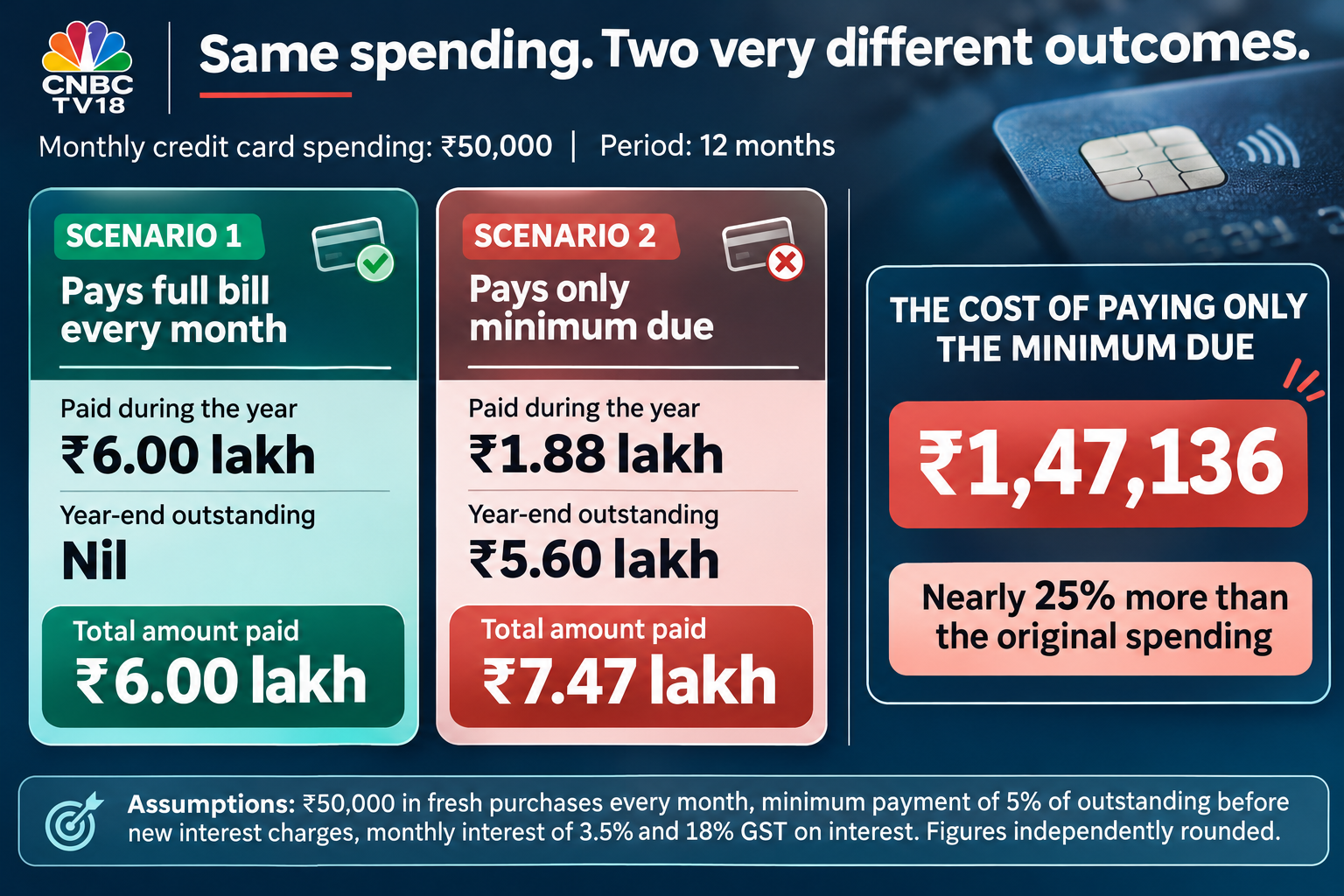
Despite making regular minimum payments of approximately ₹1.88 lakh during the year, the second credit card user would still have an outstanding balance of nearly ₹5.60 lakh at the end of 12 months.
Clearing this balance would take the total repayment to approximately ₹7.47 lakh — an additional cost of ₹1.47 lakh in interest and GST alone.
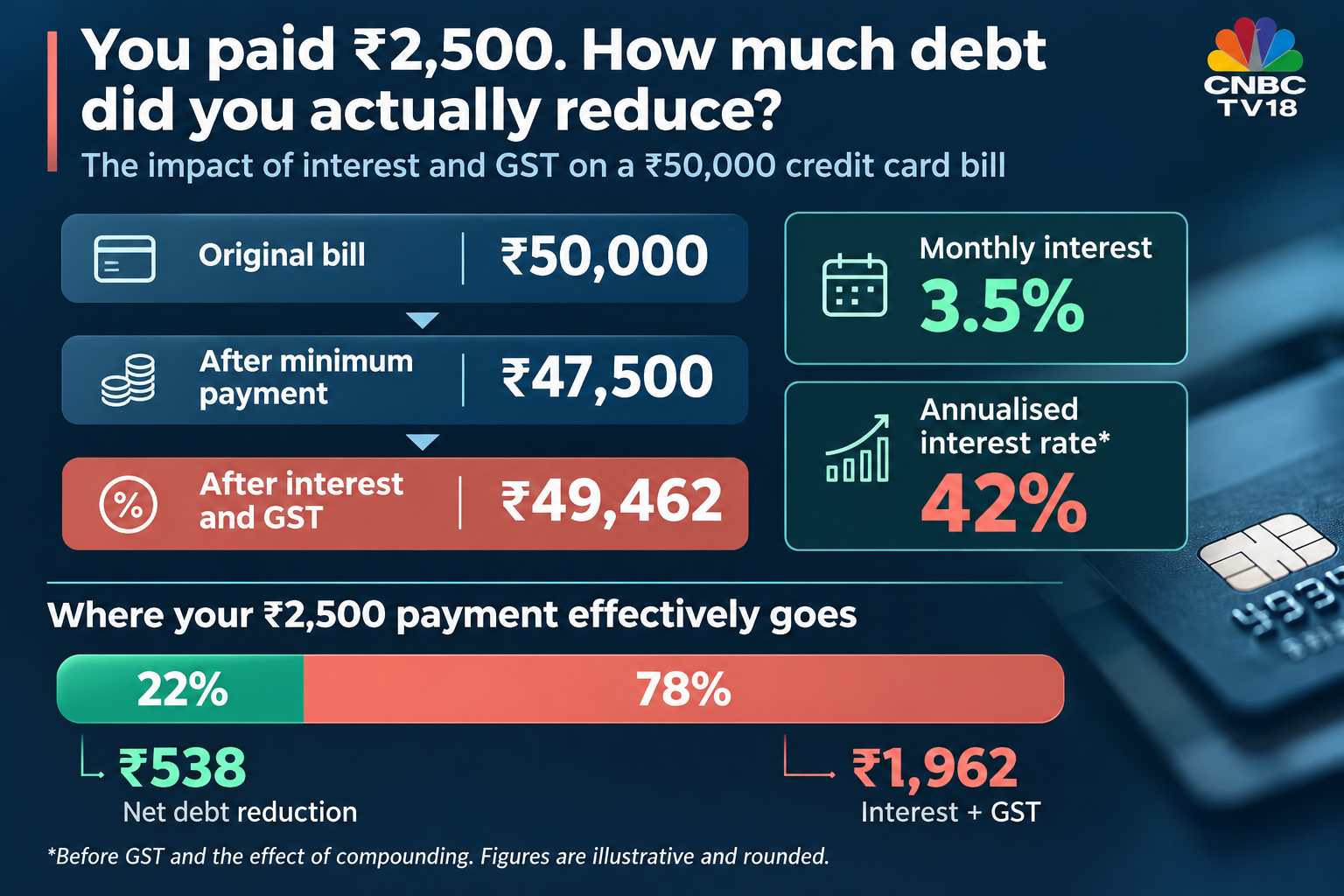
These calculations are illustrative. Actual interest charges, minimum payment requirements and repayment amounts may vary depending on the card issuer’s terms, transaction dates and spending patterns.
The bottom line
The minimum due is only a safety net to avoid being treated as having missed a payment. It is not a sustainable way to manage your credit card debt.
Always aim to pay the total amount due by the deadline. If you cannot, pay as much as possible and avoid fresh spending on the card until the balance is cleared.