
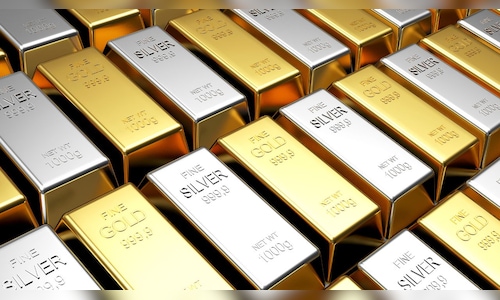
On the COMEX, gold was trading at $4,665.50 per ounce, down 0.3%, while silver slipped 0.53% to $72.535 per ounce in the latest session. The decline comes after both metals witnessed some rallies earlier in the month, driven by heightened uncertainty around the ongoing US–Iran conflict.
The recent pullback reflects a broader tug-of-war in global markets.
While geopolitical risks typically boost demand for safe-haven assets like gold, a strengthening dollar and rising bond yields have made bullion less attractive, particularly for international buyers.
According to Rajeev Sharan, Head of Research at Brickwork Ratings, gold’s trajectory highlights the “fragile balance between global risk sentiment and monetary policy recalibration.” He noted that prices surged to near $4,800 per ounce earlier in April amid conflict-driven uncertainty, but have since moderated as currency strength and rate expectations weighed on momentum.
Echoing a similar view, Ross Maxwell of VT Markets said gold is currently “balancing between its traditional safe-haven appeal and the strength of the US dollar,” adding that expectations of tighter monetary conditions have created downward pressure on prices.
Higher yields, in particular, tend to reduce the appeal of non-yielding assets like gold.
Market participants are also closely tracking developments in energy markets, which are adding another layer of complexity. Crude oil prices surged above $110 per barrel after US President Donald Trump signaled a potential escalation in the West Asia conflict, raising concerns over supply disruptions, especially through the Strait of Hormuz.
Higher oil prices are feeding into inflation expectations globally, which in turn is influencing interest rate outlooks. Investors are now reassessing the likelihood of rate cuts by the US Federal Reserve, with recent strong economic data further complicating the trajectory.
Renisha Chainani, Head of Research at Augmont, said both gold and silver saw “significant profit-booking after reaching fresh highs,” as persistent conflict and hawkish rhetoric reduced hopes of near-term de-escalation. She added that a stronger dollar environment has capped further upside in precious metals.
Despite the near-term correction, analysts believe the underlying support for gold remains intact. Continued geopolitical uncertainty, risks to global growth, and elevated inflation pressures are likely to keep safe-haven demand resilient.
For India, elevated global gold prices also carry macroeconomic implications. Higher bullion prices can widen the current account deficit and add to imported inflation, while a stronger dollar may put pressure on the rupee, complicating the monetary policy outlook for the Reserve Bank of India.
Going ahead, markets will closely watch incoming US inflation data and further developments in the West Asia. The direction of oil prices, currency movements, and interest rate expectations will remain key drivers for gold and silver in the near term.
–With agencies inputs