



A mutual fund is an investment option where many people pool their money together. Professional experts then invest this money in stocks, bonds, or other assets to earn good returns.
In today’s world, where everyone wants to grow their savings, mutual funds have become one of the easiest and smartest ways to invest. Instead of buying shares on your own (which can be risky and confusing), you join thousands of other investors. A team of experts manages everything for you.
Even in 2026, mutual funds are more popular than ever. With simple mobile apps and low starting amounts, anyone — whether a student, salaried person, or homemaker — can start investing. This beginner’s guide explains everything in simple English so you can understand and begin your investment journey confidently.
What is a Mutual Fund in Simple Terms?
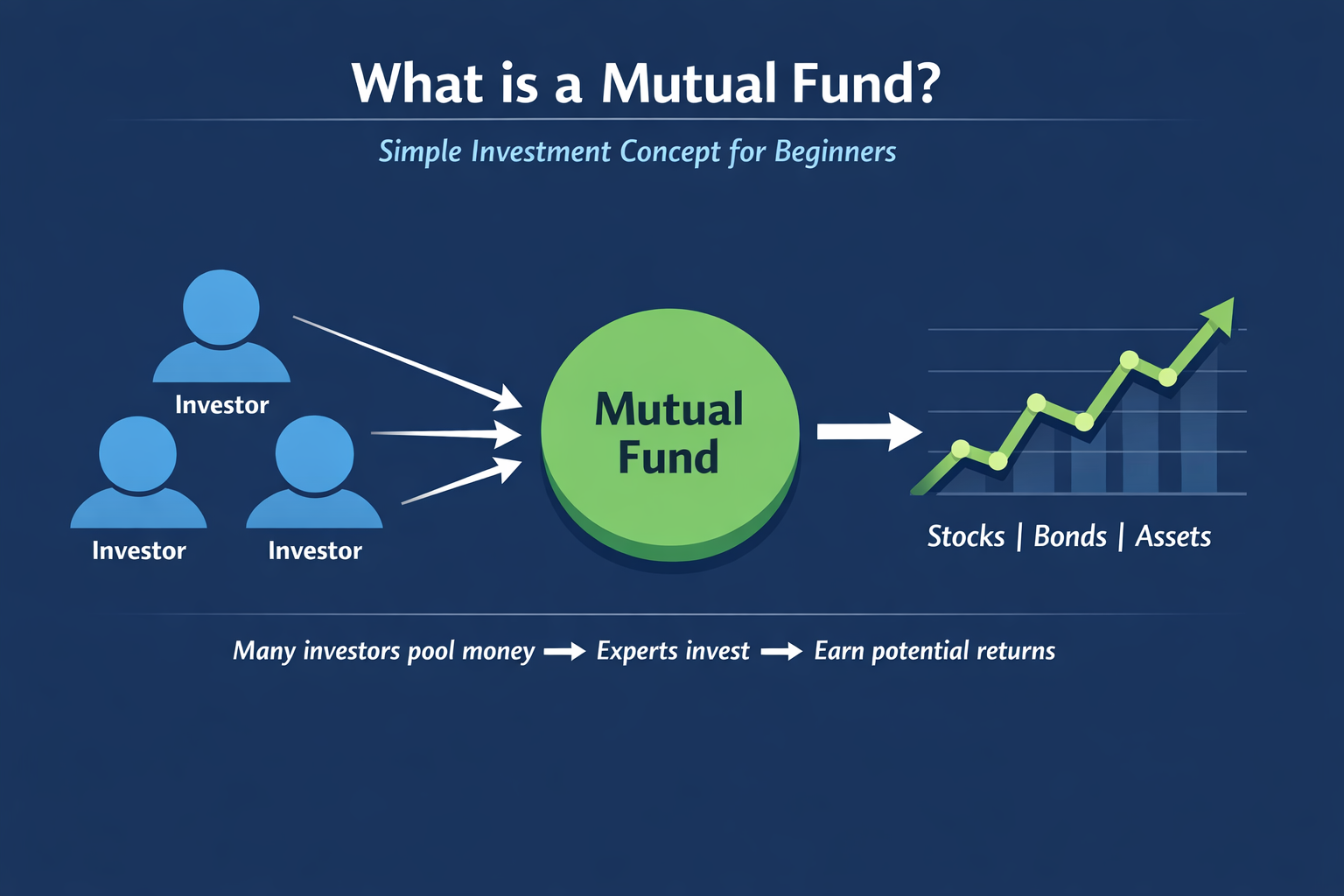
Think of a mutual fund like this: Mutual Fund = People’s Money + Expert Management
You and many others contribute small amounts of money. This total pool is called a “fund.” A trained fund manager (who is registered and experienced) then decides where to invest this money. You don’t need to watch the stock market daily. The experts do all the hard work for you.
How Does a Mutual Fund Work?
The process is straightforward and happens in three simple steps:

Investors put in money You can start with as little as ₹500 per month through a Systematic Investment Plan (SIP). Many people invest together, creating a large fund worth crores of rupees.
Fund manager handles the money The fund manager is a professional with years of experience. He or she researches companies, studies market trends, and invests the money in a mix of stocks, bonds, or other assets. The goal is to grow the fund while keeping risk under control.
Profits or losses are shared Any profit or loss is divided among all investors based on how much each person invested. This is fair and transparent.
For example: Suppose 1,000 people each invest ₹1,000 (total ₹10 lakh). The fund manager invests this wisely, and after one year the fund grows to ₹11.5 lakh. Each investor gets ₹1,150 — that’s a ₹150 profit per person.
Financial Calculator: https://www.njmutualfund.com/calculator.php
You can invest through a one-time lump sum or regular SIP. Every day, the fund’s Net Asset Value (NAV) is updated so you can check your investment value easily. In 2026.
Open free E-MF account today to start Investment journey : http://p.njw.bz/36075
Top Benefits of Mutual Funds
Mutual funds offer many advantages, especially for beginners:

✅ Professional Management You don’t need to be a stock market expert. Qualified fund managers and their research teams do all the work. This saves you time and reduces costly mistakes.
✅ Start with Small Amounts You can begin with just ₹500 a month through SIP. This makes mutual funds perfect for everyone, even if you don’t have a large salary. Over time, small investments grow big thanks to the power of compounding.
✅ Diversification = Lower Risk A single mutual fund usually invests in 50–100 different stocks or bonds. If one company does poorly, others can balance it out. This spreads your risk, unlike buying shares of only one or two companies.
✅ Long-Term Wealth Creation Mutual funds (especially equity funds) have historically given average returns of 12–15% per year over the long term. This beats inflation (expected around 5–6% in 2026) and helps build wealth for retirement, buying a house, children’s education, or dream vacations.

Other benefits include:
- Easy to buy and sell (high liquidity)
- Tax benefits on equity funds after one year
- Regular updates and complete transparency
That’s why mutual funds are considered one of the best investment tools for common people to become financially secure.
Mutual Funds return calculator: https://www.njwealth.in/mfcalculator?-STAwNDg-rpt=insight
What Are the Risks of Mutual Funds?

No investment is completely risk-free, and mutual funds are no exception. Here’s what you need to know:
⚠️ Market Goes Up and Down Share prices can fall due to economic slowdowns, global events, or other reasons. Your fund value may drop in the short term. For example, during the 2020 pandemic, many funds fell 30–40%, but they recovered later.
⚠️ No Guaranteed Returns Unlike a bank fixed deposit that gives fixed interest, mutual fund returns are not guaranteed. Past performance does not guarantee future results.
⚠️ Short-Term Losses Possible If you need money urgently and sell when the market is low, you may face a loss.
However, these risks are much lower than investing directly in individual stocks because of diversification and expert management.
Smart Tip for Beginners: Only invest money you can keep invested for at least 5–7 years. Keep a separate emergency fund in a savings account. Review your investments once a month, but don’t check the NAV every day — it can create unnecessary stress.
Open free E-MF account today to start Investment journey : http://p.njw.bz/36075
Conclusion: Is Mutual Fund the Right Choice for Beginners?
Yes! If you are a beginner, a mutual fund is a safe, simple, and smart way to start investing. It gives you professional help, lets you begin with small amounts, reduces risk through diversification, and creates long-term wealth.
In 2026, India’s mutual fund industry is expected to grow rapidly and reach new heights. Millions of people are already using mutual funds to achieve their financial dreams.
The key is to choose the right fund based on your goals, stay disciplined with your SIP, and be patient. Your money will grow over time.

Want a FREE Mutual Fund Portfolio Review? 📱 WhatsApp us now: +91 8830112625
Open free E-MF account today to start Investment journey : http://p.njw.bz/36075
Disclaimer: Mutual fund investments are subject to market risks. Read all scheme-related documents carefully before investing.