
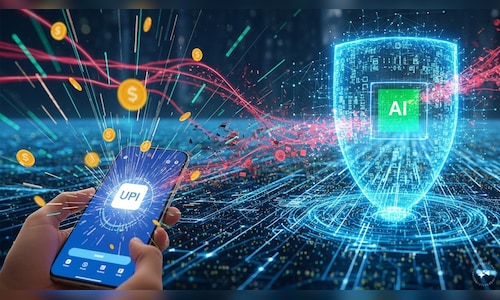
The surge strsses both the scale and the speed at which real-time payments now operate across the country.
Industry experts say this rapid growth is exposing the limits of traditional fraud detection systems. Manual oversight and rule-based monitoring frameworks struggle to keep pace with billions of transactions that are executed and settled within seconds.
Rohit Mahajan, Founder and CEO of plutos ONE, said the volume and velocity of transactions make AI-driven monitoring indispensable.
He noted that artificial intelligence systems can analyse transaction patterns in real time, detect unusual spikes, identify compromised accounts, and flag suspicious activity within milliseconds.
Experts highlight that the challenge extends beyond sheer volume.
Anurag Jain, Founder and CEO of Oriserve, pointed out that UPI transactions vary widely across geographies, user groups, and usage patterns. A fraud signal in a smaller city may look very different from one in a metro, making static, rule-based systems less effective.
AI-led monitoring addresses this complexity by continuously learning from evolving behavioural patterns and processing contextual signals such as device usage, transaction velocity, and user behaviour. This allows systems to move from post-incident detection to real-time intervention.
Kanishk Agrawal, Chief Technology Officer at Judge Group India, said AI enables financial institutions to analyse vast datasets instantly and detect anomalies before they escalate into systemic risks. He added that as UPI becomes embedded in everyday transactions, from small retail outlets to large e-commerce platforms, proactive risk intelligence is becoming essential.
Alongside these industry measures, authorities are emphasising consumer vigilance as an essential layer of security. The Reserve Bank of India (RBI), during its Digital Payments Awareness Week 2026, highlighted the importance of #ThodaDhyanSe—simple caution while making digital payments.
Fraudsters are using AI to make scams appear realistic, from fake websites and AI-generated documents to deepfake calls and phishing emails.
Visa shared some pointers for users:
- Use trusted platforms and tokenised payment methods that mask card details.
- Verify unusual payment requests through official channels before acting.
- Enable biometric and multi-factor authentication and monitor accounts for suspicious activity.
- Report suspected fraud to banks or official platforms like the national cybercrime helpline (1930) or cybercrime.gov.in.